
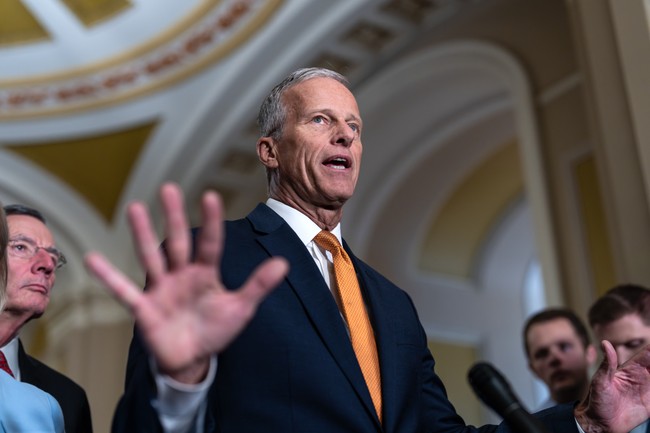
The Senate is edging toward a compromise to end the longest government shutdown in U.S. history, as a shifting vote count and a rare weekend session have created momentum for a spending package that blends full-year funding for key departments with a short-term extension for the rest of the government.
Senators from both parties signaled movement after weeks of stalemate, with at least ten Democrats reportedly willing to advance the legislation during a Sunday session. Leaders are juggling full-year bills for Veterans Affairs, military construction, and Agriculture alongside a continuing resolution that would push most funding through Jan. 30. The emerging plan aims to reopen essential services while leaving a contentious health care fight for later.
The deal attempts to split the difference between opposing demands: Republicans sought an immediate reopening without altering health care, while Democrats pushed for action on expiring Affordable Care Act tax credits. In exchange for supporting the package now, Democrats won a promised December vote on extending ACA marketplace subsidies that are due to lapse in January. That promise does not guarantee passage or the president’s signature.
Included in the full-year measures are hundreds of billions in spending for fiscal year 2026 in the Military Construction and Veterans Affairs bill, plus funding to shore up Agriculture programs like the Supplemental Nutrition Assistance Program. Courts have ordered partial SNAP payments after the administration tried to withhold benefits during the shutdown, and Congress would need to act for full restoration. Language to reverse federal layoffs ordered by the Office of Management and Budget has also been reported as part of the package.
Text for the three full-year funding bills began circulating Sunday afternoon via Senate appropriations channels, showing details of how money would be directed for the coming fiscal year. The agriculture section focuses on immediate hunger relief and program stability, while veterans and construction funding target major spending priorities. Lawmakers hope that locking those pieces in will reduce pressure on vulnerable programs and workers.
The Senate has repeatedly failed to hit the 60-vote threshold needed to advance the House-passed continuing resolution, voting 14 times without success and winning only limited Democratic support on earlier Republican proposals. Shifts in political dynamics after recent elections appear to have changed some senators’ calculations, and President Trump told Senate Republicans that the shutdown hurt the party at the polls. That political pressure has pushed leaders to pursue a blended package that might attract the critical votes.
Senate Republican leadership has said members should be ready to work through the weekend, and Majority Leader John Thune indicated votes on the combined short-term and full-year approach were coming. Procedural moves are expected, including a possible motion to reconsider the House-passed continuing resolution that would serve as the vehicle for substitution. That procedural motion itself still requires 60 votes to succeed.
If the motion passes, the plan would substitute a continuing resolution extending funding through Jan. 30 and attach the three full-year bills as the final product. Without an agreed timetable, though, floor debate and the amendment process could stretch the work into multiple days. Any individual senator can force delays, and members opposed on principle may use procedural tools to slow the process even when final passage looks likely.
Some progressive Democrats remain unconvinced, insisting they will not back any package unless health care subsidy extensions are guaranteed now rather than promised later. Their argument is the pledge of a future vote is meaningless if the president opposes the extension. Nonetheless, a senior White House official has signaled the president supports the current plan, increasing the chance that the later vote could succeed.
Senate Democrats also criticized the administration’s court fight over SNAP payments and recent reductions in flight schedules that affected travel around the country, arguing those moves compounded the harm of the shutdown. Republican senators counter that Democrats are prolonging hardship by blocking measures that would immediately pay federal workers and restore services. Political rhetoric has intensified as each side frames responsibility differently.
Opinion among senators diverges on whether backing the compromise will be seen as pragmatic problem-solving or political surrender. “I think voters would rightly see it as a surrender,” Democratic Sen. Richard Blumenthal said before his party’s lunch meeting, adding that recent elections and constituent messages have underscored that “health care matters.” That calculation has complicated the decision for many who must weigh constituent pressure against the immediate needs of federal employees and program beneficiaries.
Assuming the Senate passes the package, the House would need to approve the same language before it reaches the president’s desk, requiring members to return from recess for a vote. Senate Republican leaders have rejected calls to eliminate the 60-vote threshold to expedite the process, saying they lack the internal votes to change Senate rules. That procedural reality keeps the focus on building a broad coalition across both parties.
Editor’s Note: The Schumer Shutdown is here. Rather than put the American people first, Chuck Schumer and the radical Democrats forced a government shutdown for healthcare for illegals. They own this.
Help us continue to report the truth about the Schumer Shutdown. Use promo code POTUS47 to get 74% off your VIP membership.



Add comment