
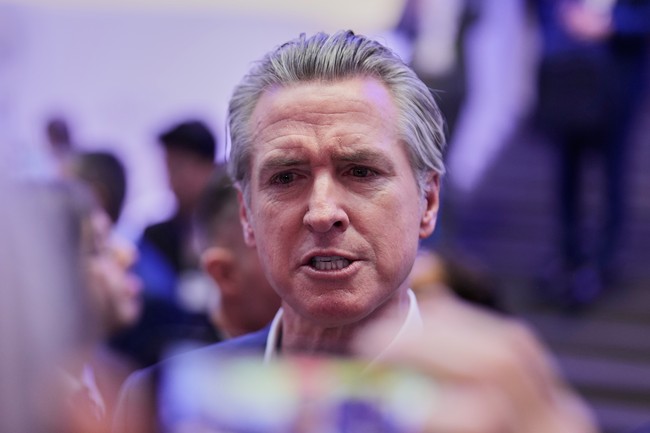
This article examines California Governor Gavin Newsom’s statement that the state will tax 100% of payments received by California residents from the federal Anti-Weaponization Fund, places that vow in the broader political fight over the fund, and highlights reactions from national figures, New York lawmakers, and President Trump’s own explanation of why he supported the settlement that created the fund. The piece focuses on the politics of restitution, state responses, and the claims of weaponized federal enforcement without offering legal advice or procedural detail.
Governor Gavin Newsom announced that California will impose a full state tax on any payments its residents receive from the newly created Anti-Weaponization Fund. He put the policy plainly: “Anyone from California that receives any of those funds, we want to tax 100% of those proceeds.” That declaration landed like a warning shot to anyone expecting federal relief to reach people living in blue states without consequence.
The Anti-Weaponization Fund totals $1.8 billion and was established as part of a settlement tied to litigation involving the IRS and alleged illegal disclosures. The program is intended to provide restitution to Americans who claim they were targeted by federal agencies for political reasons. For conservatives who felt unfairly pursued over the last few years, the fund represents both vindication and a political bargaining chip.
From a Republican perspective, Newsom’s move comes off as punishment aimed at conservatives who were victims of what they call systemic abuse by the prior administration. State leaders who publicly vow to seize that money look less like protectors of constituents and more like political payback machines. That framing fuels a growing narrative about the unequal application of law and the drive to penalize political opponents.
President Trump framed his choice to let the fund proceed as a sacrifice made to help others who suffered under federal overreach. “I gave up a lot of money in allowing the just announced Anti-Weaponization Fund to go forward,” he wrote. “I could have settled my case, including the illegal release of my Tax Returns and the equally illegal break-in of Mar-a-Lago, for an absolute fortune.”
https://x.com/GavinNewsom/status/2059763379838013900
“Instead, I am helping others, who were so badly abused by an evil, corrupt, and weaponized Biden Administration, receive, at long last, JUSTICE!” That language reinforces the political optics driving the settlement: the former president casts the agreement as restitution for victims and paints the prior administration as a bad actor. Supporters see the settlement as corrective justice; critics see it as a political stunt.
California’s proposed tax move is not the only state-level reaction. A New York lawmaker has said he would match Newsom’s approach and tax 100% of any payments to his constituents. “It’s simple, if you’re a New Yorker and you take from this illegal slush fund, New York state will tax 100% of it,” State Assemblyman Alex Bores wrote on X. That echo of tax-first, ask-questions-later posture suggests a broader willingness among blue-state leaders to neutralize the settlement’s impact on their voters.
For recipients of the fund who live in progressive states, the practical reality now includes potentially losing the full value of any payment after state taxation. That outcome will alter the calculus for people who endured legal pressure, investigations, or punishments they attribute to political targeting. It also raises questions about whether federal restitution can ever truly reach citizens when state governments are eager to take it back.
Beyond the tax headlines, the fund’s creation spotlights long-held grievances about selective enforcement. Conservatives point to a list of examples they view as evidence of weaponized federal action against political opponents, including prosecutions tied to protests and aggressive investigations into private citizens. These cases feed the broader claim that certain federal agencies were turned into political tools.
Democrats defending Newsom argue the state has every right to tax income and that settlement payments are indistinguishable from other forms of compensation. From that perspective, applying state tax law is routine and justified regardless of who benefits. Republicans counter that this is ideological retribution disguised as fiscal policy.
The clash over the Anti-Weaponization Fund now sits at the intersection of legal remedy and partisan warfare. On one side, the settlement is a remedy for people who say they were unfairly targeted; on the other, state leaders are talking openly about stripping that remedy away when it reaches their voters. That tension will likely play out in courts, statehouses, and the court of public opinion for months to come.
Whatever the next legal moves bring, the episode reveals how quickly federal actions intended to repair alleged abuses can get entangled in state politics. For recipients, the promise of relief is now filtered through state tax codes and political decisions. The fallout will test whether restitution can be delivered cleanly to individuals when partisan incentives push in the opposite direction.



Newsom is the stupidest asshole democrat ever and he thinks of being a presidential candidate his ass out accomplished is own mouth. Newscum to bankrupt America just like California his accomplishments speak louder than his actions. His own state stole billions of taxpayers money which he was involved in and now wants to play stupid and blame Trump for his incompetence even before Trump was president. Don’t walk past him with a cigarette or open flame because he’s going to explode from all his bullsh-t cover ups. Just remember he’s Pelosi nephew and major corruption is in his blood.