
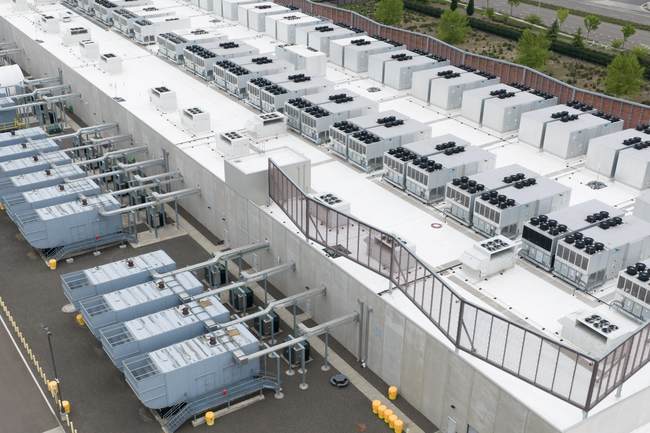
The county’s booming data-center business has become the backbone of Loudoun’s budget, funding schools, roads and services while raising questions about land use, noise, and long-term planning; supervisors are debating a temporary pause to set tougher rules even as officials point to the financial benefits data centers deliver. This article examines how a small share of commercial parcels now supplies nearly half of local tax revenue, why some residents and leaders want a moratorium, and why Republicans argue the math shows the facilities are a net win for taxpayers.
Loudoun County relies on roughly 250 data centers that together are projected to generate nearly $1.3 billion in tax revenue in fiscal 2027. About $417 million comes from taxes on buildings and land, while $879 million derives from servers and equipment inside those facilities. Those figures make data centers responsible for roughly 45 percent of the county’s projected $2.9 billion in local tax revenue, concentrating a huge portion of revenue in just four percent of commercial parcels.
That concentration creates obvious advantages for Loudoun’s bottom line and for homeowners who have seen property tax rates fall over the past decade. The county reports a long streak of rate reductions, and officials note that data-center revenues have helped lower the burden on ordinary residential taxpayers. The county also points to steady funding for public safety, roads, libraries, parks and the school system without shifting the full cost onto neighborhoods.
At the same time, neighbors near existing facilities complain about noise from cooling equipment and the visual impact of massive, windowless buildings and transmission lines. Eastern Loudoun residents describe diesel generators, new substations and giant blank walls beside established neighborhoods, while supervisors weigh whether future sites should be limited or pushed away from populated areas. The county already hosts tens of millions of square feet of data-center space and faces ongoing pressure to manage further growth.
Algonkian District Supervisor Juli Briskman proposed a moratorium in July that would pause new data-center applications, site plans and related substation approvals if adopted. She argues a temporary halt would let the county develop stricter standards on noise, building heights, power infrastructure and siting. Briskman said “It is time we take back control of land use decisions in this county.”
Republican-leaning officials and taxpayers should welcome clearer rules, but they also emphasize an honest accounting of costs and benefits. Board of Supervisors Vice Chairman Mike Turner said data centers “don’t put kids in our schools” or “cars on our roads.” That point matters: once a data center is built it brings relatively few new students and generates minimal traffic compared with most commercial developments, which makes its high tax contribution especially valuable.
County estimates indicate it spends about four cents supporting a data center for every tax dollar collected, a far lower cost than the roughly 25 cents needed to support typical commercial property. Those margins allow Loudoun to underwrite local services while keeping homeowner rates comparatively low. From a fiscal conservative perspective, leveraging private investment and high-value commercial tax bases to reduce the burden on residents is sound policy.
Still, fiscal benefits do not remove the need to address practical impacts and community consent. If new facilities increase local infrastructure strain—for example, by requiring major transmission upgrades or land-use changes—that must be planned and paid for transparently. A short, narrowly drawn pause to update ordinances could clarify where and how this industry builds while preserving the revenue stream that funds essential services.
Political fights over tax treatment and exemptions have also intensified at the state level, complicating county choices. Some lawmakers have criticized state leaders for protecting tax advantages for the industry, and budget negotiations have sometimes hinged on how data centers are taxed. That makes local decisions about moratoria and siting part of a broader policy debate over balancing economic development with community impacts.
For residents and leaders alike, the issue boils down to trade-offs: keep attracting high-value data investments and use them to lower taxes and expand services, or slow approvals to protect neighborhood character and control infrastructure expansion. The county’s experience shows the two goals can conflict, but smart local rules can reduce friction without sacrificing fiscal strength. Any pause should be targeted, time-limited, and aimed at producing clear standards so Loudoun can keep the benefits while addressing legitimate community concerns.



Add comment