
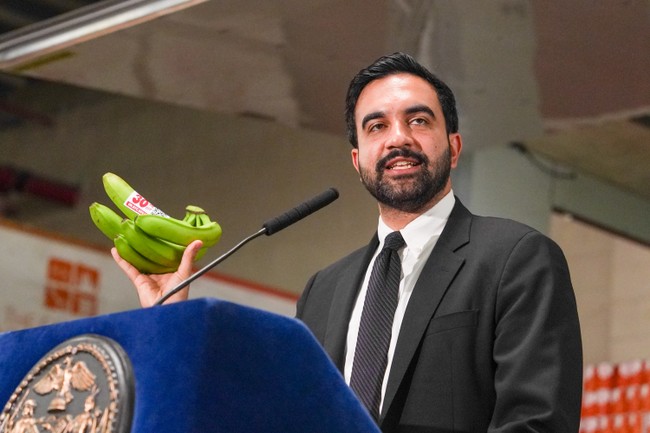
The city tour of Mayor Zohran Mamdani’s proposed government-run grocery in East Harlem was supposed to showcase a bold plan to tackle food prices, but it ended up revealing an empty lot, trash, and serious skepticism from private vendors and community members.
The mayor announced a plan for five city-owned grocery stores, one per borough, pitched as a way to lower costs for shoppers. What vendors and reporters found instead was an undeveloped lot under a Metro-North viaduct with no visible construction, no timeline pinned up, and litter drifting across the site. For people who pay taxes and run small businesses in New York, that scene raised immediate red flags about planning, accountability, and who actually bears the bill.
Big Apple officials took prospective bidders on a pathetic tour Wednesday of a trash-strewn empty lot in East Harlem where Mayor Zohran Mamdani’s planned $30 million city-owned grocery store is supposed to become reality.
The bidders wore hardhats on the city Economic Development Corporation-led tour to the under-the-Metro-North viaduct site next to La Marqueta, despite no work actually being done yet.
Prospective vendors were shown the lot while wearing hardhats and safety vests, but there was no construction to justify the gear. Reactions varied: some business owners politely circled the idea, while others made clear they did not want to be undercut by a government-subsidized competitor. Those are reasonable concerns when a public entity steps into an industry where private players already shoulder steep fixed costs to keep storefronts open.
One prospective operator, Phillip Grant, put it plainly: “We are very cautiously optimistic about this potential project and what this potential project means to the community and food deserts.” He went on to say, “It has to be a full, transparent partnership. We also have to get the public involved. There’s other things we have to think about: market forces, transportation, weather. So we have to ensure whatever model an operator like myself or a group that we put together build, that it can be flexible enough to adapt to those concerns.”
The caution is warranted. Private grocers and bodegas pay rent, property taxes, payroll, utilities, insurance, and they finance their inventory up front. Those costs are baked into prices and into the margins that keep small businesses alive. A government-run chain with taxpayer-backed subsidies could underprice competitors and squeeze out independent stores that serve neighborhoods year after year.
https://x.com/nypost/status/2090209321632108894
At least one vendor told a reporter he welcomes any effort to address rising food prices but does not want to compete against a government retailer that can operate with taxpayer support. That tension lies at the heart of the debate: a city can try to lower costs for consumers, but doing so by disadvantaging private operators creates market distortions and legal friction. Immigrant-owned grocers in particular worry that a city-backed store with subsidized overhead would undercut family-owned businesses that already operate on thin margins.
There are also legal and political flashpoints here. Some local business coalitions are preparing to take action to block what they see as unfair competition financed by public dollars. Lawsuits and prolonged litigation would delay any real benefits to shoppers and would add legal costs to taxpayers. Meanwhile, the empty lot with trash remains a useful visual for critics who see the plan as a costly, unproven experiment rather than a well-executed program.
The mayor’s office claims it will “come alongside” private grocers and offer support, but vague promises do not erase the structural advantage state-backed stores would enjoy. When government enters a market with public financing, it reshapes incentives, and those changes usually favor larger, well-connected operations at the expense of small, local entrepreneurs. Voters who care about competition, economic freedom, and fiscal responsibility are right to demand specifics before a $30 million proposal moves forward.
What happened on that field trip is not just about one lot in East Harlem; it’s a snapshot of a broader debate over how cities should address affordability. Sound policy requires a clear plan, measurable goals, transparency about costs, and respect for the private businesses that already serve communities. Until those things are on the table, a trash-strewn lot labeled as the future site of a city supermarket looks less like a solution and more like a costly political experiment.
Vendors and community members deserve realism from city officials: timelines, budgets, and protections for existing businesses. Without that, the rhetoric about helping shoppers rings hollow in neighborhoods where small grocers provide reliable service and employment every day.
Scrutiny will only grow as plans move from press events to contracts and construction. New York taxpayers should insist that any public investment be transparent, legally defensible, and designed to complement rather than replace local businesses. That’s the conservative test of public projects: do they actually solve problems without destroying the private sector that sustains neighborhoods?



Add comment