
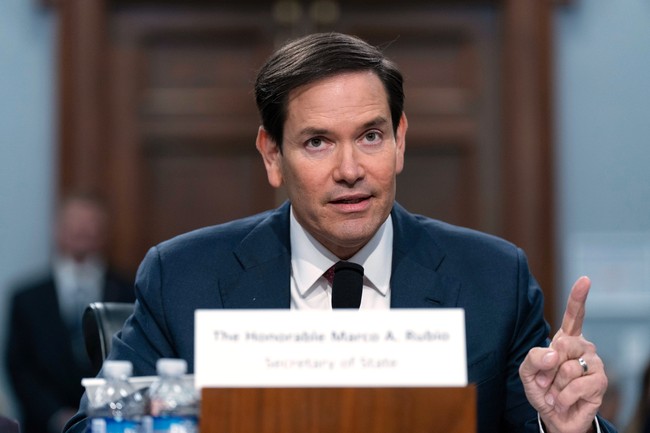
Marco Rubio announced a U.S.-backed framework aimed at stabilizing the Israel-Lebanon border after intensive talks in Washington, D.C., and he framed the agreement as a step toward putting Hezbollah’s disruptive influence in check while restoring security for civilians on both sides.
Secretary of State Marco Rubio said the talks produced what he called a “framework for lasting peace and security” between Israel and Lebanon, mediated and supported by the United States. The announcement came after several days of diplomacy in the capital, where U.S. officials worked to bridge longstanding tensions and create conditions for reduced violence along the border. The plan is presented as a diplomatic achievement that recognizes complicated regional dynamics and the need for American leadership.
https://x.com/StateDept/status/2070580795538915750
Rubio did not sugarcoat the obstacles ahead and stressed that the work was only beginning, but he said U.S. negotiators were honored to have shepherded the agreement into existence. He warned that implementation will require persistent attention and cooperation from both governments, plus pressure on the outside actors who have used Lebanese territory for attacks. That reality makes clear the framework is a starting point, not an endpoint, for a durable settlement.
“Today is a good day in that we are happy to announce a framework agreement between the sovereign government of Lebanon and the government of Israel, with the mediation and support of the United States of America, that begins to put in place a framework for lasting peace and security. And that’s what these two nations deserve,” Rubio said Friday.
Rubio highlighted Lebanon’s internal plight, pointing to decades of outside interference that have left ordinary Lebanese citizens suffering while militant groups exploited the state’s weaknesses. He argued that Lebanon’s people have been victimized by external actors using Lebanese land as a launchpad for attacks, undermining Lebanon’s sovereignty and prosperity. The message was both sympathetic to Lebanese civilians and firm about the need to remove malign influences that prevent normal life.
“The people of Lebanon have suffered tremendously now for decades, as a result of outside interference in their affairs, of countries trying to use the country as a launchpad for attacks. And this is not what the people of Lebanon want, and that’s not what they deserve,” Rubio added.
Rubio also painted a picture of what Lebanon could be if outside interference were curtailed: a prosperous, diverse country where people of different backgrounds live side by side, a regional model rather than a battleground. He referenced recent history to underscore that Lebanon once enjoyed stability and coexistence, implying that reclaiming that past is both realistic and desirable. That rhetorical contrast serves to remind listeners why effective enforcement of the framework matters.
“What they deserve to have is what they once had, and of which there is recent history of. And that is a prosperous and peaceful country, a diverse country where people of different backgrounds are able to live and go co-exist side by side, and in many ways was the envy of the region and of the world,” Rubio also said.
On the Israeli side, Rubio affirmed the basic right of Israelis to live free from cross-border attacks, with special emphasis on northern communities that have endured repeated strikes. He distinguished between the Lebanese government and the armed proxies that have launched attacks from Lebanese territory, putting the blame on outside actors rather than the civilian population. That distinction shapes the framework’s goals: to protect civilians while avoiding unnecessary escalation with Lebanon itself.
The central practical question remains enforcement: can the framework constrain Hezbollah and its backers enough to prevent resumed violence? Rubio and U.S. officials offered the framework as a tool to shrink the space militants exploit, but success will depend on verification, deterrence, and American resolve. If the United States keeps pressure on the actors who enable cross-border attacks, the chances of durable quiet go up.
The deal highlights a broader Republican case for strong American diplomacy backed by credible force and clear consequences. It reflects a belief that when the U.S. leads decisively, it can broker terms that protect allies and reduce the risk of wider conflict. This framework is being presented as exactly that kind of result: diplomacy with teeth, aimed at restoring order and making life safer for civilians across a volatile frontier.
Editor’s Note: Thanks to President Trump and his administration’s bold leadership, we are respected on the world stage, and our enemies are being put on notice.

Add comment