
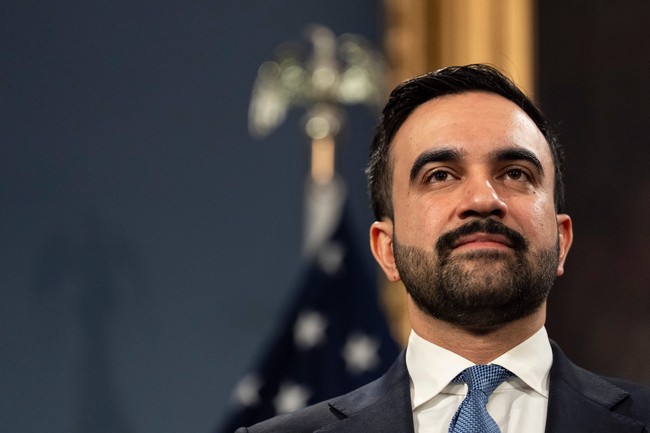
This piece examines Mayor Zohran Kwame Mamdani’s reaction after a federal judge ordered the deportation of Rafael Rubio Bohorquez, a New York City Council data analyst found to have overstayed a tourist visa, and looks at the legal facts, council responses, and the broader question of rule of law in a city wrestling with immigration and public-safety tradeoffs.
New York’s mayor is publicly fuming after federal immigration authorities moved to deport a City Council staffer who entered the country on a tourist visa in 2017 and never obtained authorization to work. The staffer, Rafael Rubio Bohorquez, was detained by ICE during a routine check this January and a judge has now ordered his removal after determining his asylum claim was abandoned. The story isn’t just about one employee; it exposes how hiring, immigration status, and criminal history intersect in city government.
Mamdani lashed out on social media, calling the decision unfair and demanding swift action from authorities. “This is an affront to justice,” he wrote. The mayor insisted that Bohorquez was a “dedicated public servant” who showed up for an appointment and was detained despite following the rules, a take many in conservative circles find disconnected from the legal record.
To quote the legendary Inigo Montoya, I do not think it means what you think it means. Public servants and officials have a responsibility to follow the law, and overstaying a visa for nearly nine years is not a technicality. The detained analyst reportedly had an arrest for assault in his past, even if that charge was later dismissed and removed from his record, which complicates the optics when the Department of Homeland Security speaks about the case.
The Department of Homeland Security released a statement celebrating the judge’s ruling and describing Bohorquez in specific terms that highlight the administration’s position. “Today, an immigration judge ordered Rafael Andres Rubio Bohorquez, a criminal illegal alien from Venezuela and an employee of New York’s City Council a final order of removal. His criminal history includes an arrest for assault,” the statement reads. “This ruling is a victory for the rule of law. ICE will work as quickly as possible to return this criminal to his home country.”
That firm language underscores a simple point: immigration enforcement agencies see this as enforcement of existing law, not political theater. For many residents frustrated by rising crime and visible lawlessness, the priority is clear—uphold the rules that protect communities and ensure public-sector hiring reflects legal eligibility. When government employers ignore basic vetting or residency requirements, it fuels cynicism and invites backlash.
Council members immediately rallied to the staffer’s defense, calling the detention and deportation order “cruel” and “inhumane” and pledging to fight it. “Raphael should be released immediately. This is an outrageous decision by the judge. There’s no justification for continuing to detain him,” one council leader declared. “We will continue fighting, as we have every single day in the courts and beyond, until this is corrected.” Those words signal a political campaign to resist enforcement rather than a legal strategy that addresses why the situation arose in the first place.
The broader problem is systemic. New York City hires thousands of people and manages a complex workforce across dozens of agencies, yet this incident raises questions about vetting and accountability. If the city genuinely supports immigrants and lawful integration, it should enforce hiring standards and verify eligibility before placing people in sensitive municipal positions. Ignoring those steps undermines both fairness and public trust.
From a law-and-order perspective, the appropriate response would be to investigate how an employee with an unresolved immigration status obtained and kept a government position for years. Were background checks skipped, overlooked, or misinterpreted? Who knew what and when? These are administrative questions that deserve clear answers, not just emotional outbursts that frame enforcement as an attack on public service.
Political theater aside, the bedrock issue remains consistent enforcement of immigration laws and transparent municipal hiring practices. Citizens who pay taxes and face the consequences of crime and mismanagement expect officials to protect communities and respect the rule of law. Debates about compassion and due process are valid, but they must operate within a framework that does not excuse unlawful residency or bypass basic checks.
Ultimately this episode will test whether city leaders learn from it or double down on rhetoric that dismisses legal reality. The council can choose to work constructively with federal authorities and tighten its internal controls, or it can keep treating enforcement actions as political outrages. Either path will have consequences for public confidence in local government and the perception of safety across New York neighborhoods.



Are there any doubts it would play out the same in Chicago?