
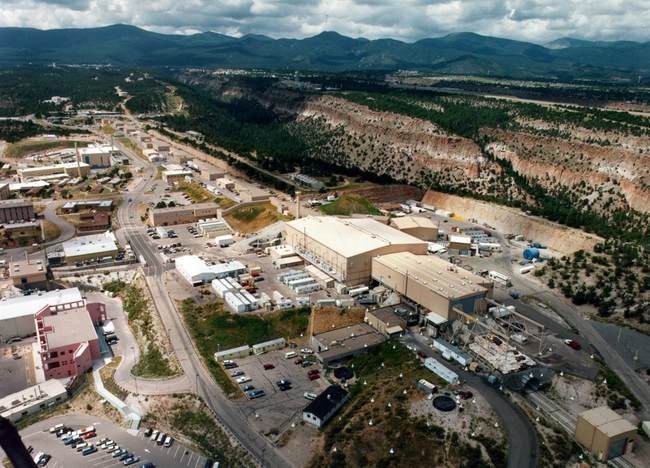
This article reports on the discovery of a body in the Carson National Forest identified as Melissa Casias, a Los Alamos National Laboratory employee, and examines how her death fits into a broader, politically charged inquiry into 11 missing or deceased scientists connected to sensitive national security work.
On Thursday, New Mexico State Police confirmed that a hiker discovered human remains in the McGaffey Ridge area of the Carson National Forest that were later identified as 54-year-old Melissa Casias. Authorities reported a handgun found beside the remains, and the Office of the Medical Investigator said it is conducting a further anthropological examination. The cause and manner of death have not yet been determined, and investigators continue to process the scene and evidence.
https://x.com/Xx17965797N/status/2061510750535864354
Casias worked at Los Alamos National Laboratory and is part of a troubling cluster of cases involving scientists, researchers, and officials tied to U.S. nuclear or rocket technology who have gone missing or died under unclear circumstances. Her disappearance followed a June 25, 2025 report that she failed to show up for work and did not return home, after which family members located her purse, identification, and phones left behind. That pattern of vanished personal items and unexplained departures is now one of the core facts investigators and lawmakers are trying to piece together.
The string of cases has attracted attention from federal authorities and Capitol Hill. The FBI is involved in parts of the inquiry, and the House Oversight Committee has prioritized the matter as a potential national security threat. Members of Congress have raised concerns that a series of unexplained disappearances and deaths of people linked to sensitive programs could represent more than coincidence, prompting formal letters and requests for briefings from the agencies responsible for safeguarding classified information.
Among those connected to the cluster are colleagues and others working at high-level science and engineering institutions. Anthony Chavez, another LANL employee, is among the missing; separately, one person is dead and another remains missing from the NASA Jet Propulsion Laboratory. The roster of cases also references an MIT scientist working on nuclear fusion, a pharmaceutical researcher, and a government contractor at a nuclear weapons component facility. To date, none of the deaths or disappearances have been definitively linked to one another.
A few common threads have emerged across these cases: people have left homes on foot without wallets and phones, and some have been carrying weapons when they went missing. Those parallels have fed public speculation and a range of conspiracy theories, which in turn have amplified calls from elected officials for clearer answers. While social chatter tries to tie every odd detail together, the investigatory focus remains on factual forensic work and chain-of-custody questions that could explain each case on its own merits.
Political leaders are treating the situation as more than a string of isolated tragedies. The House Oversight Committee said it was investigating “recent unconfirmed public reporting” about people tied to U.S. nuclear secrets or rocket technology who have disappeared or died in recent years. That inquiry reflects growing concern on the Hill that these incidents touch directly on national security and the protection of classified programs and facilities.
When the chair of the committee spoke publicly about the matter, he framed it as a serious and targeted threat. “It’s very unlikely that this is a coincidence. Congress is very concerned about this. Our committee is making this one of our priorities now because we view this as a national security threat.”
Investigators are continuing interviews, examining travel and workplace records, and running forensic tests that could take weeks or months to conclude. The presence of a handgun near Casias’s body adds a layer of complexity for examiners attempting to determine whether the weapon is linked to self-harm, an altercation, or other circumstances. Officials have emphasized that all avenues remain open as they gather toxicology, ballistic, and scene evidence.
Family members and colleagues want answers and transparency, and lawmakers are pushing federal agencies for timely briefings and documents. The political stakes are high because these are not just personal tragedies; they involve people who worked on or around programs that America relies on for defense and global technological leadership. That reality is why congressional oversight and federal investigative resources are now focused on resolving what happened and ensuring any vulnerabilities are identified and fixed.
The investigation into how Melissa Casias died and who the gun found near her belongs to is ongoing. Authorities continue to process evidence, interview witnesses, and coordinate with federal partners as the probe moves forward and more information becomes available to the public.
Add comment