
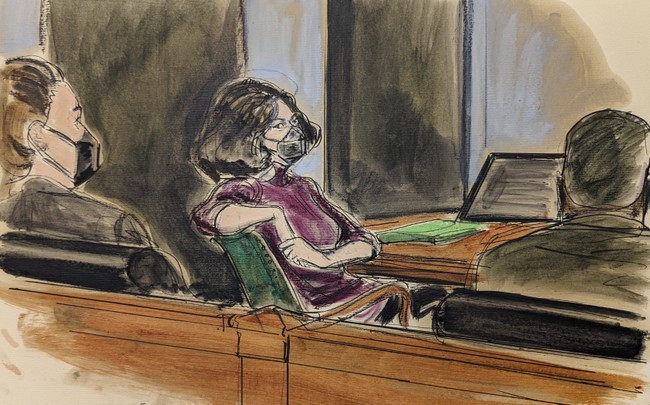
The House Oversight Committee announced that Ghislaine Maxwell will sit for a virtual deposition on February 9, a development tied to the panel’s wider Epstein inquiry and the committee’s recent contempt push against Bill and Hillary Clinton. Maxwell’s history of invoking the Fifth Amendment, her conviction and 20-year sentence, and her lawyers’ warnings that a deposition would be mere theater make this a high-stakes, politically charged moment. Committee Chair James Comer has signaled the deposition will proceed virtually despite Maxwell’s previous refusals to cooperate and legal requests to delay. Republicans on the committee see this as an opportunity to press for answers about Epstein’s network and anyone who might be implicated, including powerful political figures.
Chair James Comer announced the deposition publicly, placing Maxwell back in the spotlight for the House’s investigation into Jeffrey Epstein’s trafficking operation. The committee is pursuing testimony after several people subpoenaed in connection with Epstein either missed scheduled appearances or refused to comply. Comer’s move follows a markup of contempt measures related to Bill and Hillary Clinton, which has amplified Republican urgency to pursue leads tied to Epstein’s activities.
Ghislaine Maxwell, the longtime co-conspirator of Jeffrey Epstein, will sit for a deposition before the House Oversight and Government Reform Committee on Feb. 9, Chair James Comer said Wednesday.
Maxwell is currently serving a 20-year sentence at a federal facility in Texas for her role in Epstein’s trafficking scheme, and her legal posture has been to invoke the Fifth Amendment when asked to testify. That posture raises immediate questions about what, if anything, she will say to congressional investigators. Her counsel has already asked for a delay until her own legal issues are settled, arguing the committee’s effort would yield nothing and waste taxpayer resources.
The announcement came during a markup of contempt measures for Bill and Hillary Clinton, who refused to comply with subpoenas to sit for scheduled depositions last week as part of the panel’s Epstein probe.
Comer, a Kentucky Republican, had previously said he did not intend to send his staff to interview Maxwell, who is now serving a 20-year sentence at a prison camp in Texas for her part in Epstein’s trafficking scheme. Maxwell’s legal team had indicated she would plead her Fifth Amendment rights in declining to cooperate with lawmakers’ questioning.
The deposition is expected to be virtual.
Republicans on the Oversight Committee view Maxwell as someone who knows intimate details about Epstein’s operations and the visitors tied to Epstein’s properties, including the island that has become emblematic of the scandal. For conservatives who have long suspected elite figures were involved, Maxwell’s testimony offers a rare chance to force answers in a public, recorded forum. The virtual format reduces logistical hurdles but also raises questions about how effective a deposition will be if Maxwell opts to assert constitutional protections.
Maxwell’s attorneys made their concerns clear in a letter to Comer dated January 20, arguing the circumstances are not ripe for congressional questioning and warning against a proceeding that could be political theater. The defense framed a deposition now as premature and unproductive until Maxwell’s own criminal appeals and legal processes are concluded. That position sets up a clash: the committee’s push for testimony versus the defense’s bid to protect its client from additional legal jeopardy.
In a letter to Comer dated Jan. 20, however, Maxwell’s attorneys maintained that her posture had not changed regarding her Fifth Amendment rights. The lawyers also requested that the deposition be delayed until Maxwell’s legal proceedings had resolved.
“Put plainly, proceeding under these circumstances would serve no other purpose than pure political theater and a complete waste of taxpayer monies,” the attorneys wrote. “The Committee would obtain no testimony, no answers, and no new facts.”
Meanwhile, the committee’s recent efforts to subpoena the Clintons and their subsequent refusals have sharpened partisan tensions around the Epstein probe. Reporting from other outlets noted missed appearances and rescheduled dates for Bill and Hillary Clinton, fueling speculation about whether Maxwell’s deposition could yield anything that touches the former president or first lady. Republicans argue that every stone should be turned over to get to the truth and to hold powerful people accountable if wrongdoing is revealed.
If you know Bill and Hillary Clinton, you probably could have guessed that they weren’t going to comply with subpoenas to testify in the Jeffrey Epstein case before the House Oversight Committee.
They’d already missed previous dates, and now, Bill Clinton just missed the rescheduled appearance slated for Jan. 13. Hillary Clinton was scheduled for Jan. 14.
There is no guarantee Maxwell will provide names or new facts, but her proximity to Epstein’s operations makes her a potentially valuable witness. Republicans expect the deposition to be carefully handled to preserve committee leverage while avoiding procedures that undermine Maxwell’s legal rights. If Maxwell does speak, even limited testimony could prompt new lines of inquiry or additional subpoenas to follow up.
The coming deposition is a test for the House Oversight Committee’s strategy and for Republican claims that they will push hard on alleged abuses by elites tied to Epstein. Lawmakers will watch closely to see whether Maxwell’s lawyers follow through on their warnings or whether the deposition produces information that moves the investigation forward. For now, the date is set, the format is virtual, and the political stakes could not be higher.



Add comment