
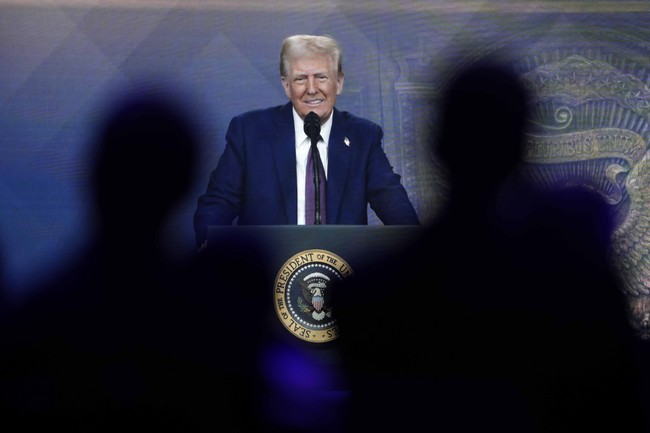
This piece covers President Donald Trump’s 2026 World Economic Forum remarks on housing, his proposal to ban large institutional investors from buying single-family homes, and the steps he announced to lower mortgage costs and restore home ownership as central to the American Dream.
Davos 2026: Trump Calls Out Wall Street on the American Dream
President Trump used his Davos appearance to challenge elites who have reshaped housing markets and to push policies aimed at returning home ownership to ordinary Americans. He framed the issue as a clash between everyday families and large institutional buyers who have turned single-family homes into financial products. The speech revisited the idea that owning a home is more than an asset; it is a foundation for community and personal stake in society.
Trump argued that the rise of mega-investors buying single-family homes has made it harder for normal Americans to break into the market. He said these firms have bought hundreds of thousands of houses, sometimes accounting for a significant share of local listings, which pushes prices up and locks people out. He pointed to tax rules that allow corporations to take depreciation on these properties while individual homeowners cannot, presenting that as an unfair advantage.
Home ownership has always been a symbol of health and vigor of American society. But that goal fell out of reach for millions and millions of people in the Biden era because interest rates went up so high. Today, I’m taking action to bring back this bedrock of the American Dream. In recent years, Wall Street giants and institutional investment firms, many of you are here, many of you are good friends of mine, many of you are supporters, sorry to do this to you Joe, I’m so sorry. But you’ve driven up housing prices by purchasing hundreds of thousands of single-family homes, and it’s been a great investment for them. Often as much as 10 percent of houses on the market.
He painted the situation as less about market cycles and more about concentrated power shifting housing from homes to holdings. The average family, he said, experiences the squeeze in clear, practical ways: rent rises, mortgage access tightens, and the idea of owning a piece of the community drifts away. That loss, in his telling, undermines social stability and opportunity.
Trump emphasized policy actions already taken and additional steps he wants Congress to endorse. Chief among them is an executive order banning large institutional investors from buying single-family homes, a move he asked lawmakers to make permanent. He also announced instructions to government-backed institutions to buy mortgage bonds—up to $200 billion—to help lower interest rates and ease borrowing costs for buyers across income levels.
You know, the crazy thing is a person can’t get depreciation on a house, but when a corporation buys it they get depreciation. Okay, there’s something we’re going to have to think about too. I don’t know if too many people think about that. You buy a corporation, they buy 500 houses — they buy hundreds of thousands — they buy 500 houses, they can take depreciation. A person sweats, and works, and buys one house, they can’t.
The depreciation point was a focal line in his remarks, and it drove home the contrast between corporate investors and individuals who buy single homes with years of hard work. Trump used blunt language to spotlight tax and regulatory features that benefit large entities and suggested those features deserve rethinking. He pushed the narrative that homes should be for people and families first, not corporations seeking steady returns.
But homes are built for people, not corporations, and America will not become a nation of renters. We’re not going to do that. That’s why I have signed an executive order banning large institutional investors from buying single-family homes. It’s just not fair to the public. They’re not able to buy a house. And I’m calling on Congress to pass that ban into permanent law, and I think they will.
Beyond the ban, the mortgage-bond purchases are the administration’s tool to nudge rates lower and expand access to credit. Lower rates can make monthly payments more manageable and open the door for buyers who might otherwise be sidelined. Taken together, the executive action and market intervention aim to shift momentum back toward home buyers instead of passive investors.
Trump also framed his stance in contrast to global elites and past policy trends, arguing that America should prioritize ownership and local roots. He positioned the moves as restoring fairness and protecting families who try to build wealth through housing. The speech at Davos was blunt, direct, and designed to spotlight housing as a central domestic battleground for his administration.
Two weeks before Davos, Trump signaled the topic on Truth Social and previewed his commitment to restricting institutional purchases of homes as part of broader housing and affordability proposals.


Add comment