
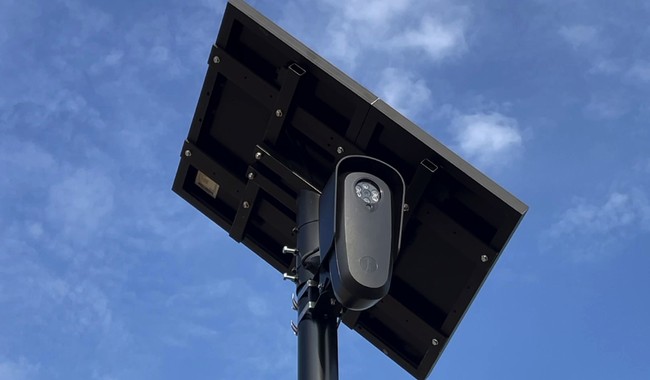
The spread of Flock Safety cameras has turned routine streets into powerful data streams, and this article walks through what these systems do, how their vehicle “fingerprints” are built, real-world misuse by people with database access, and what that means for everyday privacy and public trust.
Flock Safety cameras are cropping up on suburban streets, in parking lots, and near storefronts, promising law enforcement and communities a faster way to find stolen cars and solve crimes. The company sells a system that captures images and pulls together a profile of passing vehicles, claiming to aid investigations where other leads are thin. On paper it looks like progress, but the technology’s capabilities raise serious questions about how that data is used and who gets to see it.
Flock Safety builds a “vehicle fingerprint” that captures things like your car’s make, model, and color, and also unique car features such as dents, roof racks, and even bumper stickers; it also stores information like your car’s location, date, and time. All of this information then becomes searchable data points for police … and others.
The folks at Flock Safety say they store your information for 30 days, then it is “automatically and permanently” deleted. However, its “customers” – police departments, cities, businesses, and even HOAs (!!) – are able to request the data be held for longer if state and local laws allow it.
The core technical pitch is that these cameras create a detailed, searchable record for vehicles, not just license plates. That means images, timestamps, GPS location, and distinguishing marks get tied together into an entry that investigators can query. Companies and municipalities tout shorter investigative times and better recovery rates for stolen property, but that benefit comes with a trade-off in constant tracking potential.
Privacy advocates have flagged the centralized nature of the data and how long records can persist under certain legal regimes. Even if deletion policies exist, many agencies or private customers have channels to request extended retention when the law permits. Once a network of cameras is in place, it becomes technically straightforward to reconstruct an individual’s movement over days, weeks, or months.
The human cost shows why that capability matters. In Jefferson, Georgia, Marci Bakely noticed an ex who seemed to know when she went to routine places like the grocery store or the dentist. He messaged her about outings sometimes within minutes, despite working 15 miles away as a police chief in a nearby town. That pattern of surveillance crossed into stalking and harassment.
Bakely later learned that her ex was exploiting his access to Flock data through his job. He admitted searching for her and her teenage daughter repeatedly, hundreds of times, according to reporting on the case. The officer faced criminal charges tied to stalking, harassment, and misuse of license-plate-reader systems, illustrating how access without oversight can be weaponized against private citizens.
Incidents like this are not isolated. Analyses have reported dozens of law enforcement officers accused of tapping these systems for personal reasons, with at least 50 named in one review as having accessed camera data for harassment. Those allegations highlight a governance gap: the same tools that help solve crimes can be abused when internal controls and accountability are weak.
Local rollouts also amplify community unease. Residents who never noticed the hardware start spotting cameras in parking lots and along familiar routes, and that simple awareness can change behavior. People begin tracking who has access and worrying about whether their daily errands are being logged and stored in searchable databases accessible to others.
Policy responses have lagged behind the tech. Municipal contracts and vendor terms vary widely, and state laws offer uneven protections for data retention, audit logs, and penalties for misuse. That patchwork leaves citizens dependent on individual agencies to police themselves, which history shows is not always effective.
Given the mix of utility and risk, communities face a clear choice about how to deploy these systems and what guardrails to demand. That includes strict limits on retention, auditable access logs, criminal penalties for unauthorized queries, and transparent public oversight. Absent those protections, the balance of power leans toward surveillance, not privacy.
As cameras stack up across towns and private properties, the question becomes less about whether the tech can help law enforcement and more about who will hold the line when it is used against the very people it was meant to protect.
https://x.com/TeriChristoph/status/2081497556635279663



This is equivalent to an Enemy Within and if it continues we won’t be any better off then Communist China with millions of their cameras watching every move the citizens make!
Kiss your Privacy and Freedom of movement Goodbye!
Well on the way to a Totalitarian Surveillance State!