
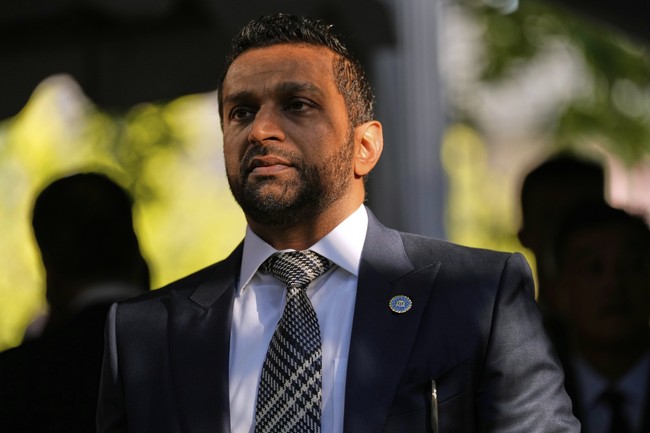
The FBI announced a major arrest over the weekend: an individual on the agency’s Top Ten Most Wanted list has been captured in Mexico in connection with a 2016 murder of a former co-worker, and authorities say others have been implicated as well. The development was confirmed by FBI Director Kash Patel and has sparked renewed conversation about cross-border law enforcement and the importance of accountability for violent crime. This article summarizes the capture, the people tied to the case, and the broader law-and-order context surrounding the arrest.
FBI Director Kash Patel publicly confirmed that one of the bureau’s Top Ten Most Wanted fugitives was taken into custody in Mexico after years on the run for the alleged killing of a former co-worker in 2016. The arrest marks the end of a lengthy hunt for a suspect who had evaded capture for nearly a decade. Such arrests underscore the reach of U.S. law enforcement when agents and partners prioritize a case and coordinate internationally.
Two other people are implicated in the case:
Ahmia Feaster, who was initially listed as missing, turned herself in to authorities in 2017 and was extradited from Mexico to North Carolina, WTXF-TV reported at the time. The outlet said Feaster faced several charges, including accessory charges related to the murder.
A third person, Felipe Ulloa, was charged with accessory after the fact of murder in March 2017 in connection with the murder of Le, WTXF-TV reported.
Those developments from 2017 set a precedent: when suspects cross international borders, extradition and cooperation between nations become essential tools for justice. Law enforcement agencies frequently rely on diplomatic channels, international legal agreements, and on-the-ground coordination with foreign authorities to make arrests beyond U.S. borders. The successful capture in Mexico shows those mechanisms can work when pursued with persistence.
The family of the victim and the community affected by this violence have waited years for answers, and this arrest will reopen old wounds while offering a path toward legal resolution. A formal extradition or transfer process is likely to follow, and prosecutors will move to build the case for trial back in the United States. For many victims’ families, seeing a suspect in custody is a critical step toward closure, even though the legal process that follows can be lengthy.
Public reaction highlights two equal parts of the equation: relief that a fugitive was found and frustration at how long violent offenders can slip through enforcement gaps. Critics say that if the suspect had been detained earlier, the victim’s life might have been spared. Supporters of coordinated law enforcement praise the final capture and point to the investment in resources that the FBI can bring to the most serious cases.
This case also brings attention to law-enforcement priorities and the reality that some violent criminals exploit borders and bureaucratic delays. When an alleged offender flees internationally, the clock starts on complex legal maneuvers and diplomatic negotiations. Those hurdles can slow justice, which is why sustained focus and interagency collaboration are so important for closing long-running investigations.
There’s a clear message here about deterrence: accountability matters. Nations and law-enforcement agencies that follow through on arrest warrants and extraditions send a signal to would-be criminals that evasion will not guarantee safety. The public debate will likely continue over how best to allocate resources to prevent and solve violent crime, especially in areas where communities feel under threat.
For prosecutors, this arrest will prompt a careful review of evidence and witness testimony assembled over the years. Defense teams, meanwhile, will scrutinize the arrest and the methods used to find and detain the suspect. The court process that lies ahead will test the strength of the case and the ability of the justice system to deliver a fair outcome based on the available evidence.
Communities affected by violent crime deserve results, and this capture represents a concrete step toward that end. Law enforcement agencies can point to this arrest as the product of persistent investigation and international cooperation. At the same time, the case renews conversations about preventing violent crime in the first place and ensuring that timely action can save lives.
Editor’s Note: President Donald Trump is returning America to the American people by locking up violent criminals and restoring order.
We’ve covered the failure of Democratic law-enforcement policies for years. Support us today in our coverage of the comeback. Join RedState VIP and use promo code FIGHT to receive 60% off your membership.

Add comment