
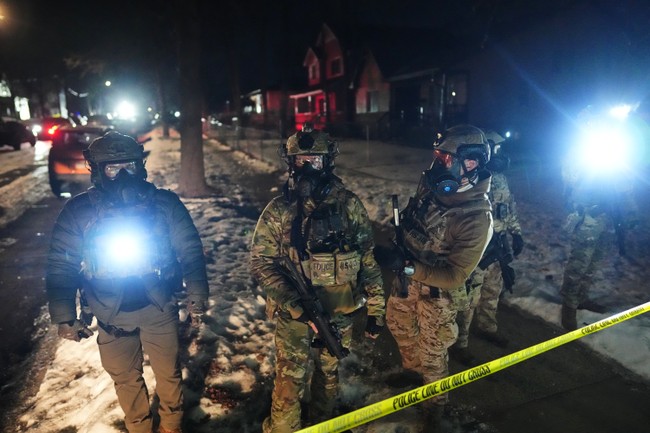
Border Patrol Chief Gregory Bovino has laid out a blunt message from the field about operations in Minneapolis, saying agents will stay until their mission is complete, and describing the unrest around ICE activity as violent and damaging to everyday citizens; this article summarizes his remarks, recent legal limits on ICE tactics, and the local political dynamics fueling protests.
Minneapolis has become a flashpoint where enforcement of immigration laws collides with protests and political posturing. On the ground, what some call demonstrations others call outright rioting, and that difference matters for how law enforcement can respond. Federal agents deployed to the Twin Cities are operating amid that uncertainty and public pressure.
A recent federal judge ruling has limited certain crowd-control tools and arrested actions against demonstrators deemed to be exercising First Amendment rights. That restriction has real effects on ICE and related operations, at least according to those working in the field. Agents argue those tools have been vital for maintaining safety during confrontations.
“They are now prohibited from using crowd-controlling tools like pepper spray — which, if you’ve watched any of the videos coming out of the Twin Cities, you know has been a crucial method for keeping angry activists back — and are prohibited from arresting any “peaceful” demonstrators who are supposedly exercising their First Amendment rights. (I don’t see how saying what you believe is akin to aiming your car at law enforcement, but maybe that’s just me.)”
Border Patrol commander Gregory Bovino has been active in operations across the country and has recently been focused on Minnesota. In his interview with NewsNation, he made clear that agents are committed to the work of arresting and removing criminal noncitizens who entered the country unlawfully. Bovino framed the mission as steady and necessary even as politics swirl around it.
Bovino also noted that decisions about invoking emergency authorities like the Insurrection Act are matters for the president and the secretary of homeland security. He emphasized he does not want to “get ahead” of such choices while saying that leadership is receiving the direct intelligence and reporting they need. That kind of caution is routine, but it underscores the tension between on-the-ground facts and political decisions.
He described a troubling trend where militants or agitators target vehicles and lodging used by agents and by ordinary people suspected of being connected to enforcement efforts. “I’m calling them anarchists now, these anarchists, these rioters, these bad people that wish to harm law enforcement, are now harming American citizens.” Those attacks on private property and innocent bystanders, Bovino says, are part of a wider pattern of escalating behavior.
That pattern has led to concern about public safety beyond the immediate immigration mission. Vandalized cars in hotel parking lots and harassment of civilians show the spillover effects of violent protest tactics, and those consequences are visible to residents and travelers alike. Officials in the area are tracking these incidents as part of both criminal and operational assessments.
Political leaders in Minneapolis and Minnesota have been accused by federal commanders of stirring rhetoric that fuels hostility toward ICE and CBP personnel. Bovino singled out local officials for contributing to an environment that emboldens hostile demonstrators, and federal investigators opened a preliminary review into some of those actions. The dynamic between local political messaging and federal enforcement is a key feature of the conflict.
Despite legal constraints and political pressure, Bovino insisted the agents will remain until the mission objectives are met. He reiterated that the work is focused on arresting criminal aliens who pose a danger to communities, and that completion of that task will determine the timeline for departures. For him and many in the field, operational success and the safety of the public and officers drive decisions, not optics or transient political wins.
There is a broader lesson in the Minneapolis situation about how civil unrest, legal rulings, and political rhetoric interact to shape enforcement operations. When protests cross into property destruction and targeted attacks on perceived law enforcement supporters, that blurs the line between protected speech and criminal activity. The federal presence, in their view, is aimed at restoring order and enforcing laws that local systems are struggling or unwilling to execute.
Communities watching this play out should understand both the legal limits now placed on certain responses and the practical realities agents face day to day. Bovino’s remarks make it plain that federal personnel judge their mission by outcomes and threats to safety, and that they will not abandon operations simply because activists or politicians demand it. The calculus for departure is rooted in mission completion and public safety metrics.
Add comment