
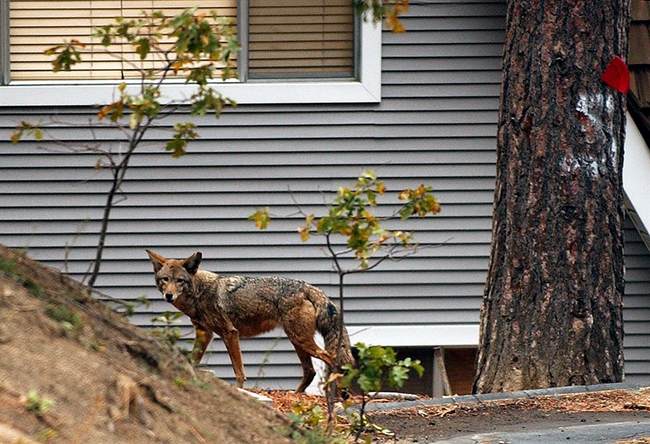
This article looks at a surprising urban wildlife story: a pack of coyotes has moved into an unfinished housing site in West Hollywood, changing local routines, worrying some pet owners, and drawing crowds. I’ll describe how coyotes adapt to cities, relay residents’ concerns in their own words, note how people are reacting, and point out what this episode reveals about wildlife and expanding human neighborhoods.
Coyotes are famously adaptable animals that thrive in many environments, including dense urban areas. They eat a wide variety of foods, are intelligent and quick, and have a knack for exploiting new habitats and food sources. Their comfort around human spaces makes them especially visible in cities where development overlaps historic wild ranges.
The recent West Hollywood situation involved a vacant construction parcel that the local pack began using as a den and nightly gathering spot. Neighbors reported howls echoing through the development at night, and some dog owners worried about safety when they walk their pets. The presence of the group also attracted onlookers and reporters, and the animals altered their behavior as attention increased.
In a region where the demand for housing outpaces its supply, a pack of coyotes have made a vacant construction site their home.
For months, residents in the dense West Hollywood neighborhood say they have complained about the coyotes. At night, the coyote howls echo through the development keeping residents awake. During the day, some dog owners say they worry about the safety of their furry companions.
Over the past week, the block has been flooded with onlookers and reporters and even a helicopter trying to capture an image of the coyotes from above. With all the attention, the pack has not been coming out as early. The howls come later and later into the night.
:
https://x.com/desota/status/2082642026206495010
Coyote sightings are far from rare across Los Angeles, and most individuals avoid close contact with people. Still, when coyotes lose their fear of humans they can pose a real threat to small pets like cats and tiny dogs. The perception of risk is especially strong among owners of small breeds who fear an unexpected encounter during evening walks.
One neighbor captured the tension in simple terms when discussing the threat to his small dog. “The scary part is when we walk the dogs.” Jesus Zavala, a neighbor, said while walking his Chihuahua, Zoe. “They can just come out and grab dogs, especially the small ones.” After living near the pack for several months, Zavala said the animals became a routine part of life and he felt less anxious on night walks.
Urban coyotes can be bold, but they also adapt their timing and habits when faced with human activity. As more people gathered and media attention spiked, the pack shifted when and how it showed itself, making their night vocalizations later and less predictable. That reaction underscores how wildlife responds flexibly to pressure and disturbance.
Coyotes killing small pets is an unfortunate reality, and in some cases a coyote may view a toy-sized dog quite differently than a human would. Predatory behavior among canids follows ecological logic: where larger predators exist they can limit coyote numbers, while in cities without such checks coyotes can flourish. That balance helps explain why coyotes are comfortable moving into human-altered landscapes.
There are also human stories of people trying to deal with coyotes in more intimate ways, including cases where coyotes nested in or under private property and resisted eviction efforts. Those reports highlight how challenging it can be for individuals—especially vulnerable seniors—to navigate wildlife problems when official responses are slow or inconsistent. Frustration grows when residents feel they lack practical help to protect property and personal safety.
In West Hollywood the coyotes turned into a local spectacle as well as a concern, with people reportedly gathering to hear their howls and some signs warning residents not to feed the animals. The presence of crowds complicates the situation, because human attention can change animal behavior and increase potential conflicts. Listening to wild vocalizations can be interesting, but proximity raises genuine safety and nuisance questions.
As cities spread into historic wildlife ranges, encounters like this will likely continue and perhaps increase. Coyotes are adept at finding pockets of habitat within urban matrices, and as long as food and shelter are available they will keep showing up. Managing those interactions requires clear rules, consistent enforcement, and public awareness about not feeding wildlife and protecting small pets.



Add comment