
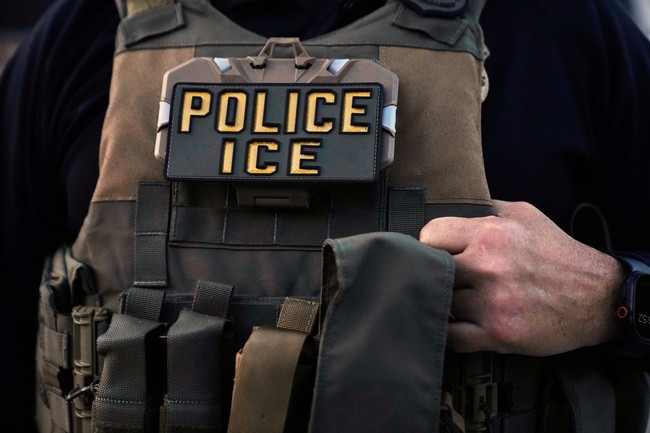
The U.S. Constitution just reminded New York’s governor that states can’t rewrite how federal agents do their jobs, and a federal judge has blocked elements of a state law that tried to limit face coverings for ICE and other federal officers.
Federal courts are not in the business of making policy, they interpret the Constitution, and in this case the Supremacy Clause settled the dispute. U.S. District Judge Mae D’Agostino found that provisions added to New York’s budget law conflicted with federal authority, echoing earlier rulings in other states. The decision doesn’t pretend to be a comment on immigration policy; it enforces the constitutional boundary that separates state and federal powers.
State officials framed the measures as actions to boost transparency and public safety, but the court saw a different problem: the law attempted to dictate tactics and equipment for federal agents operating under federal law. When Albany tries to tell ICE, Customs and Border Protection, or the FBI how to dress or identify themselves during operations, it runs headlong into federal supremacy. That legal conflict was decisive for the judge’s order, which paused the state’s attempt to manage federal enforcement within its borders.
https://x.com/wakeupnj/status/2084728285796135384
The federal government demonstrated a strong chance of prevailing on the claim that New York overstepped. Governor Kathy Hochul and the state attorney general signaled they were weighing their next moves, but constitutional limits are not a matter of preference. The underlying practical concerns for agents’ safety are real, and the decision recognizes that federal officials must be able to protect themselves where the law allows.
Federal law enforcement faces targeted threats from organized criminal networks that profit from smuggling and violence, including transnational cartels. Reports and testimony have described tiered bounties and doxxing campaigns aimed at exposing officers and their families. Those risks include online harassment, public outing of personal information, and physical retaliation against agents who enforce federal immigration laws.
Face coverings and similar protective measures are not about hiding from oversight, they’re about limiting the ability of violent actors to identify and retaliate against individual officers. When federal agents operate against groups linked to cartel violence or gang networks, covering faces can reduce the chances that an officer will be photographed, tracked, or targeted later. That operational reality underpins federal decisions to permit coverings during sensitive operations.
New York’s law blurred the line between local policing and federal enforcement by imposing identification rules meant for municipal officers onto federal agents. The Constitution draws a bright separation: immigration enforcement falls squarely within federal responsibility. States can voice disagreement with federal policy, lobby, or push for legislative change, but they cannot dictate the conduct of federal operations in ways that contradict national authority.
The judge’s ruling preserves that constitutional boundary while leaving intact other avenues for accountability. Federal officers are still required to identify themselves in many situations, and oversight mechanisms remain in place where the law requires it. The court’s decision was narrow: it prevented the state from imposing operational constraints on federal agents that would interfere with their duties, rather than endorsing every tactical choice made by those agencies.
Those targeted by enforcement often have documented ties to criminal networks, and many carry records showing involvement in smuggling, narcotics, or violent crime. Forcing agents to operate fully exposed in that environment raises the risk that personal information will be harvested and used against them or their families. Reasonable protective steps are rooted in the plain fact that enforcement can make officers targets of organized violence.
The ruling does not settle every dispute about state and local cooperation with federal immigration efforts, and separate legal battles over assistance and limits will continue. On the specific question of whether a state may impose identification and uniform rules on federal officers during operations, the Constitution provided the answer. Federal responsibility for immigration enforcement means states cannot unilaterally rewrite how federal duties are carried out within their borders.



Handcuff Hochul and lock her away!
Hochul needs to be removed immediately along with Mamdani two completely trying to destroy NYC. Nothing but stupid assholes destroying a great state and letting illegals take over our country. Every illegal needs to be deported and anyone obstructing deportations need to be arrested immediately. Save our state and country now.
Sue, “I couldn’t agree with you more” that is perfect, genuine and crystalline!
I say to Congress especially now while it’s not in control by the Demoncraps; Get you collective GOP ass in gear and do it!
I’m sick and tired of false promises and Kabuki Theater!!!
Appropriate estimates put the flood of Illegal Aliens that flooded into our United States during the Fraud/Insane Biden/Harris Auto-Pen Cabal at nearly 20 Million!!! What’s been deported so far only scratches the surface of that INVASION of mostly UNDESIRABLES and ENEMIES!!!
Remember all of this mayhem and destruction was planned so the Demoncraps and Criminals could seize and hold onto total control of our country!!!
All that Criminal Witch Fraud Politician Hochul does is serve the AGENDA!!!