
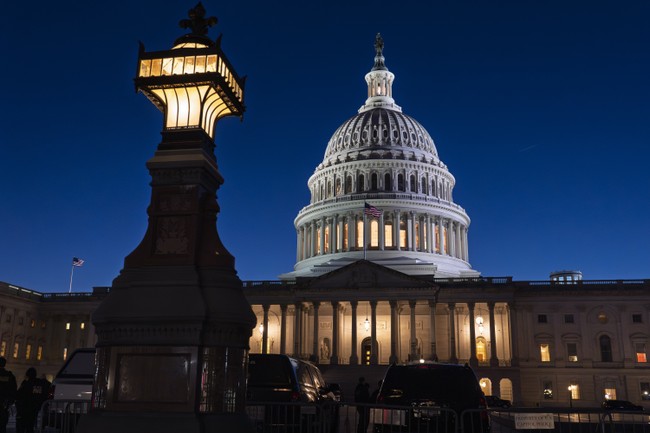
Democrats are pushing to raise the bar for censuring members of Congress after a wave of recent reprimands, and Republicans argue the best fix is for those members to stop doing things that deserve censure in the first place. This piece lays out the political maneuvering, examples of conduct that sparked censure efforts, and why changing the threshold now looks like a partisan move to protect allies instead of a serious reform. It also highlights quotes from key lawmakers and notes Speaker Mike Johnson’s openness to discussing higher standards while questioning the timing and motive behind the push.
Democratic lawmakers are openly complaining about the rising use of censure and want to make it harder to discipline members for misconduct. They frame the uptick as political gamesmanship and are proposing raising the vote requirement from a simple majority to something like 60 percent or even two-thirds. “I am in camp ‘shut this s*** down,'” Democrat Rep. Jim Himes (CT-4) said, arguing that frequent censures would become a routine and corrosive practice.
Rep. Don Beyer (VA-8) has been pushing legislation to increase the threshold and says he’s circulating language to move censure to a 60% requirement. “we’re just using it as a partisan tool, which I hate,” he told reporters, and some Democrats want the bar even higher. Those proposals come at a time when several members on both sides face credible allegations that have prompted calls for formal rebukes.
Recent weeks have seen a flurry of censure threats rooted in serious accusations, not just partisan theater. Del. Stacey Plaskett faced a censure effort tied to texting with a convicted sex offender during a hearing and steering questions in his favor, while Rep. Cory Mills is the subject of multiple allegations that led to a referral to the House Ethics Committee. Rep. Sheila Cherfilus-McCormick was indicted over alleged theft of FEMA funds, prompting yet another censure threat.
A frustrated House Speaker has signaled he is “open” to discussing a higher standard for censures, warning that the measure “should be an extreme measure for extreme cases.” Johnson’s remark reflects a desire to avoid making reprimands a commonplace political weapon, but Republicans question why Democrats only want stricter rules when their members are under scrutiny. Changing the rules in the middle of a wave of investigations reads less like principled reform and more like partisan self-preservation.
Republicans point to earlier censures of Democrats as proof that reprimands can be appropriate and necessary. Some examples include public rebukes for actions ranging from leaking sensitive information to shouting down a president during a joint address and pulling a fire alarm to halt official business. Most of those instances prompted bipartisan condemnation at the time and showed censure can be used to enforce basic norms of behavior.
The timing of the Democrats’ campaign to raise the bar raises obvious questions. If the goal is to limit frivolous or partisan censure, why not pursue that reform before allegations land against high-profile members of your own party? Political observers note that under a higher threshold, party-line votes would likely shield members from accountability, since the minority would be unable to muster the extra votes needed to pass a censure.
Beyond the procedural debate, the practical answer from a Republican perspective is simple: stop doing things that merit censure. Reprimand should be reserved for conduct that truly undermines the institution or breaks the law, not for petty disputes or theatrical stunts. If members want to reduce the frequency of censures, curbing the behavior that triggers them is a more honest and effective route than rewriting the rulebook to shield allies.
The push to limit censure risks sending the message that rank political loyalty outweighs accountability when serious allegations arise. Voters expect Congress to police itself when members cross legal or ethical lines, and raising the bar now would be seen as insulating powerful incumbents. Lawmakers who favor tighter rules should either accept that consequence or join in cleaning up conduct so the tool becomes less necessary in practice.
At its core, the fight over censure standards is about whether Congress enforces basic norms or protects members facing credible charges through procedural changes. The current debate has opened a larger question about the balance between preventing weaponization of reprimands and preserving a mechanism to hold lawmakers responsible. Until members stop engaging in conduct that invites rebuke, calls to make censure harder to obtain will look like a defensive reflex rather than a reform grounded in principle.



l Get paid over $110 per hour working from home. l never thought I’d be able to do it but my buddy makes over $22150 a month doing this and she convinced me to try. The possibility with this is endless….
Copy This ____________ EarnApp1.Com