
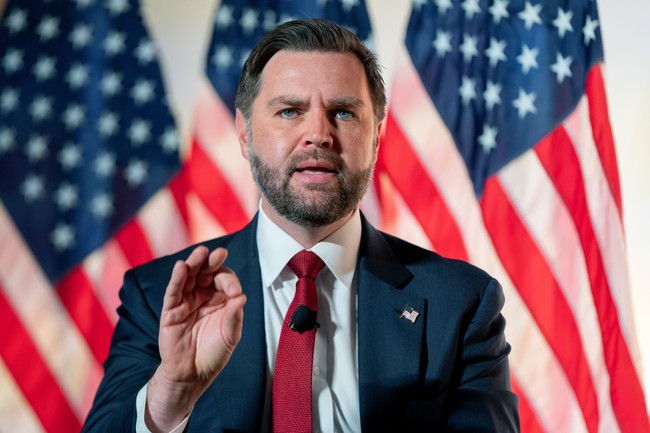
The vice president traveled to Hungary and spoke plainly about Iran as high-stakes, in-person negotiations loom this weekend; he warned that the United States has “tools in our toolkit” it has not yet used and reiterated that preventing Iran from obtaining nuclear capabilities is non-negotiable, while dismissing Tehran’s portrayal of a so-called 10-point proposal as a serious starting point for talks. Vance also criticized media outlets for treating Iranian claims as authoritative and noted signs that shipping in the Strait is beginning to reopen amid contradictory Iranian statements. With in-person talks set for Pakistan, the U.S. delegation will press for a ceasefire framework that excludes nuclear enrichment and rejects any deal that treats Lebanon as a carte blanche bargaining chip.
Vice President JD Vance gave a concise update before boarding Air Force Two, framing the U.S. position ahead of face-to-face negotiations this weekend. He said the clock is moving and that the United States is prepared to act if Iran does not change its behavior, stressing that deterrence includes options the administration has not yet chosen to deploy.
Vance traveled to Hungary for talks and was blunt about messaging from Tehran that tried to spin progress where none exists. He called out the narrative that Iran’s 10-point list reflects a legitimate bargaining position and pushed back against outlets amplifying those claims as if they were serious diplomatic milestones.
…“They’ve got to know we’ve got tools in our toolkit that we so far haven’t decided to use. The president of the United States can decide to use them, and he will decide to use them if the Iranians don’t change their course of conduct,” he adds.
The vice president said Iran seems to have an “honest misunderstanding” about whether Lebanon is part of any ceasefire framework, implying that Tehran’s assertions misread what negotiators are willing to accept. That distinction matters because it undercuts attempts to frame the conflict as a simple package deal that would legitimize proxy actions across the region.
Vance made clear that Washington is not treating the Iranian 10-point document as a valid opening offer, nor as a substitute for real commitments verified by actions on the ground. He warned that treating Tehran’s public statements as binding or authoritative would jeopardize any real path to a durable ceasefire and leave open the risk of escalation.
The vice president also criticized legacy media that have relayed Iranian talking points without sufficient skepticism, saying those reports give Tehran room to claim diplomatic victories it did not earn. From a Republican perspective, that kind of loose reporting undermines U.S. leverage and confuses the public about what is actually on the table.
Responding to immediate operational concerns, Vance reported that the Strait is “starting to reopen” in some areas, a sign that pressure and diplomatic activity may be easing specific choke points even as broader disagreements remain. He underscored the administration’s top demand: no nuclear weapons and no enrichment capabilities, a red line the United States will not compromise on.
Hours before Vance spoke, Iran claimed it had closed the Strait of Hormuz and asserted that the U.S. had accepted parts of its 10-point outline. U.S. spokespeople quickly disputed those claims, and Vance’s comments reinforced that Tehran’s public pronouncements do not substitute for verified agreements. Republicans will point to those false narratives as evidence that Iran seeks influence through information operations as well as military moves.
Reports surfaced that Iran may have already violated the terms of a proposed ceasefire by engaging in hostile actions against Israel and neighboring Gulf states, which, if confirmed, would further strain any fragile diplomatic footing. Vance’s warnings that the U.S. possesses unused options serve as a reminder that consequences remain a realistic prospect if Tehran continues to provoke.
Fox News reported that Vance will lead the U.S. delegation for in-person talks in Pakistan this Saturday, accompanied by senior envoys and advisers. The delegation’s objective is to press for a concrete, verifiable ceasefire that eliminates Iran’s enrichment capabilities and prevents the normalization of its proxy activities in Lebanon and elsewhere.
As negotiations approach, the administration—backed by clear messaging from senior officials—intends to keep pressure on Tehran and correct misleading narratives wherever they appear. The Republican stance emphasized by Vance is straightforward: diplomacy backed by credible consequences, and zero tolerance for any path that leaves Iran closer to a nuclear weapon or freer to sponsor regional destabilization.


Add comment