
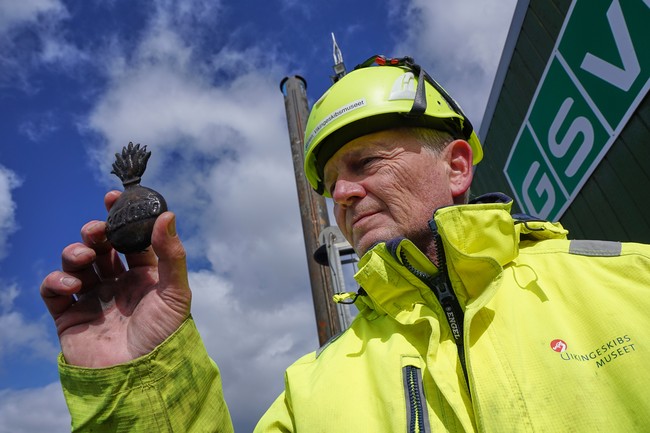
The wreck of the Danish man-of-war Dannebroge has been located in Copenhagen Harbor nearly 225 years after it sank in the Battle of Copenhagen in 1801, and marine archaeologists working in deep, silty water have uncovered cannon, ship fittings, and human remains that bring a brutal naval clash from the age of sail back into clear view.
Discovering a ship like the Dannebroge is a rare glimpse into a specific moment in naval history when wooden hulls and cannon fire decided the outcome of battles. The find is both an archaeological treasure and a solemn maritime grave, making careful excavation urgent as modern development encroaches on the site. Diving conditions are challenging: low visibility and thick sediment test the limits of underwater excavation teams.
The Dannebroge was the Danish flagship during the Battle of Copenhagen in 1801, a fight in which the British fleet, led by Horatio Nelson, attacked to command control of northern waters. The wreck was the primary target during the engagement, and contemporary accounts identify the vessel as central to the fierce fighting that followed. When incendiary shells ignited a fire aboard, the situation on deck became catastrophic for crew and ship alike.
More than 200 years after being sunk by Adm. Horatio Nelson and the British fleet, a Danish warship has been discovered on the seabed of Copenhagen Harbor by marine archaeologists.
Working in thick sediment and almost zero visibility 15 meters (49 feet) beneath the waves, divers are in a race against time to unearth the 19th-century wreck of the Dannebroge before it becomes a construction site in a new housing district being built off the Danish coast.
Denmark’s Viking Ship Museum, which is leading the monthslong underwater excavations, announced its findings on Thursday, 225 years to the day since the Battle of Copenhagen in 1801.
Recovered artifacts include heavy cannon, fragments of the ship’s structure, and even the jawbone of an unrecovered crew member, items that paint a vivid picture of life and death at sea in the early 19th century. Cannon shot and splintered timbers were deadly in close quarters; contemporary survivors described wooden shards tearing through crew the way shrapnel does in modern conflicts. Those physical traces give archaeologists material evidence to match against historical records and eyewitness testimony.
Historians place the Dannebroge at the center of the British attack, and that makes the wreck especially significant for understanding Nelson’s tactics and the broader geopolitical aims of the era. The British assault sought to break an alliance of northern powers and to dominate shipping lanes that were vital for trade and naval movement. The battle left thousands killed or wounded and altered the balance of power in the region, consequences that echo through diplomatic histories of the time.
In the Battle of Copenhagen, Nelson and the British fleet attacked and defeated Denmark’s navy as it formed a protective blockade outside the harbor.
Thousands were killed and wounded during the brutal hourslong naval clash, considered one of Nelson’s “great battles.” The intention was to force Denmark out of an alliance of Northern European powers, including Russia, Prussia and Sweden.
At the center of the fighting was the Danish flagship, the Dannebroge, commanded by Commodore Olfert Fischer.
The 48-meter (157-foot) Dannebroge was Nelson’s main target. Cannon fire tore through its upper deck before incendiary shells sparked a fire aboard.
“(It was) a nightmare to be on board one of these ships,” Johansen said. “When a cannonball hits a ship, it’s not the cannonball that does the most damage to the crew, it’s wooden splinters flying everywhere, very much like grenade debris.”
Excavation teams treat the site with archaeological rigor and respectful caution because parts of the wreck are also a burial site for sailors who went down with their ship. That legal and ethical dimension influences how artifacts are handled and how human remains are treated and recorded. Authorities and museum specialists aim to balance scientific study with the dignity owed to those who died in combat.
Beyond the human cost, the Dannebroge offers a technical snapshot of shipbuilding and armament from 1801, from timber joins to the layout of gun decks and the types of cannon used. Each recovered object helps reconstruct how the ship looked and functioned, and how crew lived and fought aboard such a vessel. That material record complements contemporary written reports and naval logs, giving a fuller, three-dimensional view of history.
The timing of the announcement—coming exactly 225 years after the battle—adds symbolic weight to the discovery and underscores how long historical wounds can remain under the sea. Modern construction and coastal projects threaten to disturb the wreck site, which explains the race to document and preserve what remains before irreversible changes occur. The Dannebroge now sits at the intersection of memory, science, and modern development pressures.
Finds like this remind us how archaeology can reopen conversations about past conflicts and the people who lived through them, and they show how material culture anchors large historical narratives in tangible, sometimes harrowing detail. The Dannebroge is a window into a brutal, intimate form of naval warfare that shaped nations and lives, and the ongoing work to recover it is both a technical challenge and a moral obligation to the past.



Add comment