
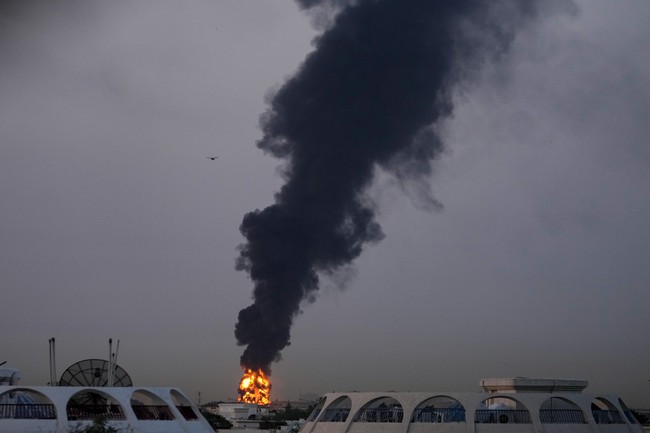
The United Arab Emirates is now accused of carrying out covert strikes against an Iranian oil facility, a development that could reshape regional dynamics if verified and that raises questions about how capable regional partners are stepping up where others hesitated.
Reports: UAE’s New Secret War on Iran Exposed
<pThere are unconfirmed reports that the United Arab Emirates launched military strikes on an Iranian oil installation, and observers are watching closely for confirmation and fallout. If true, the action would mark a significant escalation by a Gulf partner acting beyond public diplomacy and could signal a shift in how regional states respond to repeated Iranian provocations. The implications touch military capability, deterrence, and the limits of U.S. patience in a tense neighborhood, and this story demands scrutiny from a conservative lens that values decisive defense.
Details remain sparse and authorities have not publicly acknowledged any strikes, which leaves open possibilities from deliberate deniability to careful operational security. Official silence from the UAE and no immediate confirmation from U.S. defense channels keep analysts relying on satellite imagery, intelligence leaks, and regional reporting. That ambiguity matters because the difference between a defensive hit and an aggressive escalation can determine whether this becomes a broader confrontation or a contained tactical message.
It is worth noting the strategic logic behind such an operation if indeed the UAE acted: Iran has repeatedly used asymmetric tactics against Gulf shipping and infrastructure, creating persistent risk to energy markets and regional security. A capable regional power nudging back against those attacks would change deterrence calculus and show American partners can enforce consequences without waiting for Washington to move. That approach aligns with a Republican view favoring strong allies and clear consequences for hostile behavior.
The UAE’s air force has been described as unusually advanced for the region, with platforms and support systems that enable precision strikes at range. Retired American planners point to its Mirages, modern F-16s, aerial refueling, command and control aircraft, and surveillance drones as force multipliers that let Abu Dhabi project power in ways it couldn’t decades ago. Those capabilities make a covert or deniable campaign plausible, and they complicate Iran’s calculations about safe havens for sensitive infrastructure.
Beyond hardware, executing a strike on a heavily defended target like an oil facility requires detailed planning, intelligence, and secure lines to avoid escalation with unintended actors. Precision strike capacity and airborne surveillance reduce collateral risk, which can be decisive for a state that wants to retaliate without opening a wider war. Still, even tightly planned operations carry the risk of miscalculation—especially when Tehran’s response options include proxies and asymmetric attacks that can sow broader instability.
The political angle cannot be ignored: a UAE strike would have diplomatic consequences that ripple through the Gulf, Europe, and Washington. Conservative policymakers tend to favor strong support for partners that confront malign actors, but they also demand clear coordination and the avoidance of unintended entanglements. The ideal outcome from that perspective is targeted action that restores deterrence while minimizing the chance of open, extended conflict that drags in additional states.
Militarily, the U.A.E. is dwarfed by the U.S. But it has a highly trained and capable air force with Mirages and a fleet of advanced F-16 jet fighters supported by refueling planes, command and control aircraft and surveillance drones.
Those capabilities give it unusually sophisticated air power for the region, according to retired U.S. Air Force Lt. Gen. Dave Deptula, who planned the air campaign for Desert Storm.
“They are very strong in terms of precision strike, air defense, airborne surveillance, refueling, and logistics,” Deptula said. “If you have that capable of an air force, why would you sit back and absorb attacks from Iran without responding?”
Iran’s likely reactions are varied, from deniable proxy attacks to provocations aimed at shipping lanes and energy infrastructure, which would raise insurance rates and pressure global markets. The prospect of tit-for-tat actions is real, and conservative strategists will argue that credible, proportionate responses now can prevent the need for larger interventions later. That calculus is why capability matters as much as intent: if partners can impose costs on Iran, Tehran may be less willing to test thresholds.
Right now the key facts are limited, and verification will come slowly as intelligence is corroborated and reporting converges. Still, the news that a Gulf state might have struck Iran directly shifts the narrative away from simply complaining about aggression toward enforced consequences. For conservatives who value strong deterrence and reliable partners, this development—if confirmed—signals an important change in regional behavior and expectations of how to keep the peace.
Whatever the coming days reveal, the central point remains: capability, resolve, and clear-eyed strategy determine whether regional threats are contained or allowed to metastasize. Observers will watch for Iran’s next moves, responses from other Gulf states, and any signals from Washington about coordination or restraint.



Add comment