
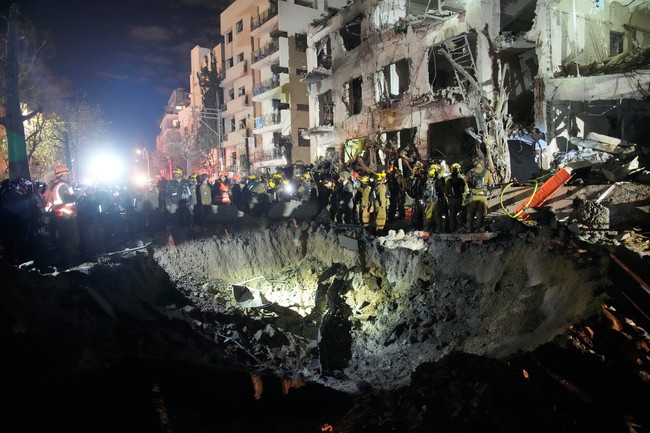
The U.S. launched a decisive campaign that eliminated Iran’s supreme leader and senior commanders, Iran responded with missile and drone attacks on American bases and regional targets, and President Donald Trump has warned of unprecedented retaliation if Iranian aggression continues.
‘A Force That Has Never Been Seen Before’ — Trump Warns Iran That Retaliation Would Be Very, Very Costly
The United States has carried out what officials describe as a series of operations aimed at dismantling Iran’s top leadership and key military capabilities. Those strikes, part of a campaign named Epic Fury following earlier actions against Iran’s nuclear infrastructure, have dramatically escalated tensions across the Middle East. Tehran has retaliated with strikes against American positions and regionally significant sites, signaling a dangerous new phase.
In response to Iran’s attacks, several governments reported confrontations in the skies and at bases that host U.S. forces, and Iran declared it would “stab” America in the heart. That rhetoric has been paired with coordinated drone and missile launches aimed at Israeli and American targets, many of which were intercepted by regional defenses. The scale and ambition of those launches prompted widespread international concern about further escalation.
President Trump addressed Iran directly in the early hours after these exchanges, warning that further aggression would be met with overwhelming force. He made clear that previous operations, including one that targeted nuclear facilities and the recent strike that eliminated the supreme leader, were only part of a sustained campaign. His remarks left little doubt that the administration intends to press its military advantage if Iran or its proxies continue hostile actions.
Trump’s public statement contained the exact line that has been circulated widely: “THEY BETTER NOT DO THAT, HOWEVER, BECAUSE IF THEY DO, WE WILL HIT THEM WITH A FORCE THAT HAS NEVER BEEN SEEN BEFORE! Thank you for your attention to this matter! President DONALD J. TRUMP” That was delivered as a blunt deterrent to Tehran and its regional partners. The language mirrors the administration’s posture that decisive, visible power is central to preventing further attacks on U.S. personnel and allies.
Israel also moved to strike Iranian capabilities, reporting a new wave of attacks focused on ballistic missiles and air defense sites after intercepting incoming threats over its territory. Those Israeli actions reflect a broader regional alignment with U.S. efforts to degrade Iran’s ability to project force. Officials on both sides described the operations as intended to reduce the immediate threat posed by missile and drone arsenals rather than to occupy Iranian territory.
Iran’s Islamic Revolutionary Guard Corps announced it had launched what it called a “sixth wave” of missile and drone strikes, targeting numerous U.S. bases across the region. The IRGC framed its response as a historic, extensive offensive, though details about damage and casualties remain limited. That claim underscores Tehran’s intent to demonstrate reach and resolve even after suffering major leadership losses.
With Tehran’s top leader reported killed, questions about succession and stability inside Iran are front and center. Observers are watching which internal factions will assert control and how quickly a new leadership structure will emerge. The uncertainty increases the risk of miscalculation, because unclear command lines can lead to conflicting responses from different Iranian entities and their regional proxies.
When asked about who might lead Iran next, President Trump hinted he had answers but declined to elaborate publicly, saying, “I know exactly who, but I can’t tell you.” That comment suggests the administration may be tracking potential successors and considering political as well as military levers to influence Tehran’s future. U.S. officials also indicated that kinetic operations could continue with sustained bombing and strikes planned through the coming days.
The broader scene shows a mix of kinetic military actions and public messaging aimed at shaping perceptions and deterrence. Tehran’s leaders are attempting to respond dramatically, while Israel and the United States are signaling they will not accept an unchecked Iranian strike campaign. Those competing signals create a volatile environment where each side’s next move will be watched closely by regional partners and global capitals.
As fighting continues in various theaters, local authorities and militaries are assessing damage and defending critical infrastructure against further attacks. The human and strategic costs of this conflict are escalating as operations target command nodes, missile sites, and logistics. For now, major powers appear focused on limiting further spread while preserving the capacity to strike back if necessary.


Add comment