
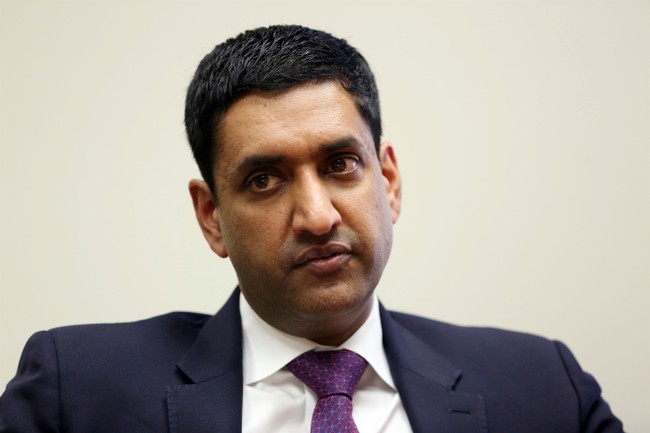
This article examines Rep. Ro Khanna’s take on recent Democratic losses to socialist-backed challengers, his argument that economic failure opened the door to those insurgents, the distinctions he draws between his views and the DSA’s platform, and the debate inside the party over whether to embrace or resist that leftward push.
Rep. Ro Khanna of California says Democrats have left a gap that socialist groups are exploiting by failing working-class voters. He told a national audience that economic frustration—difficulty affording gas, food, housing, and getting good jobs—is driving support for outsiders who promise big change. Khanna rejects the DSA’s most radical prescriptions but frames its rise as a symptom of a party that has strayed from its roots. He argues those grievances need to be addressed through a renewed focus on broadly shared prosperity.
Khanna places the blame for Democratic erosion partly on past trade decisions that hurt working-class communities. He singled out support for NAFTA and China’s entry into the World Trade Organization as turning points that hollowed out economic support in key regions. His remedy is a return to what he calls FDR-style policies and economic patriotism that prioritize workers and communities over concentrated corporate gains. For Khanna, those policy shifts are a way to reclaim voters who feel abandoned.
At the same time, Khanna insists that some red lines remain. He told the interviewer, “Of course we need borders,” and argued a nation requires secure boundaries. He also said prisons are necessary even as he criticized the harsh penalties many people still serve for marijuana offenses. Those positions set him apart from the DSA leadership and its stated agenda, even while he sees value in the energy fueling their wins.
https://x.com/FoxNews/status/2084036358864073180
Khanna’s argument rests on two claims: first, that many voters are desperate enough for relief to back sweeping change; and second, that the Democratic establishment has not offered credible alternatives. He described the situation bluntly: “People are upset at an unfair political and economic system. They can’t afford gas, they can’t afford food, young people can’t afford to buy a home or get a job.” That phrasing appears to be an appeal to the party’s progressive wing while attempting to reassure moderates that certain institutions should remain intact.
Not everyone in the party shares Khanna’s tolerance for a leftward nudge. Other Democrats argue that the DSA’s victories should be met head-on, not accommodated or redirected. Those voices point to instances where insurgent candidates have toppled longtime incumbents and warn that tolerating the movement risks ceding important wards of the party. For skeptics, the issue is existential: either the party defends its governing competence or it slowly transforms into something else.
Khanna embraces the idea that the internal challenge could be useful if it produces policies that help ordinary Americans. He said, “I’ll tell you why they’re winning. People are upset at an unfair political and economic system.” He goes further, promoting the notion of America’s next New Deal and calling himself an FDR Democrat who wants a big tent able to deliver tangible economic improvements. That language echoes populist appeals to shared prosperity while stopping short of endorsing the DSA’s longer-term institutional goals.
Critics counter that some DSA leaders have openly backed proposals that would upend longstanding constitutional and governmental structures. Those positions include calls to abolish institutions such as borders, ICE, and even parts of the federal government, according to public statements by DSA leadership. For many Democrats with secure seats, those ideas feel distant and easy to repudiate; for those in competitive districts, they are a strategic and political threat.
The argument over strategy is also practical. Representatives in competitive districts see an urgent need to repel socialist advances, while those in safe seats can afford to treat the insurgency as an opportunity to shift policy emphasis. Khanna, representing a reliably Democratic Silicon Valley district, has room to think about broad policy realignment. Others, facing districts President Trump carried or narrow margins, press for immediate confrontation to preserve electability.
At its core, the clash is about messaging and priorities. Khanna believes the party must win back working-class voters through economic programs that deliver tangible results and restore faith in government’s role. Opponents insist that confronting ideological extremes is necessary to keep the party viable and distinct from movements that would radically remap American governance. The tension between those approaches will shape Democratic strategy heading into future cycles.
The political debate plays out against a backdrop of real electoral consequences as socialist-backed candidates remove incumbents and force the party to choose a path forward. Khanna’s prescription is to move the party’s economics leftward while defending institutions he sees as essential. Whether that balance holds—or whether the party decisively rejects the DSA vision—remains an active, unresolved contest inside Democratic ranks.



Add comment