
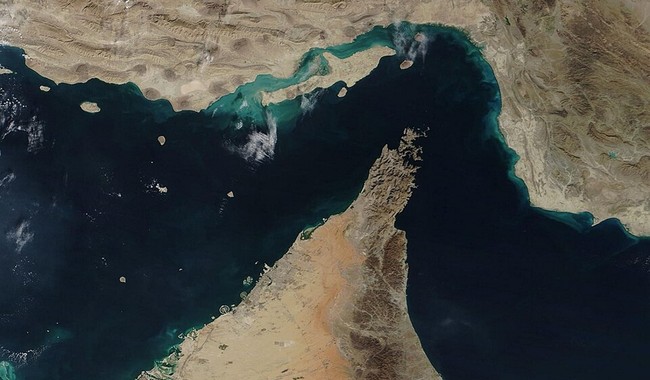
The U.S. military says a Texas-built, AI-powered unmanned surface vessel carried out the first combat rescue of downed American pilots, pulling two Apache crewmen from the water after their helicopter was shot down near the Strait of Hormuz.
The incident began when an AH-64 Apache went into the sea after sustaining hostile fire off Oman. The pilots managed to ditch the helicopter and survive in the water until an unmanned surface vessel arrived to retrieve them. U.S. Central Command described the mission as unprecedented: the first time an unmanned surface drone rescued crew members in combat. That shift from concept to operational reality marks a major moment for autonomous maritime systems and their role in protecting American lives.
President Trump spoke directly about the episode during a call, relaying how the pilots were recovered by the unmanned vessel. “These two pilots were able to take [the Apache] down into the sea, where ultimately, they were rescued, for the first time in U.S. military history, by an unmanned sea drone,” the president told a reporter. He used the moment to describe the broader U.S. response to Iranian aggression and to emphasize that American forces are striking back hard. His remarks underline a clear message: strength and decisive action on the battlefield save lives and deter future attacks.
https://x.com/RapidResponse47/status/2064686148962730101
Officials say the crash occurred in waters close to the Strait of Hormuz after what was characterized as an Iranian attack. U.S. forces have been conducting operations in the region in response, employing air and maritime assets to degrade hostile capabilities. Capt. Tim Hawkins of U.S. Central Command explained that the rescue involved a U.S. Navy Corsair unmanned surface vessel, part of Task Force 59, which began deploying these boats in the theater in late March. That timeline shows how quickly cutting-edge systems have moved from testing to mission use.
The craft involved is a Saronic Corsair, a 24-foot autonomous surface vessel built by Saronic Technologies in Austin, Texas. Governors and state leaders noted the local connection, pointing to homegrown engineering and private-sector innovation that produced a platform capable of operating in contested waters. The Corsair’s size and autonomy let it approach survivors without exposing sailors to direct danger, giving commanders a new option when traditional search-and-rescue would put people at risk. This capability matters because modern warfare increasingly mixes human courage with machine speed and persistence.
Texas officials praised the achievement as an example of what free enterprise and minimal regulatory friction can produce. “A Texas-built drone boat just made history, executing the first sea drone rescue in combat,” one statement noted, adding that private companies lead when given the freedom to innovate. That point echoes a broader Republican view: when businesses are allowed to develop new technologies without heavy-handed interference, those technologies can quickly bolster national security. The rescue highlights both military need and civilian ingenuity.
Military spokespeople described how the Corsair integrated with fleet command and maritime situational awareness systems to locate the downed crew. The vessel’s autonomy let it navigate to the survivors and provide a stable platform for extraction in a dangerous environment. That kind of interoperability—between autonomous systems and traditional forces—is precisely what commanders are seeking as they modernize. It reduces risk to personnel while expanding the reach of U.S. power in littoral zones.
The event also illustrates a practical shift in how the United States prepares for future conflicts, blending human leadership with unmanned systems across domains. From aerial drones to surface vessels, the trend is toward layered defenses and flexible response options that keep sailors and aviators safer. In this case, the combination of pilot training, quick decision-making, and autonomous capability produced a rescue that would have been far more hazardous otherwise. That outcome reinforces the argument for continued investment in next-generation technologies.
News of the rescue came amid heightened tensions in the region, with U.S. commanders and political leaders signaling a firm stance. The president framed the broader campaign as one that restores deterrence and enforces consequences for aggression. On the operational side, Task Force 59 and partner services are now seen as trailblazers for integrating unmanned surface vessels into routine maritime operations. The successful retrieval of two aircrew shows that when strategy, technology, and bold leadership align, results follow.
Watching driverless vehicles perform life-saving work at sea is striking for anyone used to more conventional rescue approaches. As autonomous systems continue to prove themselves in real-world missions, commanders will likely expand their use in contested and peacetime environments alike. For now, the mission stands as a concrete demonstration: unmanned surface vessels built in America can enter harm’s way and bring Americans home. That capability changes the calculus for rescuing personnel and protecting assets in offshore hotspots.

Add comment