
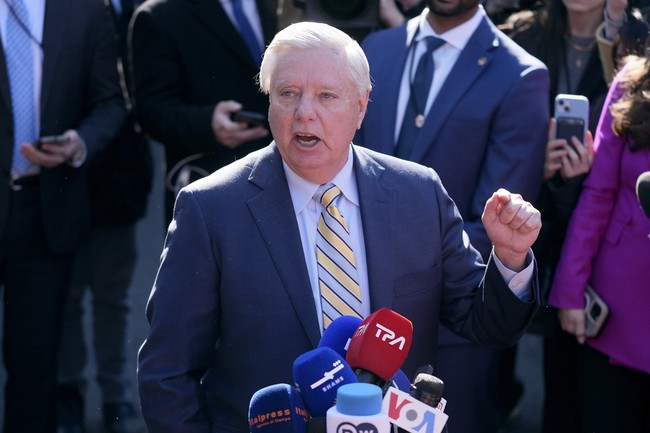
The Senate voted overwhelmingly to pass the Lindsey O. Graham Sanctioning Russia and Iran Act of 2026, a bill that would expand penalties on Russian energy exports and extend sanctions on Iran, marking a final legislative push tied to the late Sen. Lindsey Graham’s priorities.
This bill passed the Senate 86-11 and carries provisions to allow the president to impose tariffs up to 100% on the five largest importers of Russian crude oil or natural gas by volume. Supporters say it tightens pressure on Vladimir Putin’s war machine while renewing sanctions aimed at Iran’s energy and weapons sectors. The legislation now heads to the House, where its fate remains uncertain after the August recess.
Lindsey Graham’s colleagues framed the vote as a tribute to his persistent foreign policy efforts, noting he had secured a deal with the White House the day before his death. The measure had long been stalled but gathered speed in the aftermath of his passing, with senators from both parties joining to move it across the floor. That bipartisan margin reflects widespread concern about Russian energy fueling aggression abroad and about Iran’s ongoing threats.
The bill’s most dramatic tool is the authority for targeted tariffs as high as 100 percent on the top five buyers of Russian fossil fuels, by volume. That lever is aimed at nations that keep purchasing Russian oil and gas despite global condemnation of the invasion of Ukraine. Backers argue these tariffs create a concrete cost for countries that enable Putin, giving the United States and allies a stronger economic instrument short of direct military engagement.
The Senate approved a long-stalled Russia and Iran sanctions bill Friday in a final tribute to the late Sen. Lindsey Graham (R-SC), who championed the legislation before his sudden death last month.
The Lindsey O. Graham Sanctioning Russia and Iran Act of 2026 was passed in a 86-11 vote.
The legislation targets Russian oil and gas exports that have been fueling Vladimir Putin’s long and bloody war against Ukraine and extends existing sanctions against Iran’s energy and weapons sectors. [….]
The legislation allows the Trump administration to impose targeted tariffs of up to 100% on the five largest importers of Russian crude oil or natural gas by volume. It also renews sanctions on Iran set to expire after the end of this year.
Supporters emphasize that the measure strengthens the United States’ leverage without committing troops or invoking direct military measures. The goal is to make it increasingly costly for countries—state and private actors alike—to prop up Russia’s energy revenues. By renewing Iran sanctions set to lapse, the bill also seeks to avoid letting Tehran regain economic breathing room that could fund destabilizing behavior.
https://x.com/nicksortor/status/2085780494721978603
Sen. Darline Graham (R-SC), appointed to fill her brother’s seat after his death, presided over the chamber and announced the final tally. That moment underscored the personal and political stakes tied to his legacy and to the bill itself. Lawmakers framed the vote as equal parts tribute and strategy: honoring a late colleague while trying to cement tougher tools to deter aggression overseas.
Critics argue the tariff power could complicate relations with allies and trading partners, and they worry about unintended consequences for global energy markets and prices. Some senators who opposed parts of the measure voiced concerns that the approach could politicize energy policy or hurt economies that rely on Russian supplies. Those objections help explain why the bill must still clear the House, where debates over trade, energy, and geopolitics will continue.
On the Senate floor, proponents tied the bill to a broader foreign policy approach focused on deterrence through economic pressure. They credited recent leadership that has pushed a tougher stance on rivals while emphasizing American strength abroad. That framing resonates with many who view robust sanctions and economic tools as essential to backing allies and defending global stability.
JUST IN: The US Senate has PASSED Lindsey Graham’s sweeping Russia Sanctions bill, 86-11 Darline Graham was in the chair to announce the vote The bill also gives President Trump the ability to impose 100% TARIFFS on imports from the five largest buyers of Russian crude oil or natural gas The bill will now go to the House, who will vote on it following August recess.
With the Senate passage complete, attention shifts to the House calendar and to negotiations that may alter the measure before final passage. Lawmakers will weigh the tariff mechanism, the extension of Iran sanctions, and any side provisions that could affect trade or energy policy. The coming weeks will reveal whether Congress can translate the Senate’s broad margin into a durable, bipartisan policy that holds adversaries accountable.
Passing the bill in the Senate sends a clear signal that Washington is willing to use economic muscle to confront aggression and to press for outcomes favorable to allies. Whether the House moves in the same direction will shape how quickly these new authorities can be put into practice. For now, the Senate vote stands as a major step toward strengthening U.S. options against Russia and Iran and as a legislative moment tied closely to Lindsey Graham’s final priorities.


Add comment