
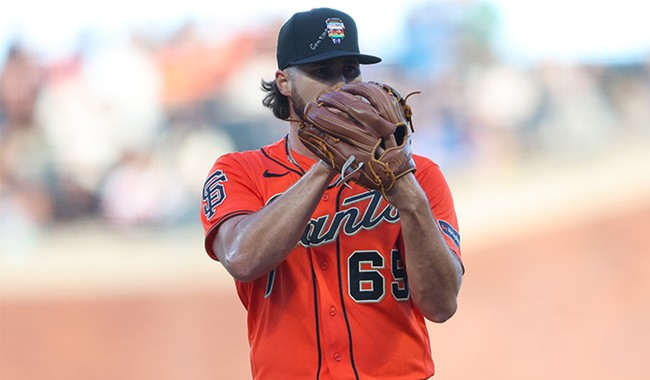
The San Francisco Giants’ Pride Night episode — three pitchers writing Bible verses on team-issued caps and the league’s initial warning — reignited a culture war that stretches beyond baseball. This piece traces the timeline, quotes MLB’s response in full where relevant, and considers the wider implications for religious liberty, team policy consistency, and how institutions pick and choose which messages to let stand in uniformed spaces.
The incident took place on June 12, 2026, when three Giants pitchers added Bible verses to their Pride Night caps. That simple act prompted a terse response from Major League Baseball, which initially warned the players about uniform alterations under its negotiated policy. Senator Josh Hawley stepped in on the players’ behalf, sending MLB a pointed letter that questioned whether punishing players for expressing religious beliefs was appropriate.
Commissioner Robert Manfred replied on June 19, 2026 with a detailed explanation that ultimately announced no discipline would be imposed. His letter tried to walk back the warning and explain how MLB enforces its uniform rules and handles special days, while also offering a defense of the league’s practices around celebratory events. The text of the letter is central to understanding MLB’s stance and how it justified the sequence of events.
MLB’s letter included this assertion in full:
First, your letter asserts that by warning three San Francisco Giants players that they
are not permitted to alter their cap, MLB has discriminated against players. MLB takes
discrimination against its players or in any form related to the league very seriously. As you
reference in your letter, MLB has a policy negotiated with the Major League Baseball Players
Association that states a “[p]layer may not write, attach, affix, embroider, or otherwise
display nicknames or messages on apparel or playing equipment.” This policy is enforced
without regard to the substance of the messaging. The rationale for the policy is that the
league does not desire for its players to become messengers for political or social issues
while in uniform playing baseball games because many messages have the potential to
offend some segment of our fanbase – even if that was not the intent of the player.
That paragraph is a careful legal framing, but it also exposes a double standard that conservatives and many fans smell immediately. MLB has permitted and promoted team-endorsed messages before, notably the 2020 season opener activities when a high-profile team wore league-provided apparel tied to a social movement. That selective allowance undermines the idea that message restrictions are applied uniformly and entirely irrespective of content.
Manfred’s letter continued by pointing to a roster of league-managed commemorations and claimed that these special days, where uniform regulations have been relaxed by agreement with the union, have not prompted significant fan or player complaints. It reads in part:
At the league level, MLB has twelve league-wide events each year in which the
uniform or hat is altered to commemorate the day, and in which all Clubs must participate.
The twelve events are: Mother’s Day, Father’s Day, Armed Forces Weekend, Play Ball
Weekend, Memorial Day, Lou Gehrig Day, Independence Day, Hall of Fame Weekend,
Childhood Cancer Awareness Day, September 11th, Jackie Robinson Day and Roberto
Clemente Day. For these days, players wear special uniforms and hats, and for some of
the days, the Uniform Regulations contained in the collective bargaining agreement are
relaxed per agreement with the Union. We are unaware of any significant complaints from
fans or players regarding these celebratory days.
That line of reasoning is a stretch when Pride Night is equated with national memorials and holidays celebrating the country and its heroes. A lot of Americans view Pride as a political and cultural movement rather than the same category as Memorial Day or Jackie Robinson Day. Treating Pride as a neutral, universally accepted commemoration ignores dissenting religious convictions held by some players and fans.
https://x.com/HawleyMO/status/2069180415668326784
Manfred also addressed the league’s effort to accommodate religious objections by restricting special uniforms and hats after 2023, except under narrow circumstances. The commissioner offered context about a grandfathered exception granted to the Dodgers and Giants in which teams could use a pride emblem so long as no player was compelled to wear it and teams communicated that opt-out was available. The letter states:
We understand that some players or other on-field personnel have not been
comfortable wearing the pride emblem on their uniform based on their religious beliefs.
As a league, we agree with the principle that players or other Club employees – at their
place of work – should not be compelled to participate in a celebratory event (particularly
by wearing something on their person) if such participation would violate their sincere
religious beliefs or values. As a result, to avoid putting players or others in an
uncomfortable position, beginning in 2023, we adopted a policy of not permitting Clubs to
utilize special uniforms, hats or equipment in their celebration days except under very
narrow circumstances (patches honoring deceased members of the baseball community,
commemorating baseball milestones, and things of that nature).
How that grandfathered exception was applied this year is the crux of MLB’s explanation and part of the dispute. According to the letter, the Giants requested their use of the pride emblem be grandfathered due to the civic composition of their city and fanbase. Again, the full wording follows:
In 2023, the Dodgers and the Giants requested their use of the pride emblem on
uniforms/hats on Pride Night be grandfathered. Los Angeles and San Francisco are homes
to the some of the largest LGBTQ communities in the United States, and those Clubs
desired to show their appreciation and support for those communities that have supported
their Clubs throughout the years.
Manfred’s letter claims the Giants failed in 2026 to communicate clearly that players could opt out, and that an oral warning was issued before the league realized the team had not properly informed its roster. The league concluded that no fines or discipline would follow. The letter states the players “were neither fined nor disciplined, nor will they ever be.”
Players involved have insisted the decision to add biblical references was their choice and not the result of coercion. One quoted player explained his position and the backlash he received in stark terms, saying he felt pressure to support something he could not in conscience endorse. That sentiment has ignited a broader debate about whether religious convictions are being respected or sidelined in professional sports.

Add comment