
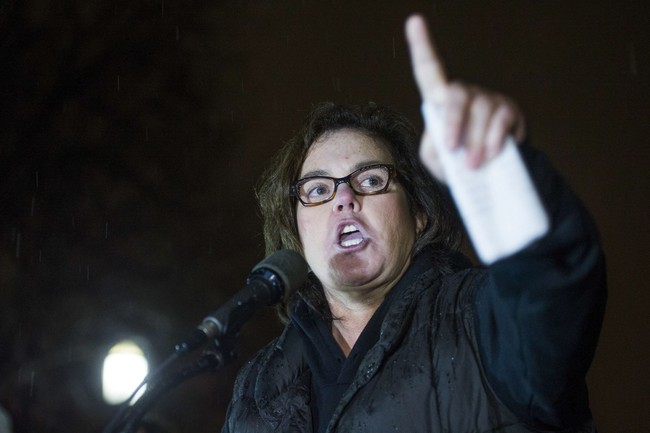
Jimmy Kimmel is stepping away for two months and has tapped Rosie O’Donnell to guest-host, a move that spotlights how late-night television often recycles the same voices and perspectives instead of expanding its range. This piece examines why O’Donnell’s return matters, how it reflects late-night’s narrowing creative choices, the fallout from her past political stances, and what that means for audiences seeking alternatives beyond the usual echo chamber.
Jimmy Kimmel is taking a two-month break, and the network has chosen Rosie O’Donnell as one of the celebrity fill-ins. O’Donnell is a known figure in Hollywood’s media scene and her hiring feels less like an experiment and more like a safe, predictable choice. That predictability is exactly the point of concern for viewers tired of one-note late-night routines.
O’Donnell’s return is notable because she left the United States for Ireland after President Trump’s 2024 election victory, citing deep opposition to him. She has described the president in harsh personal terms and positioned her move as an escape. Now she is back to host on American television, and Kimmel said she would “keep the hits coming.”
This is the same comedian who once blindsided actor Tom Selleck on her daytime show, turning a promotional appearance into an uncomfortable ambush over his support for the National Rifle Association. That moment stuck in public memory because it prioritized confrontation over civil exchange. When conservative viewpoints appear, the instinct too often becomes to shut down debate rather than engage it.
The more basic question is simply: why her? Late-night has many comedians who might broaden the audience and bring different energy. Craig Ferguson, for instance, proved how offbeat wit and irreverence can win viewers without leaning on the same political script. Adam Carolla demonstrates another path, rooted in working-class experience and blunt commentary, that would diversify the conversation.
https://x.com/LeadingReport/status/2068422463231332845?ref_src=twsrc%5Etfw
Instead, networks consistently opt for continuity over curiosity, choosing names that reinforce the same cultural assumptions. That choice narrows late-night’s reach and turns what used to be broad entertainment into a platform that often reads like a single editorial voice. For millions of Americans who feel their views are treated as a punchline, these programming decisions reinforce a sense of exclusion.
Just what America needs right now: More Trump Derangement Syndrome lunacy on late night television. We finally got rid of the insanity of nightly, hatefilled verbal vomit from Jimmy Kimmel and now he’s being replaced by the crazy refugee from Ireland Rosie O’Donnell. She escaped from the Dublin state mental hospital and hijacked a tuna fishing boat so she could ride on it back to the United States after abandoning the U.S. when Donald Trump returned to the White House.
When Kimmel framed O’Donnell’s appearance as a “special treat” for the commander-in-chief, the implication was clear: the segment was designed as satire aimed at millions of Americans who support his agenda. That framing risks treating a large portion of the electorate as mere targets for ridicule rather than legitimate participants in national discourse. It also cements late-night’s role as a venue for cultural signaling instead of broad entertainment.
O’Donnell’s career has mixed hits with controversy, and she has never been shy about speaking her mind. The pattern of leaving the country after political losses, then returning when opportunities arise, has drawn criticism for inconsistency. President Trump even publicly threatened to look into revoking her citizenship on Truth Social in 2024, a line that underscored how these cultural battles spill into questions of loyalty and belonging.
Americans now have more viewing choices than ever, from podcasts to streaming to independent creators who offer perspectives ignored by mainstream late-night. Strong ratings for alternative formats suggest audiences are voting with their attention when networks stick to narrow formulas. If late-night wants to matter beyond its core studios, it will need hosts and guests who can reach beyond predictable divides.
For now, Kimmel’s show will continue without him while O’Donnell takes a turn in the host chair, likely earning applause from parts of the audience and scorn from others. The bigger issue remains the industry’s reluctance to book diverse voices that could restore variety and surprise. Until the business recognizes that alienating half the country is a poor long-term strategy, late-night will keep losing ground to formats that actually meet viewers where they are.

Add comment