
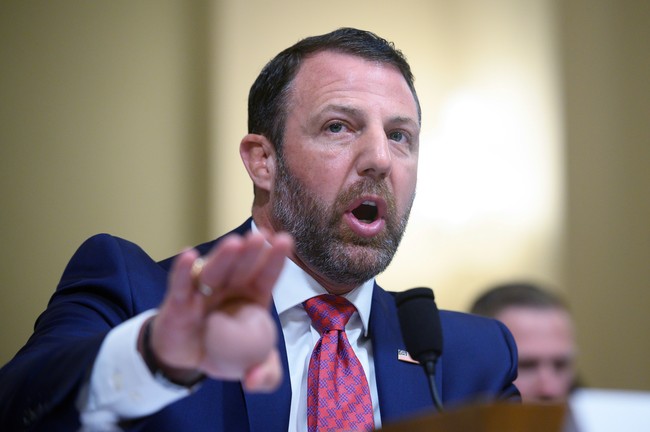
The Department of Homeland Security secretary said ICE could be deployed to polling places in 2026 if threats arise, arguing the agency brings more than immigration enforcement and can respond to emergency situations; this piece unpacks that exchange, the core arguments, and why federal assistance should remain an option to protect voters and polling sites.
ICE at Polling Places? Sec. Mullin Defends Potential Role in 2026 Elections
The 2026 midterms are months away but already raising questions about how to protect polling locations from real threats. Secretary Markwayne Mullin told CNN that federal assets like ICE could be asked to assist under narrow, specific circumstances, and he emphasized they would not be used to check voters’ status.
His point is simple: ICE is not only an immigration agency; it also has response teams trained for high-risk incidents. If a polling place faces an immediate danger, local leaders might request federal help with a tactical response that local police can’t safely deliver alone.
https://x.com/CNNSOTU/status/2066151865318781193
On Sunday, Secretary of Homeland Security Markwayne Mullin appeared on CNN’s State of the Union with CNN’s Kasie Hunt to discuss the possible deployment of Immigration & Customs Enforcement (ICE) agents to polling places, and while making some good points about how their presence shouldn’t be required, he wouldn’t .
Here’s that conversation:
Kasie Hunt: At your hearings recently, you didn’t rule out sending ICE agents to the polls, in the midterms. Are you willing to rule out sending ICE agents to polling places in November?
Markwayne Mullin: No. What I said was, we would only be there if a threat has arisen.
Kasie Hunt: So you’re not ruling it out.
Markwayne Mullin: Keep in mind why would ICE be there? The only people that should be there, should be voting there, is (sic) American citizens. There shouldn’t be any immigration enforcement. This should be a moot deal for anyone.
Kasie Hunt: So why would there be a certain sense that there…
Markwayne Mullin: So, keep in mind, ICE agents are there to flex, if we need to. So you saw ICE at TSA lines, not processing, but in the soft areas. If a threat were to arise, and for whatever reason at a polling station, say a bomb threat would be called in, our ICE agents are more than just immigration and customs enforcement. They’re also trained to have an SRT (Special Response Team), which means we can have an emergency team to respond quickly and deal with (that.) The only reason we would be there is not for voter identification. It would be because the law enforcement is needed and the local law enforcement would be a part of that conversation, and so we wouldn’t show up on our own. We would be getting asked to show up. But not for immigration purposes. Because, as I said, the only people that should be in line are American citizens. So there should be no reason to have them there for that.
That exchange matters because it frames federal involvement as conditional and tactical rather than political. Mullin insisted ICE would not be used to intimidate or screen voters; the stated aim is to protect life and property if a real, immediate threat appears at a polling site.
Critics warn that the presence of federal agents can chill turnout and be portrayed as intimidation, especially in polarized communities. That concern is legitimate in principle, which is why transparency and strict limits on roles and rules of engagement are essential if anyone beyond local police gets involved.
From a Republican perspective, however, protecting the right to vote safely is not optional. When threats come from political violence or coordinated disruptions, local resources may be overwhelmed or unavailable, and the federal government should be ready to help upon request.
We should also be honest about the capabilities at stake. ICE maintains Special Response Teams and other assets useful in crisis response, and those tools can be lifesaving in scenarios like active threats, bomb scares, or coordinated attacks on multiple sites. That is the core of Mullin’s argument.
Right now the discussion is largely hypothetical; no wide deployment has been announced and local officials would control requests for federal assistance. But the political climate is tense, and officials owe the public clear rules so protection doesn’t devolve into partisan theater.
Election security is not a partisan slogan, it is a duty. Agencies with specialized response skills should be options for lawful, limited use when safety demands it, and leaders must be upfront about when and how those options will be exercised.

Add comment