
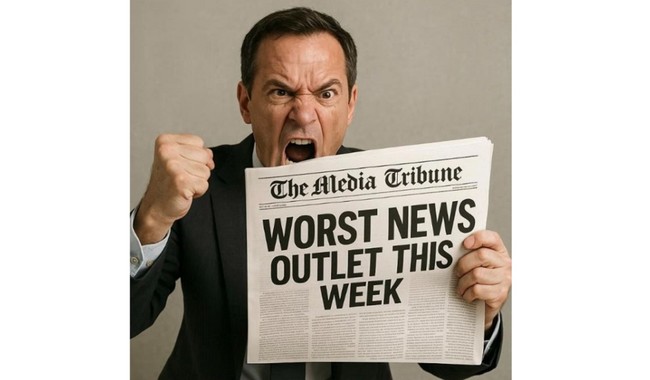
This piece takes a clear, pointed look at the last week in national news coverage, calling out where major outlets tripped over bias, missed context, or pushed narratives that didn’t hold up under scrutiny. It highlights patterns across several mastheads, shows specific lapses in judgment, and names the outlet that deserves the title “Worst News Outlet of the Week.” The goal is plain: expose sloppy reporting, uneven standards, and partisan double standards that shape what millions hear as news.
The press returned from Thanksgiving with the same habits it left with: rush-to-judgment headlines and storyline-first reporting. Reporters leaned hard into a manufactured scandal over alleged Venezuelan boat strikes while other inconvenient details were minimized or ignored. That pattern of selective attention felt less like reporting and more like narrative management.
As questions arose about the origin and timing of a pipe-bomb suspect, some outlets rushed to brand him politically without examining the timeline or family statements. Reports glossed over claims that the devices were constructed long before the election, and they often failed to explain why a device was also found at a Republican headquarters. Those omissions matter when the media are eager to hand out political labels.
That brings us to the named contenders, where each outlet shows the same underlying problem: confirmation bias over curiosity. The Washington Post, for example, pivoted its framing as elements of the drug-boat story frayed, pushing angles that kept the initial narrative alive even as evidence suggested a different picture. The paper also ran personality-driven pieces about a shooter who killed two National Guard members, emphasizing certain motifs while downplaying others.
CNN delivered what looked like breathless coverage that collapsed under its own reporting, a classic case of haste undermining accuracy. One anchor rushed to air a conclusion that the network’s later pieces did not support, illustrating a failure to coordinate fact-checking with on-air commentary.
ABC showed the same uneven standards by devoting energy to defending particular communities from criticism rather than investigating alleged electoral fraud and irregularities. Rather than interrogate anomalies in Minnesota, some coverage leaned toward advocacy for groups framed as victims in the story. At the same time, ABC described men in high-powered watercraft with multiple outboard engines as mere “fishermen,” which raised eyebrows about whether terminology was being chosen to fit a comforting narrative rather than reality.
MS Now moved fastest to apply a partisan label to the pipe-bomb suspect, reporting him as a Trump supporter while the family described him as an autistic man with no political views. That discrepancy gets to a core problem: reporters and producers too often reach for a political shorthand that simplifies messy facts into a tidy headline. The rush to judgment ignored both family testimony and context that complicates the easy political assignment.
Across cable and cable-adjacent commentary, hosts spun hypotheticals into full-blown charges, speculating about presidential motives and military law without establishing solid evidentiary ground. One recurring theme was reading complex foreign policy threads as intentional plots rather than the messy consequence of competing interests and limited information. That tendency turns nuanced national decisions into a soap-opera duel played out in headlines and monologues.
Several reporters produced pieces that read like character assassination rather than careful reporting, circulating rumors and unattributed claims that did not survive follow-up. When sources were pressed for specifics, some stories lacked them, yet the initial accusations stayed live and continued to influence the conversation. Editing changes were sometimes made quietly, which undermines transparency and accountability.
Other coverage displayed selective empathy, presenting suspects or subjects in sympathetic tones while omitting facts that complicate the softer narrative. In one case, a Thanksgiving deportation story foregrounded the human element without acknowledging that an individual had a long-standing removal order. That choice shaped reader impressions while obscuring relevant legal context.
There’s also been a stubborn refusal among some outlets to confront uncomfortable truths about political figures they favor. After years of downplaying concerns about President Biden’s cognitive state, multiple programs pivoted to report signs of decline when it became politically expedient to do so. That inconsistent standard looks less like honest reassessment and more like timing-driven coverage.
In the end, the pattern is the same: headline-first journalism, advocacy posing as reporting, and inconsistent standards depending on which political side is involved. That erosion of trust is avoidable if newsrooms recommit to context, verification, and resisting the temptation to simplify complex events into instant political narratives. “Worst News Outlet of the Week.”


Add comment