
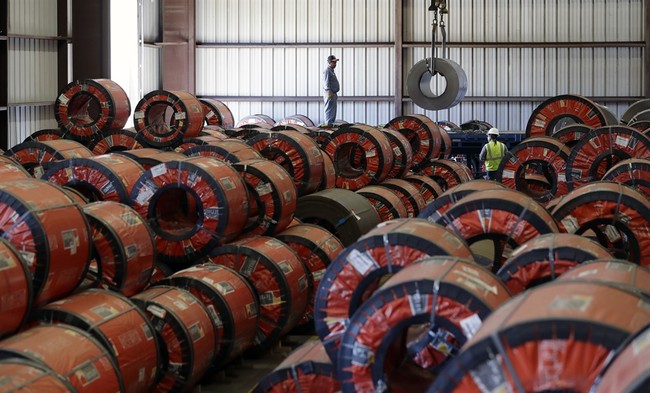
The MAGA economic approach is getting real results as U.S. Steel plans to restart a blast furnace at its Granite City, Illinois plant, bringing hundreds of jobs back to a community that sorely needs them. This piece walks through the announcement, the company rationale, the projected hiring, and how the deal with Nippon Steel ties into broader America First manufacturing goals. It also lays out the immediate local impact and the federal safeguards tied to the transaction, presented from a clear Republican perspective that favors strong manufacturing policy and national security protections. Read on for the core facts, key quotes, and what the restart means for workers and the region.
U.S. Steel’s decision to bring a blast furnace back online in Granite City signals a tangible manufacturing rebound. The company says it will resume steelmaking there for the first time in two years, a move expected to create a significant number of blue-collar jobs in a community that has been waiting for opportunities to return. The restart is framed as a direct response to rising customer demand, not a government handout, which fits well with conservative emphasis on market-driven recovery.
White House Press Secretary Karoline Leavitt hailed the news as evidence of President Donald Trump’s Make America Great Again agenda delivering results, noting the local headline that highlights the plant’s return to production. In the short term, the restart will mean hiring, training, and a renewed industrial heartbeat for the region. For Granite City residents, that translates into paychecks, local spending, and a restored sense of economic stability tied to American manufacturing.
U.S. Steel made clear it began analyzing customer demand before deciding to restart the furnace, emphasizing a measured business decision rather than political theater. CEO David Burritt is quoted explaining the company’s confidence in operating the mill profitably to meet 2026 demand, reflecting a typical cyclical industry posture. Restarting production will require a workforce and a ramp-up period focused on safety and efficiency, offering a pipeline of work for skilled and entry-level labor alike.
Leavitt highlighted a simple, bold line that captures the immediate promise of the move:
“U.S. Steel plans to restart one blast furnace, hire 400 workers.”
Local reporters described the announcement as the beginning of a comeback the town has been waiting on, noting the planned timing of the furnace restart by next spring. The employer anticipates hiring between 400 and 500 people to operate the plant effectively, a meaningful number for the regional labor market. That hiring figure points to a return of stable industrial employment at scale, not just temporary or peripheral roles.
The corporate rationale for the restart was plain: customer demand is back and the company must meet it. U.S. Steel stated it had spent several months analyzing demand and concluded that bringing a blast furnace back online was the prudent move. That disciplined, demand-driven decision aligns with free-market principles and conservative preferences for private-sector-led economic growth.
U.S. Steel’s restart comes in the broader context of a major transaction with Japan-based Nippon Steel, which agreed to acquire U.S. Steel in a deal both sides called a historic partnership. As part of addressing national security concerns, Nippon Steel agreed to give the federal government a role in certain domestic production decisions and pledged significant U.S. investment. Those protections ensure that American production and jobs remain a priority even as global capital gets involved.
To resolve security objections, the acquiring partner agreed to federal oversight on decisions that could affect domestic steel production, including closures or idling of plants. The same agreement included a pledge of roughly $14 billion in U.S. steel investment, including plans for a new electric furnace, signaling long-term manufacturing commitment. Those safeguards matter to conservatives who want robust domestic industrial capacity and sensible oversight of strategic assets.
The combination of revived demand, the corporate restart decision, and the acquisition structure that includes federal input creates a favorable environment for renewed domestic steel production. For Granite City and similar communities across the Rust Belt, the result is not only jobs but renewed tax revenue, local economic activity, and the return of skilled trades opportunities. From a Republican standpoint, this is the kind of industrial comeback national policy should enable and celebrate.
Lower energy costs and a stronger manufacturing posture across America reinforce the momentum behind moves like this. When private companies respond to demand and federal safeguards protect national interests, communities see tangible benefits. In Granite City’s case, the blast furnace restart represents a real, measurable win for American workers and the kind of results-oriented policy many voters say they want.


Add comment