
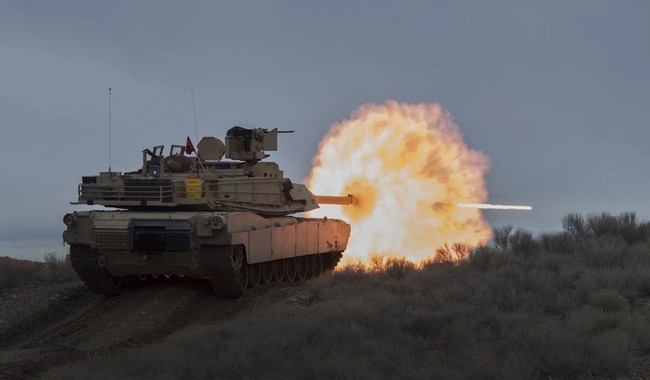
The M1A3 Abrams is shaping up as a faster, lighter, and more survivable main battle tank built for a battlefield dominated by drones, electronic warfare, and AI. This piece walks through what the proposed changes mean for survivability, offensive power, and the logistics of running a 60-ton armored vehicle in modern campaigns. It highlights likely defensive upgrades like electronic warfare suites and high-powered microwaves, the continued use of the 120mm main gun, and the debated shift to a diesel-electric hybrid powerplant. The article takes a clear, pro-defense view that heavy armor still matters when you need to seize and hold ground.
The Abrams family has fought through the Cold War, Desert Storm, and the conflicts since, and the M1A3 aims to keep that edge. The main armament appears to remain the 120mm smoothbore that’s been central to the Abrams since the M1A1. That continuity matters: kinetic punch plus modern sensors keeps the tank lethal against peer and near-peer threats.
Drone attacks from the air, top-down anti-tank guided missiles, hit-and-run ambushes from dispersed groups of armed soldiers and long-range enemy missiles and tank rounds…. are a few of the threats the Army’s new M1E3 60-ton tank will need to address. The explosion of AI and drone war is massively reshaping the landscape of modern warfare, and the success of anti-armor weapons have led some to posit that perhaps the main battle tank has become obsolete. Perhaps heavy armor is simply too vulnerable to dismounted anti-armor weapons and drones to be considered relevant in modern war?
The U.S. Army is seeking to address this problem and surge forward with a main battle tank adapted to a modern AI-and-drone-capable threat environment. One thing seems clear; with tactical and technological adjustments necessary to accommodate modern warfare scenarios, the main battle tank is going nowhere. There is not another way to fully “breach” an enemy perimeter, maneuver to contact and actually seize and hold ground. Despite the success of anti-armor weapons and the destruction of tanks in the war in Ukraine, the arrival of heavily armored vehicles did help the Ukrainians take back ground from Russia during their previous counteroffensive.
Defense in depth for tanks now includes electronic warfare, layered counter-UAS, and directed-energy concepts that weren’t practical a decade ago. Modern sensors and AI are being used not just to shoot accurately but to detect, classify, and prioritize incoming threats in milliseconds. If you can couple detection with electronic attack and kinetic or non-kinetic defeat options automatically, a tank’s survivability rises dramatically even on contested battlefields.
Perhaps of even greater importance, it is nearly a certainty that the M1E3 will operate with new generations of EW, as advanced systems can now help deconflict the spectrum, identify enemy signatures and RF signals and “jam,” “disable” or even “take over” attacking drones. High-Powered Microwave weapons are also emerging quickly as a key area of focus when it comes to the challenges associated with countering drone attacks. It would not be surprising to learn that the M1E3 operates with AI-enabled C-UAS and threat-oriented computing able to find, verify and validate targets and pair them with an optimal countermeasure or effector … in milliseconds.
By operating with a diesel-electric hybrid engine, the M1A3 will not only be more fuel efficient, and operate with silent “watch” capability, but it will benefit from large sources of on-board electrical power generated by the diesel-electric engine. This will bring necessary on-board electricity to support electronics, sensors, targeting and AI-enabled computing at lighter weights without needing to add APUs.
Those quoted predictions sketch the likely technical path: more on-board power, more sensors, more options to stop drones and guided threats before they hit the hull. A diesel-electric hybrid makes sense for several reasons, not least the extra electrical generation it provides for sensors, EW, and directed-energy payloads. Silent watch capability also reduces thermal and acoustic signatures, which helps when operating close to enemy surveillance and loitering munitions.
I’m skeptical about every new idea until it proves itself under real combat stress, and hybrid propulsion has trade-offs in complexity, maintenance, and logistics. Still, adopting systems that reduce crew exposure and increase the vehicle’s ability to detect and defeat incoming threats is common sense. Upgrades should be judged by how well they let crews survive, move, and fight in a combined-arms environment dominated by air, drone, and long-range fires.
Tanks are no longer just steel and guns; they’re networks on tracks that bring concentrated firepower and protection where ground forces must hold. The M1A3 promises to keep the Abrams relevant by blending proven armor and firepower with modern electronics and counter-drone measures. When a fight requires breaching, holding ground, and protecting infantry, nothing else replaces a well-equipped main battle tank.
Timing for fielding remains uncertain, but when the M1A3 reaches armor units it will change tactics and training as much as hardware. Crews will need to learn how to integrate EW, AI-assisted targeting, and new power management tools into classic maneuver and gunnery doctrine. That combination of old-school armored thinking and new-school electronic tools is exactly the kind of edge our forces need on future battlefields.


Add comment