
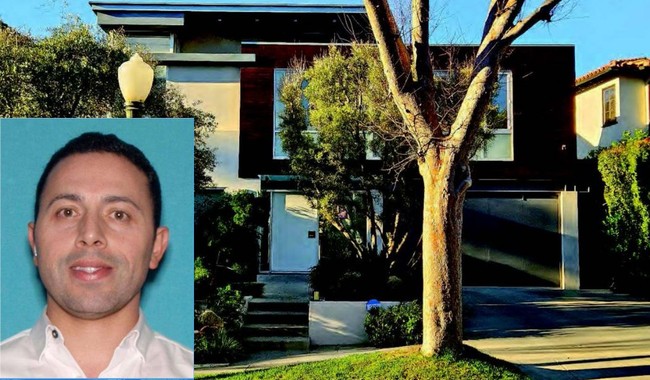
This piece covers the arrest of Alexander Soofer, the executive behind Abundant Blessings, accused of diverting millions meant for Los Angeles homeless services, the alleged discovery of ramen and minimal provisions instead of proper meals, the federal charges and alleged lifestyle funded by the money, and reactions from prosecutors and local officials.
Federal agents arrested Alexander Soofer early Friday at his Los Angeles mansion on wire fraud charges tied to Abundant Blessings, the charity he ran that contracted with the Los Angeles Homeless Services Authority to feed and house people experiencing homelessness. Prosecutors say the charity was supposed to supply three nutritious meals a day to about 600 participants, but investigators found evidence suggesting those promises were not met. The complaint shows photos of sparse food items and a small, dirty microwave instead of prepared, balanced meals. The arrest is part of a wider push by federal prosecutors to root out fraud in homelessness spending across California.
Between 2018 and 2025 Abundant Blessings received over $23 million from those contracts, and prosecutors allege that Soofer “pocketed at least $10 million” for personal expenses. The indictment details luxury purchases allegedly paid for with those funds, including a $7 million Westwood home down payment, major home upgrades, private schooling, gambling and resort trips, private jet travel, and a $475,000 payment connected to a vacation property in Greece. Officials describe this as money that should have gone to meals, housing, and support for people in need but instead financed an extravagant private life.
Photos in the criminal complaint reportedly show inadequate food distributions — cans, breakfast bars, and ramen paired with a microwave — instead of the nutritious meals Abundant Blessings promised. First Assistant U.S. Attorney Bill Essayli emphasized the discrepancy plainly, noting the charity provided “ramen noodles and a microwave.” When complaints reached LAHSA and auditors noticed billing irregularities, investigators conducted site visits and began piecing together a pattern of alleged deception and misreporting.
The U.S. Attorney’s office laid out several alleged schemes in its criminal filing, including fake invoices and sham vendor arrangements to hide the diversion of funds. The complaint alleges Soofer sometimes pretended to pay third-party vendors or lease properties from outside landlords, but instead paid himself or used phony paperwork to justify those expenses. To regulators, it appeared as though legitimate vendor and rent payments were being processed, while real funds vanished into personal accounts and shell companies.
In some contracts, Soofer agreed to house participants at sites he managed. In other contracts, he committed to pay third parties, including hotels or motels, to provide this housing.
[Soofer] also lied about payments supposedly being made to third party vendors for homeless housing services and took steps to conceal that he was diverting the money to his personal bank accounts.
He also made it falsely appear he was leasing properties for homeless housing from third-party landlords at a market rate, when he was instead paying himself above market rate and again misappropriating money that could have been used to help alleviate the homeless housing crisis.
To cover up the fraud, Soofer fabricated fake and misleading invoices – at times stealing the names, addresses, and logos of real companies – to make it appear that the vendor and rent payments were legitimate.
Investigators also found problems with the charity’s board and subcontractor relationships. When a LAHSA investigator asked whether board members knew about Soofer’s spending, it turned out the board was largely fictional or unaware of the charity, officials say. Prosecutors further assert that some subcontractors listed in paperwork were actually companies Soofer owned, a conflict of interest that local prosecutors have since charged him over for failing to disclose his ownership stakes.
The case has drawn sharp commentary from federal prosecutors who say lax oversight enabled the fraud. Essayli, a former state legislator who pushed for audits of homelessness spending, criticized the process for rushing funds to NGOs without proper vetting and oversight. He framed this arrest as a symptom of a larger problem: billions spent with little accountability, creating opportunities for fraudsters to exploit public dollars.
“California is the poster child of rampant fraud, waste, and abuse of tax dollars. The state has facilitated the spending of billions of dollars to combat homelessness, with little to show for it and almost no oversight. Thankfully, the federal government has begun auditing California’s spending and today’s arrest is just one example of how fraudsters have swindled millions of dollars from tax papers. This money should have gone to those in need, instead in lines the pockets of individuals subsidizing their lavish lifestyle.”
Local prosecutors are also pursuing conflict-of-interest charges tied to allegedly undisclosed ownership of companies used in the contracts. Officials have pointed out the bitter irony that, if convicted and incarcerated, Soofer will receive basic shelter and meals in prison that he allegedly denied to the people his charity was meant to serve. This arrest joins earlier shakedowns targeted by the Homelessness Fraud and Corruption Task Force, which has recently focused on multi-million-dollar schemes linked to homeless housing funds.

Add comment