
Checklist: explain the Supreme Court arguments, outline two possible rulings, assess consequences for Congress and national security, and argue why preserving congressional authority matters.
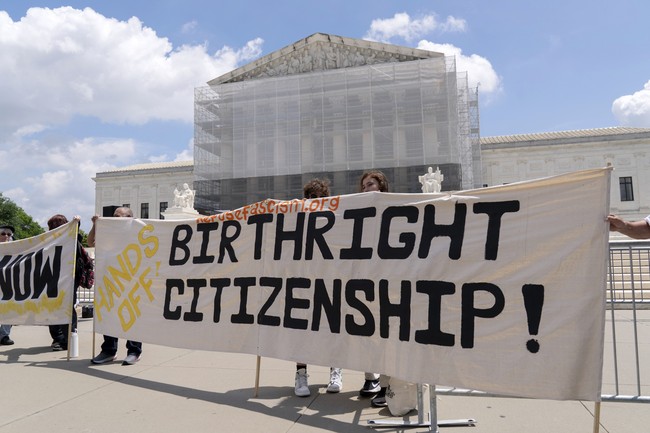
Solicitor General John Sauer made a forceful presentation defending President Trump’s executive order limiting birthright citizenship when the case reached the U.S. Supreme Court in April. The debate centered on how to read the Fourteenth Amendment’s citizenship clause and whether children born to illegal immigrants are “subject to the jurisdiction” of the United States. Conservatives argued the historical record and original meaning do not support automatic citizenship for children of those here unlawfully. The administration framed the issue as one of sovereignty and common sense, not merely legal hair-splitting.
Despite a strong historical case, the courtroom reaction suggested trouble for the executive order. Several justices, including Amy Coney Barrett and Brett Kavanaugh, expressed skepticism about the President’s power to impose such a change unilaterally. That skepticism signaled a likely ruling that would strike down the order, at least in its current form. For Republicans who want immigration fixed, the stakes are about more than a single legal loss; they are about which avenue remains open to restore control of our borders.
One possible outcome is a broad constitutional ruling that interprets the Citizenship Clause to guarantee citizenship to anyone born on U.S. soil, without exception. If the Court takes that route, the decision would render attempts by either the executive branch or Congress to restrict birthright citizenship presumptively invalid. Such a ruling would handcuff future lawmakers and limit common-sense policies aimed at birth tourism, chain migration, and similar practices. That result would be a substantive defeat for those seeking to end incentives that reward unlawful entry or exploitation of loopholes.
If the Court adopts the expansive interpretation, it creates perverse incentives. Wealthy foreigners could exploit surrogacy or birth tourism with impunity, producing U.S.-born children who enjoy American citizenship without the parents ever living here lawfully. Chain migration would remain a potent mechanism for large-scale family-based immigration, and the federal government would have fewer tools to address the national security and public policy problems that follow. For voters concerned about borders and assimilation, that outcome would feel like governance by judicial fiat rather than by accountable lawmakers.
The alternate path is narrower and more politically constructive: the Court could use the “canon of constitutional avoidance” and decline to decide the broad constitutional question. Instead of making a sweeping pronouncement about the Fourteenth Amendment, the justices could find the order unlawful under statutory or procedural grounds and leave the larger constitutional question unresolved. This approach preserves the role of Congress and the political process in addressing complex immigration problems. It keeps the ball in the arena where the American people can vote and lawmakers can craft tailored reforms.
Choosing avoidance is not weakness; it is prudence. It recognizes that Congress has already addressed aspects of birthright citizenship law in 1952 and that elected representatives are better placed to balance immigration enforcement, national security, and individual rights. A decision that labels the executive order illegal rather than unconstitutional would still be a loss for the administration, but it would avoid shutting down legislative remedies. That outcome would allow Republicans in Congress to take responsibility and deliver policy fixes voters expect.
Practical reforms Congress could pursue include measures to curb birth tourism, require a demonstrable domicile for parental claim to citizenship, and tighten visa rules for surrogate arrangements. Those are policy choices with clear safety and sovereignty rationales that voters support. Leaving the constitutional question open would let lawmakers tailor solutions to real-world abuses instead of relying on a single executive action that courts now appear ready to reject.
The political reality is that a Supreme Court ruling is not the end of the line. If the Court strikes down the order but avoids a sweeping constitutional holding, the issue returns to the arena where accountability matters most: Congress and the White House. Republicans should view that scenario as an opportunity, not a dead end. Lawmakers can and should act to close loopholes, defend national security, and restore common-sense limits that protect American citizenship.
Conservative legal strategy should focus on preserving democratic remedies and mobilizing voters and lawmakers to act. A clear, narrowly reasoned decision by the Court that invalidates the executive order on procedural or statutory grounds would force Congress to legislate, which is where durable, bipartisan solutions are made. That is the preferable path for those who believe popular sovereignty, not judicial doctrine, should decide immigration policy.
What matters now is practical action: press Congress to legislate, build public support for reasonable reforms, and hold leaders accountable for delivering results. Protecting American citizenship and securing the border are interconnected goals, and leaving room for legislative fixes keeps those tools available. Republicans who want lasting change should prepare to fight for it where it counts—in the halls of Congress and at the ballot box.



Add comment