
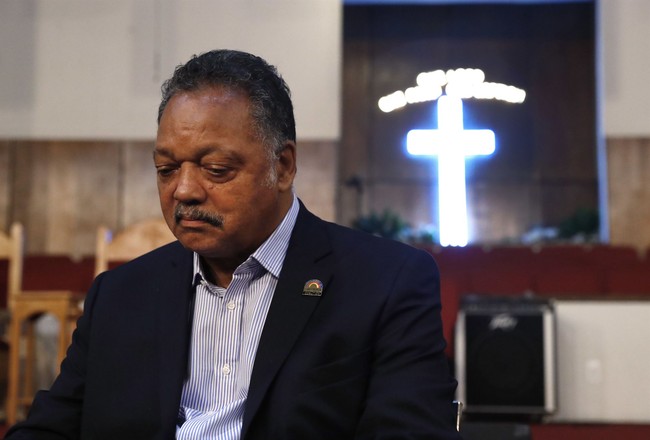
At Jesse Jackson’s funeral, his son publicly criticized former presidents for turning memorial moments into partisan spectacle, arguing the service should honor Jackson’s life rather than become a political platform. This piece covers the reactions from Jackson Jr., contrasts between speakers, and why many saw the event as a missed chance to show basic respect.
The funeral in Chicago became a flashpoint when speakers used the platform to attack political opponents instead of focusing on the late reverend’s legacy. Many attendees and viewers felt the tone veered away from remembrance and toward partisan messaging, which sparked pushback from Jackson’s family.
Jesse Jackson Jr. addressed the issue directly at a separate gathering, making clear his view that the service had been politicized. He said the presidents who spoke “didn’t even really know his father,” a sharp critique aimed at turning the focus back to the man being honored rather than the politics of the moment.
That line landed hard for a reason: a funeral is supposed to be a time to mourn and recall someone’s contributions, not a chance to score political points. For many onlookers, seeing former leaders leverage a memorial to lambaste an opposing movement felt opportunistic and disrespectful.
He added: His father had a “tense relationship with the political order” because of the demands of justice—not race or party. Yet they politicized it anyway.
Talking about Obama, Biden, and Clinton turning the service into a political rally. Dad deserved better.
Jackson Jr.’s rebuke emphasized that his father’s activism was about principles, not partisan theater, and he urged attendees to respect that distinction. His speech framed the misuse of the pulpit as a betrayal of what Jesse Jackson spent a lifetime fighting for.
There’s a stark contrast to point out: some speakers used sharp rhetoric about current political forces, while others stuck closer to personal recollections and reflections on the man’s work. That difference in approach shaped how the funeral was perceived by family, friends, and the public.
Many conservatives saw the moment as another example of political elites using solemn occasions to reinforce their narratives and denigrate opponents. From that perspective, it was unsettling to watch prominent figures channel grief into campaign-style denunciations instead of honoring the breadth of Jackson’s influence.
Jackson Jr. went on to ask the crowd not to bring partisan politics into ongoing services, stressing inclusivity. He said mourners should be “respectful” and that the events welcome people across the ideological spectrum, underlining that his father’s life reached beyond party lines and deserved a nonpartisan tribute.
DO NOT bring your politics, out of respect to Rev. Jesse Jackson, and the life that he lived, to these ongoing services. Come respectful, and come to say thank you. But these ongoing services are welcome to ALL – Democrat, Republican, liberal, and conservative. Right-wing, left-wing. Because his life is broad enough to cover the full spectrum of what it means to be an American.
That message resonated with people who felt the memorial had drifted into partisan territory. Observers claimed Jackson Jr.’s remarks outclassed the tone struck by several speakers who had turned the podium into a stage for criticism rather than commemoration.
Some commentators singled out former President Obama for particularly sharp language that day, arguing his remarks leaned heavily into partisan framing. Critics described those comments as divisive for a moment that should have united people in remembering a civil rights icon’s life and struggles.
There was also attention on how other high-profile figures performed, with complaints about apathy or inappropriate behavior from some in attendance. The debate over who showed proper respect and who did not became part of the larger conversation about decorum and public duty.
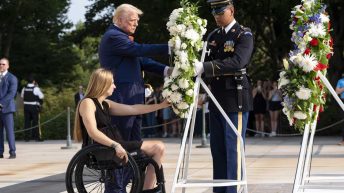
Amid the controversy, many recalled that President Trump attended and delivered remarks that some said kept the focus on Jackson’s complicated legacy rather than attacking political opponents. That contrast fed into larger partisan narratives about who honors tradition and who uses public mourning for political advantage.
“We see science and expertise denigrated while ignorance and dishonesty and cruelty and corruption are reaping untold rewards.”
“Every single day we see that, and it’s hard to hope.”
For those who believe political leaders should show restraint at funerals, Jackson Jr.’s comments were a clear call to return decency to public life. He asked that Jackson’s memory be treated as a bridge rather than a battleground, a request many found both reasonable and necessary.
The episode sparked sharp debate across the political spectrum about when it is appropriate to bring politics into private loss and public mourning. Jackson Jr.’s plea stands as a blunt reminder that some moments demand humility and that respect for the dead should not be weaponized for partisan gain.

Add comment