
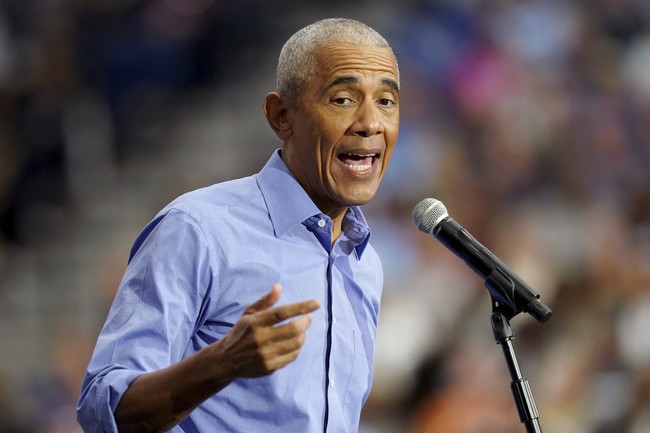
This piece critiques Barack Obama’s new presidential center in Chicago, reacting to its design, the giant text added to its exterior, the announced June opening, the local backlash and legal fights, and broader grievances about his presidency—especially on Iran, Libya, healthcare promises, and the Russia collusion saga—while preserving notable reactions and embeds tied to the announcement.
We’ve commented before about the presidential center in Chicago and the strong reactions it continues to provoke. The building’s brutal, bunker-like appearance struck many critics as cold and imposing rather than inspiring, and adding massive lettering to the exterior only amplified that sense. Visually and symbolically the project has been controversial from the start.
The decision to place large lines of text on the facade feels inward-looking to some observers, turning public space into a personal monument. Placing words from one of his own speeches about Selma on the outside invites a debate about whether the tribute is really about the marchers or really about the man who chose the quote. That choice has been read by critics as an act of vanity in a city that has seen real struggles.
Now, Obama has just posted more about the building, along with announcing the opening day will be in June. The announcement carried a tidy, optimistic line: “Hope is coming home,” which landed oddly for critics who note that the former president now spends much time away from the city. For many locals, the phrasing felt more like image management than a reflection of Chicago’s lived reality.
The center’s rollout has not been smooth. Construction ran significantly over budget and drew legal challenges from neighbors worried about the center’s size, security footprint, and community impact. Those disputes underline a wider critique: a project meant to commemorate civic courage ended up sparking local resentment and lawsuits, which critics say is emblematic of the broader disconnect between elite projects and neighborhood concerns.
Reactions poured in after the latest post, and a number of responses were sharp and sardonic. Observers took aim at the juxtaposition of grand rhetoric and pragmatic grievances, treating the moment as a ripe target for mockery and pointed commentary. Here are some of those reactions captured after the update.
Beyond the architecture and the optics, critics tie the center back to the record of the administration it commemorates. They point to foreign policy consequences as a central part of that record, arguing that certain decisions left dangerous gaps that others now must address. For conservatives, those unresolved consequences are concrete evidence that legacy framing cannot erase messy outcomes.
As long as we’re talking about Obama’s words: The guards are up when rhetoric shows up on monumental buildings, because words carved or cast in public view take on the weight of endorsement and history. Skeptics argue that plastering a message across a facade does not absolve past policy failures or heal divisions that widened during his terms.
On national security, critics emphasize the Iran posture adopted during the prior administration and argue it enabled malign behavior by Tehran that later administrations have had to confront. They see present-day efforts to reverse or counter that policy as necessary cleanup, not mere political critique. Such assessments feed into a broader narrative that legacy projects attempt to whitewash policy missteps.
Other flashpoints from the tenure—interventions that critics describe as chaotic or misleading promises on domestic policy—feed the distrust. Healthcare promises, for example, are still cited when people recall assurances that plans could be kept, and foreign interventions like Libya remain touchstones for those who view the era as marked by bad judgment. It’s not just aesthetics; for many, the building compels a reckoning with policy and promises.
The building itself therefore becomes more than architecture; it becomes a lightning rod for unresolved grievances about leadership and national direction. When a presidential center tries to shape public memory, those unhappy with the record will respond loudly and often with ridicule. That dynamic explains why reactions have been sharp, plentiful, and frequently unforgiving.
Mockery aside, the debate about the center raises a basic civic question: how do communities host memorials that inspire without alienating the neighbors they’re meant to welcome? For now, the center’s grand opening in June will be a test of whether a controversial project can shift perceptions or remain a focal point for criticism. The answer will hinge on how the center balances commemoration with accountability and community trust.
Add comment