
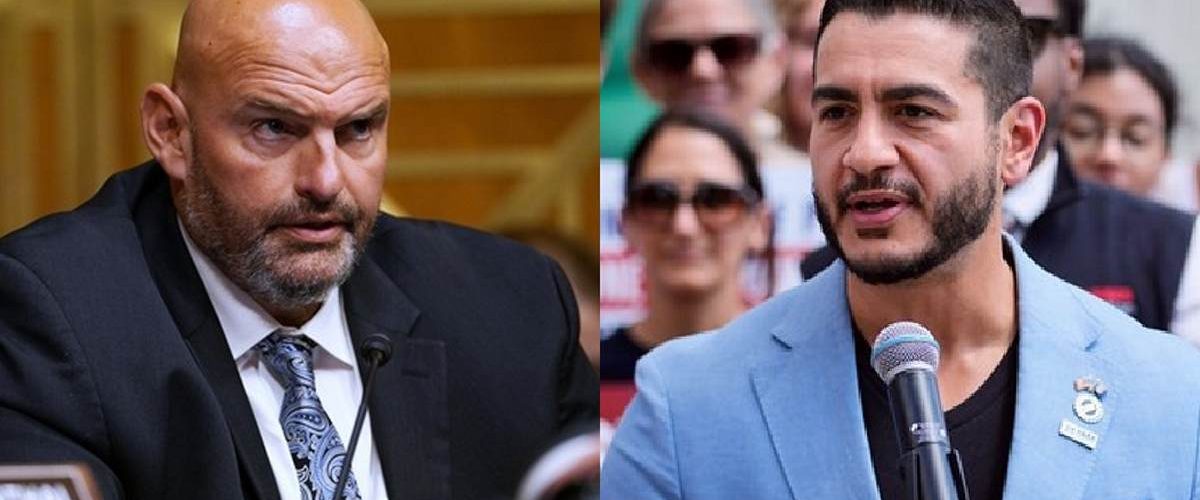
I’ll lay out what this piece covers: why John Fetterman’s challenge to Abdul El-Sayed matters, how Fetterman framed the dare on 9/11, the role of Hasan Piker in the exchange, reactions from conservative voices, the political stakes for Democrats, and what this tells voters about alliances shaping the 2026 races.
John Fetterman, a Democratic senator from Pennsylvania, has surprised many on both sides by taking a sharp stand in the current political fight. From a Republican perspective, I’m not aligning with his policies, but his recent public challenge to Michigan Senate nominee Abdul El-Sayed is the kind of direct political confrontation we rarely see from Democrats these days. Fetterman’s callout centers on the optics and associations El-Sayed has with figures who have made deeply offensive statements about America and Israel. That confrontation landed during an appearance on Fox News and has reverberated across social and traditional media.
Fetterman accused El-Sayed of aligning with extreme voices and invited him to confront that alignment on a symbolic date. He urged El-Sayed to “Show the people who you are,” and to explain his relationships and beliefs in a public forum on a day loaded with national meaning. The senator framed the challenge for the 25th anniversary of 9/11, pressing El-Sayed to appear with his controversial associates and answer tough questions about ideology and loyalty. Republicans will note the sharpness of the contrast: Fetterman defending America and Israel in a way many Democrats have not.
One of the central lines from Fetterman was aimed at a streamer and commentator who has been a lightning rod for criticism. Fetterman said, “He’s a socialist. But he also absolutely loves Sharia Law. I mean, he said that in an interview with the New York Times, a few years back, yeah, absolutely — Sharia Law. And now he absolutely has support for Hamas and Iran, as well, too, and a lot of the other things that have come out over from his past conversations and other things that he said on social [media]; defund the police and all those things.” Those exact words put the spotlight on alliances and rhetoric that are becoming central to the midterm narratives.
Fetterman then named Hasan Piker directly and pushed El-Sayed to show up with him on 9/11, offering a large public incentive to make the point unavoidable. In Fetterman’s words, “And now he has been campaigning strong with Hasan Piker. You know, of course, we all know the guy that said America deserved 9/11, and that absolutely despises Israel and Jews, and that, and I’m encouraging El-Sayed, you know, remind everybody in Michigan who you are and the kind of people that you stand with.” He followed with a provocation: “And I’m offering $50,000 for you to do a rally with Hasan Piker on 9/11, the anniversary, and you could all explain to people why America deserved that 25 years ago.”
Fetterman doubled down immediately after, escalating the pressure and assigning culpability to those El-Sayed surrounds. “Or, or do a rally, that’s another $50,000. If you do a rally with your sister, you know, that she celebrates publicly after the massacre of 10/7 for that, too. These are the people that he aligns with. That’s the kinds of folks that helped him win the primary now.” Those words were chosen to force clarity, to make voters decide if they want candidates tied to individuals who celebrate violence or embrace radical rhetoric.
Conservative voices have been quick to amplify the challenge, drawing attention to statements they view as beyond the pale and to the stakes of such alliances. One outside commentator summed it this way: “I survived Islamic terror. I know this when I see it.” That kind of testimony feeds into a broader Republican argument that national security, support for Israel, and opposition to extremist ideology should be decisive issues for voters in 2026. The Fetterman-El-Sayed confrontation puts those issues in plain sight.
https://x.com/RNCResearch/status/2095169476996071473
What matters next is how El-Sayed responds and whether other Democrats disown or defend the associations in question. For Republicans, Fetterman’s challenge is a strategic gift: it forces a rival to define himself publicly under intense scrutiny. The larger lesson for voters is simple and stark — alliances and rhetoric now shape campaigns more than ever, and candidates will be judged not just by policy proposals but by the people they choose to stand beside. This moment could reshape narratives in key Senate contests as the fall campaign heats up.

Add comment