
Checklist: Explain the regional escalation and U.S. responses; describe Kuwait’s official reaction; report Iran’s missile and drone strikes and prior actions in the Strait of Hormuz; include President Trump’s quoted statements and outline U.S. “tanker for tanker” policy implications.
Iran launched missiles and drones at Kuwait in the predawn hours, aiming at U.S. assets and regional stability. Kuwait’s defense apparatus intercepted the attack, and the government labeled the strikes a serious breach of its sovereignty. The incident comes amid a wider burst of violence that has hit several Gulf neighbors in quick succession. This episode underscores how a single aggressive regime can escalate quickly across borders.
Kuwait’s Ministry of Defense publicly called the attack “a blatant Iranian aggression,” and the Foreign Ministry described the strikes as a “direct threat.” Officials warned that these actions undermined diplomatic efforts designed to cool tensions, signaling that Kuwait considers this more than a one-off provocation. The Ministry also made clear that it reserved the right to respond, putting the region on edge about what might come next. That declaration raises the stakes for all nearby states watching for further moves.
The Ministry of Foreign Affairs expresses the State of Kuwait’s condemnation and strongest denunciation of the repeated heinous Iranian aggressions against the country, the latest of which occurred at dawn today, in flagrant violation of its sovereignty, a direct threat to its security and stability, and the safety of its citizens and residents on its territory, and a grave breach of the rules of international law, the United Nations Charter, and Security Council Resolution 2817.
The Ministry reiterates its affirmation that the continuation of these brazen aggressions reflects a hostile approach, constitutes a dangerous escalation that threatens the security and stability of the region, and systematically undermines diplomatic efforts aimed at de-escalation and reducing tensions.
Before the Kuwait strikes, Iran tried to disrupt commercial shipping in the Strait of Hormuz by deploying launchers meant to fire mines into the waterway. U.S. forces destroyed those launcher positions at Larak Island, aiming to protect global maritime traffic. Afterward, Iran expanded its campaign and struck at neighboring countries, including Jordan, Bahrain, and the United Arab Emirates. Those successive actions show a coordinated pattern of pressure intended to test both regional defenses and American resolve.
The U.S. employed targeted strikes in response, taking out a range of Iranian sites linked to those maritime threats. Washington has also signaled a tougher, more immediate policy on commercial shipping: a “tanker for tanker” approach that promises retaliation for any vessel damaged by Iranian actions. That posture is designed to raise the cost for Tehran by hitting its economic and logistical interests. It also sends a direct message that attacks on international commerce will produce proportionate consequences.
American officials say the strikes were meant to remove both offensive and defensive capabilities Iran had been building near the Strait of Hormuz. The goal was to blunt Iran’s ability to project power into a critical shipping corridor and to deter further attempts to menace commercial traffic. Those moves reflect a strategy of targeting infrastructure and military assets that enable aggressive behavior rather than broad occupation or escalation. For Republicans and national security hawks, this approach fits a long-standing view that strength and precise retaliation prevent wider wars.
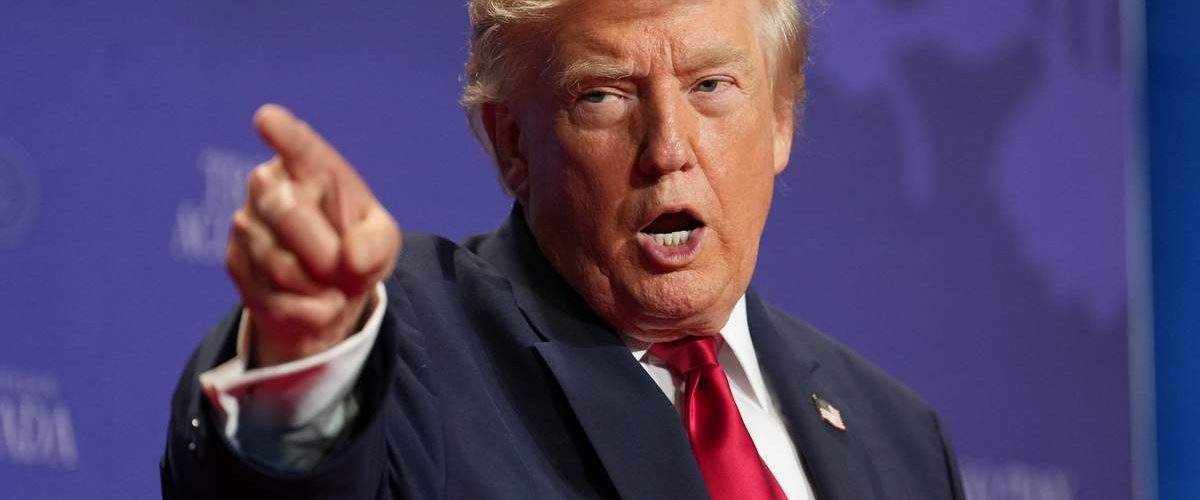
President Donald Trump framed the U.S. actions as decisive and technologically superior, stressing the readiness to strike again if necessary. He argued the recent strikes inflicted major damage on Iranian systems and showcased American military advantages. Those statements were intended to reassure allies and warn adversaries that the U.S. can and will act to defend its interests and partners in the region. The president’s comments also underscore a political posture favoring firm, visible responses to aggression.
“It was a very heavy attack last night, and we’re prepared to do another one anytime we want,” Trump said.
Trump said the U.S. “blew up much more than their radars,” touting America’s advanced defense systems.
“We have technology that’s incredible. Nobody has technology like we have. So, we hit them hard last night, very hard. They gave a little love tap, but we hit them very hard,” Trump said.
“We took out all of the new equipment that they tried to build along the Strait of Hormuz, some defensive, some offensive.”
Regional leaders and U.S. strategists are watching closely to see whether Kuwait or other Gulf states will take independent military steps or coordinate more closely with Washington. Any retaliation by regional governments risks a larger confrontation, but doing nothing could invite further strikes. For American policymakers who favor deterrence, the current posture aims to make aggression unprofitable for Tehran. The next few days will be decisive in testing whether force and diplomacy can combine to end the episode without spiraling into broader conflict.



Add comment