
This article examines New York Gov. Kathy Hochul’s accusation that President Trump is “defunding the police,” the sharp rebuttal from Attorney General Todd Blanche, and the wider debate over federal homeland security funding and sanctuary policies unfolding just before the 25th anniversary of 9/11.
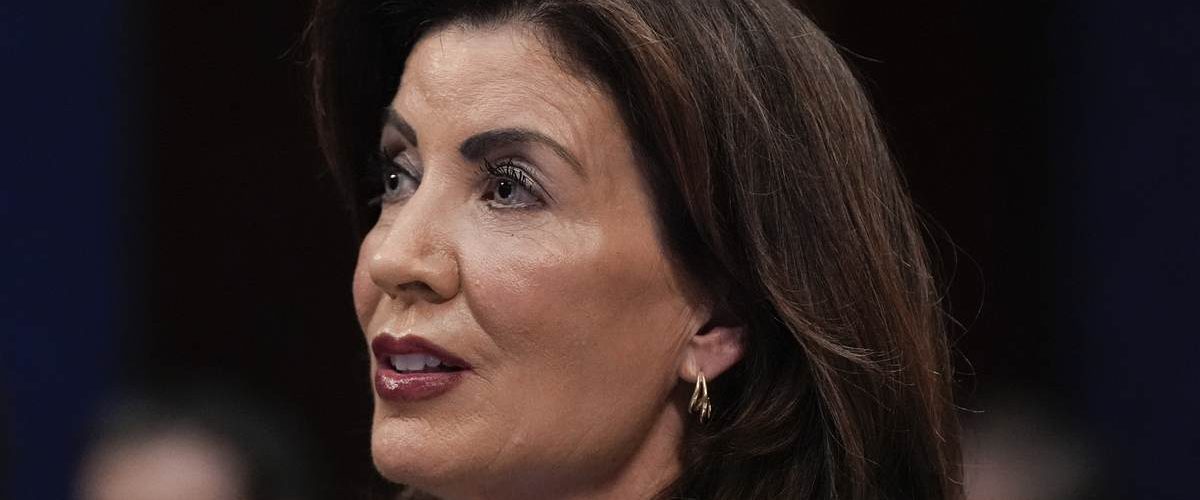
Kathy Hochul used a high-profile appearance in Manhattan to claim Washington was withholding $87 million in counterterrorism money and to accuse Donald Trump of betraying first responders. “Donald Trump is defunding the police,” she declared, adding, “Another example of Donald Trump endangering public safety to yet again extract revenge on a blue state.” The timing—near the 9/11 anniversary—made the moment more dramatic and the dispute louder.
Blanche fired back in a TV interview, dismissing the spectacle as intentional misdirection. “Talk about getting gaslit by a governor who has done nothing but try to fight us,” he said, arguing Hochul and City Hall were turning a routine grant disagreement into theater. He insisted the claim was a publicity stunt and not a genuine defense of law enforcement.
“We will always support the police,” added Blanche. “President Trump always has and always will, and they know it, so this was nothing but a publicity stunt, and the American citizens will reject it.” He emphasized that the federal relationship with New York on security funding is nuanced, not the simple political attack Hochul portrayed.
The political optics were sharpened by Hochul’s lunchtime partner onstage, Mayor Zohran Mamdani, whose past statements about policing have been confrontational. Critics pointed out his prior characterizations of police as racist, anti-queer, and dangerously flawed, and noted calls to “Defund it. Dismantle it.” That lineup made it easy for opponents to cast the press event as a coordinated political move rather than a policy briefing.
Blanche did not hold back on tone. “It’s like she’s trying to write an article for The Onion,” Blanche continued. “I mean, it’s insane. She can’t even believe what she’s saying.” The harsh language reflects how this debate is being framed: not as a technical funding spat, but as a moral and political battle over who protects cities and how.
Beyond rhetoric, the question of actual dollars surfaced quickly. Blanche argued New York has not even spent all the federal homeland security money it already received, making Hochul’s urgent claims seem manufactured. FEMA’s critique strengthened that point: “Governor Hochul is manufacturing a funding crisis despite New York sitting on more than $300 million in UNSPENT federal homeland security funding.” The agency also noted, “In fact, they traditionally received allocations significantly ABOVE risk-based formulas, allowing them to rake in MORE and MORE money than other states.”
https://x.com/GovKathyHochul/status/2094853191267451375
FEMA’s statement pressed a practical question: why demand more taxpayer funds when a large stockpile of unspent federal grants already exists. That challenge reframes the dispute from a partisan attack into an accountability issue about how emergency funding is budgeted, tracked, and used at the state and local level.
Meanwhile, DHS Secretary Markwayne Mullin’s remarks in New York added another layer to the fight. “I don’t think we should be sending one federal penny to sanctuary states and sanctuary cities,” Mullin said, criticizing sanctuary policies while touting ICE enforcement. The secretary’s stance connected immigration policy to the broader conversation about federal support and who qualifies for it.
Blanche and other critics portrayed the whole episode as a distraction from local policy choices that have limited law enforcement options across the state. They argued that New York’s own decisions—not federal cuts alone—have constrained authorities and that political theater should not replace practical stewardship of homeland security dollars. That perspective pushes responsibility back onto state and local officials to show how existing funds are being spent to protect citizens.
The exchange plays into larger debates over federalism, policing, and public safety priorities in big cities. On one side are officials warning that reduced federal support risks weakening counterterror efforts; on the other are state and city leaders pointing to shifting Washington priorities and demanding more resources. The result is a loud, personal, and politically charged confrontation rather than a quiet, technical negotiation about grants and spending.


Add comment