
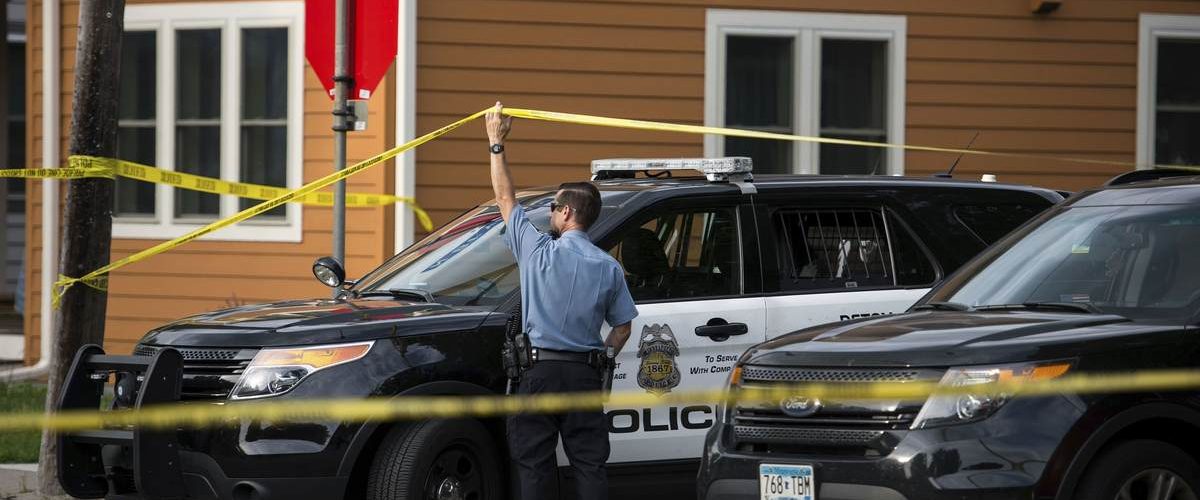
The Minneapolis apartment shooting that left multiple people dead and officers wounded has exposed a string of warning signs about the suspect and renewed questions about public safety, repeat offenders, and decisions by city and state leaders that reshaped policing after 2020.
Authorities identified the suspected shooter as 35-year-old Carlton Neal Johnson II, a resident of Shoreline Plaza who was already on police radar and reportedly facing eviction. Public records show Johnson had been involved in numerous legal incidents over the years, including traffic cases, two domestic-assault allegations, and two misdemeanor drug charges, totaling 34 separate matters on his record. Those incidents, combined with complaints from building management, paint a picture of a resident who had been a persistent problem for months leading up to the attack.
Building management alleges Johnson committed six lease violations between January and June, including an alleged assault in March, exhibiting a firearm around the property, and threats that included the line “would kill someone.” Court filings and eviction papers described alleged episodes where Johnson entered the management office displaying a firearm and threatened residents and staff. Johnson denied the allegations in filings and said he had a permit to carry a handgun, but his denials do not erase the pattern neighbors reported.
Neighbors provided specific, chilling accounts about Johnson’s behavior in the days before the rampage. One resident, Chris Miller, recounted that Johnson said only days before the attack that he intended to shoot his ex-girlfriend and two property managers, and that he told him, “I’m going to shoot people.” Miller described Johnson as “very, very, very angry, drunk and mad” and said Johnson had shown him his handgun and carry permit. Another witness claimed Johnson grabbed her shortly before the shooting while declaring he was going to “kill my baby mama.” These statements from neighbors suggest a man broadcasting clear threats well before violence erupted.
Johnson’s violent behavior reportedly stretched back years, including a 2018 domestic incident where he was accused of assaulting a sibling and allegedly said he had a gun and was “not afraid to shoot people in the face.” He pleaded guilty to destruction of property, served four days in jail and received probation, while a judge noted he appeared to have “anger issues.” Those past encounters offer further evidence that this was not an isolated escalation but part of a longer pattern officials could have tracked and acted on more decisively.
Despite the multiple red flags and ongoing eviction proceedings, there is no public indication that prosecutors or police took steps that halted Johnson’s escalation before he opened fire. The eviction process at Shoreline Plaza was civil in nature, with a hearing scheduled for September 11, and civil matters often move too slowly to prevent violence. That gap between civil remedies and criminal enforcement is precisely where dangerous people can remain freely among neighbors until tragedy strikes.
When officers arrived after reports of shots fired, they reached the building in less than two minutes according to police statements, confronting low visibility and an active shooter on an upper floor. Officers exchanged gunfire with Johnson, who was later found dead at the scene; some reports indicate a self-inflicted gunshot, though authorities say the precise circumstances remain under investigation. The response by law enforcement under those conditions likely limited further loss of life, and officers who entered the building deserve recognition for their rapid action.
Still, the case will inevitably raise scrutiny over how Minneapolis handles repeat offenders and public safety after sweeping changes to policing following the 2020 riots. Minnesota Governor Tim Walz championed a broad set of reforms at the time, declaring “Minnesotans are demanding real change” and that “Minnesota will change the way we do policing.” Six years on, critics argue those reforms have at times weakened accountability and law enforcement tools that might have curtailed a dangerous trajectory in a case like this.
The shooting killed two civilians and wounded five others, including two officers; a third officer suffered a non-gunfire injury and is expected to recover. Minneapolis Mayor Jacob Frey said the “death toll would have been far higher” without the officers’ actions, and that claim highlights the immediate bravery on scene. Yet the broader, tougher question remains about whether earlier interventions could have prevented any deaths at all.
As investigators piece together the timeline, the events raise uncomfortable policy questions for city and state leaders about the balance between civil processes like eviction and criminal enforcement, the management of repeat offenders, and how law enforcement is empowered to act on persistent threats. Those questions will be central to public debate in Minneapolis as the community seeks to reconcile safety for residents with the legal structures that govern enforcement and due process.
Add comment