
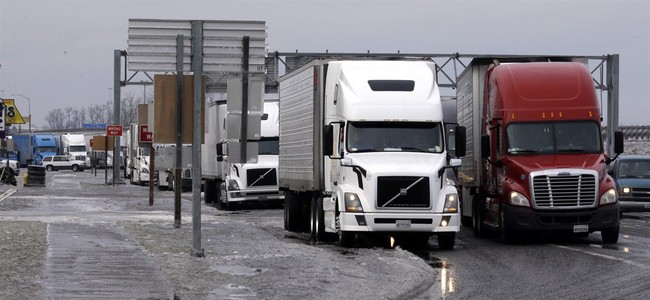
The Department of Transportation says Illinois has become a hotspot for non-domiciled commercial driver’s licenses issued to people who shouldn’t be behind the wheel of 18-wheelers, and federal officials are threatening to withhold big funding unless the state acts fast.
The revelations about illegal immigrants operating large commercial trucks without proper qualifications are alarming and have put new pressure on the federal-state relationship on immigration enforcement and road safety. This comes amid a broader critique from Republicans who blame the Biden administration’s border posture for letting unvetted drivers enter and remain in the country. Federal action aims to force states to choose between following safety rules and losing substantial highway funds.
According to federal inspectors, Illinois issued a startling number of non-domiciled commercial learner’s permits and commercial driver’s licenses before the Federal Motor Carrier Safety Administration ordered the state to halt issuing them. The DOT has given Illinois 30 days to revoke improper licenses and come into compliance or face the potential loss of roughly $128 million in federal highway funding. That kind of funding leverage is meant to compel swift fixes to what regulators call a glaring public-safety lapse.
The DOT’s notice also included a strict order aimed squarely at the state’s licensing processes: “immediately pause the issuance of all new, renewed, transferred, amended, corrected, reprinted, or upgraded non-domiciled CLPs and CDLs until FMCSA (Federal Motor Carrier Safety Administration) provides written confirmation that the State’s corrective action plan has been accepted and implemented.” This is not a request; it is a federal mandate tied to safety compliance.
Transportation Secretary Sean Duffy has publicly voiced frustration with states that appear to prioritize local politics over national safety, saying states must act on the findings and clean up licensing practices. He argued that allowing unvetted, unqualified drivers onto American roads is unacceptable and that federal consequences will follow if states do not cooperate. Duffy framed the enforcement as protecting American families and restoring proper standards for commercial driving.
There is a broader national picture here, with similar issues identified in other states where non-domiciled CDLs were issued improperly. California faced an even larger penalty threat when federal officials said the state failed to revoke thousands of questionable licenses by a federal deadline, prompting the DOT to announce withholding of $160 million in federal money. Those moves signal a tougher federal posture toward states perceived as enabling a flawed licensing pipeline.
Reports have surfaced that numerous commercial driving schools did not meet safety and training standards, with inspections finding unqualified instructors and inadequate testing of students. An investigation revealed hundreds of schools under scrutiny, a finding that raises serious questions about how CDL standards were enforced at the local level. Poor oversight in training programs directly feeds the problem of inadequately prepared drivers entering the heavy-truck workforce.
The safety implications are straightforward: drivers who cannot read English road signs, do not understand U.S. traffic rules fully, or who were never properly tested pose increased risks for everyone on the road. Republican officials have highlighted these risks while criticizing federal and state leaders who they say ignored the warning signs. The argument is that national security and public safety require firm, consistent enforcement of licensing rules across all states.
Federal enforcement tools now include withholding funds and demanding immediate corrective action plans, and officials have shown willingness to use them. States resistant to complying face not just monetary penalties but national scrutiny and political blowback. That reality pressures governors and state agencies to align with federal safety expectations or face concrete consequences.
While the political debate over immigration policy continues on Capitol Hill, the current fight centers on enforcement of existing trucking and highway safety rules. Republicans pushing for stricter checks argue this is a commonsense step to prevent dangerous outcomes on highways and to protect taxpayers who fund federal transportation programs. The core demand is simple: enforce the law and keep unqualified drivers off public roads.
With the DOT’s deadlines in place and funding at risk, Illinois must decide whether to revoke suspect licenses, implement corrective measures, and shore up oversight of CDL issuance and training. Federal officials have shown they will not hesitate to use budgetary leverage to force compliance. The coming weeks will reveal whether Illinois and other targeted states comply or choose to challenge federal directives amid a fraught political backdrop.
ICE and CBP continue to put themselves in harm’s way in order to protect America’s sovereignty and to keep our streets safe.


Crush the Illinois government!