
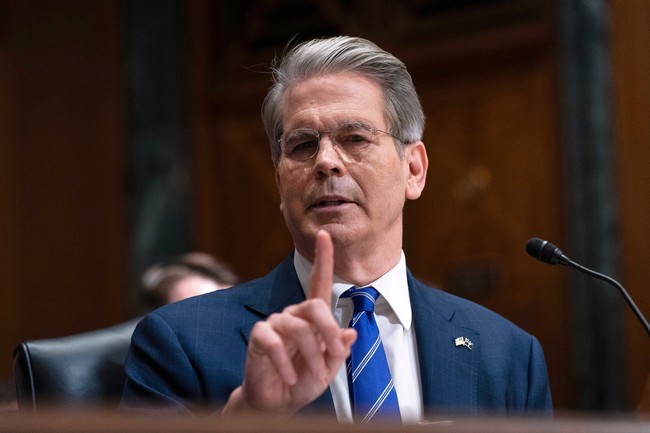
Treasury Secretary Scott Bessent responded to the Supreme Court’s ruling on tariff authority, outlining the administration’s view that alternative legal tools can maintain tariff revenue while warning the decision reduces the president’s immediate leverage and could complicate refunds and litigation ahead.
New: Treasury Secretary Bessent Reacts to Supreme Court Tariff Decision
On Friday, Treasury Secretary Scott Bessent weighed in after the Supreme Court limited the use of IEEPA to raise revenue, framing the ruling as a setback for speedy presidential leverage but not a total bar on trade actions. He argued the administration already has other authorities it can use and said Treasury’s estimates show revenue could remain largely unchanged next year.
Bessent spoke at a briefing covered by C-SPAN about the range of alternatives the administration will pursue in the wake of the court’s decision, emphasizing contingency planning and legal backup options. He stressed that the decision narrows one specific authority but does not, in his view, eliminate the government’s ability to act on national security grounds.
First: At a briefing covered by C-SPAN, Bessent spoke on the alternatives available to the .
Secretary Bessent said in part:
I’d also like to take a moment to address today’s Supreme Court ruling, and I would note, that I did not change a single word in my speech, post the ruling. President Trump will always put our national security and Americans first. And as I have said before, the president has multiple tools in his toolbox. Let’s be clear about what today’s ruling was, and what it wasn’t. Despite the misplaced gloating from Democrats, ill-informed media outlets, and the very people who gutted our industrial base, the court did not rule against President Trump’s tariffs. Six justices simply ruled that IEEPA (International Emergency Economic Powers Act) authority can not be used to raise even one dollar of revenue.
This administration will invoke alternative legal authorities to replace the IEEPA tariffs. We will be leveraging Section 232 and Section 301 tariff authorities that have been validated through thousands of legal challenges. Treasury’s estimates show that the use of Section 122 authority combined with potentially enhanced Section 232, and Section 301 tariffs, will result in virtually unchanged tariff revenue in 2026.
Bessent noted the statutes the president referenced are longstanding and have faced extensive litigation in the past, but he acknowledged new legal fights are likely and will be resolved later through the courts. He presented the administration as prepared to pivot quickly and use validated statutory authorities to pursue the same policy goals. The tone aimed to reassure markets and partners that policy continuity is possible even after the high court’s ruling.
Later, speaking with :
The post continues:
Think to this time last year when POTUS put on the fentanyl tariffs against Mexico, Canada, China for precursor chemical. We saw a RAPID decline in fentanyl deaths. If that’s not emergency authority, what was?
So in terms of the direction of travel, national security, how we will get there with these deals, revenue, nothing has changed.
But what has changed, the Supreme Court has taken away the president’s leverage.”
In a later exchange with Will Cain, Bessent doubled down on the idea that removing IEEPA as a revenue tool cost the president quick, unilateral leverage that had been useful in past crises. He cited the fentanyl tariffs and a response to Chinese export controls as examples where immediate presidential authority brought swift results. Bessent argued those outcomes demonstrate why the administration valued that particular tool.
Again, Secretary Bessent replies to Mr. Cain:
Will Cain: So, I listened to you speak this morning. And, we’ve heard from the president. It sounds like the position of the administration is really, nothing has changed today.
Secretary Bessent: Well, Will, to be clear, today was a loss for the American people, because, by taking away President Trump’s instantaneous leverage, using the IEEPA authority, the American people have suffered a significant setback. Think to this time last year, when President Trump put on the fentanyl tariffs against Mexico, Canada, China, for precursor chemicals. And then, we saw a rapid decline in fentanyl deaths. If that’s an emergency authority, what was?
On October 8th, when the Chinese government said they were going to put a worldwide export control on any product that had .01 percent Chinese rare earths in it, 24 hours later, President Trump said that he would impose a 100 percent tariff on China if they did it, they immediately came to the negotiating table and we were able to negotiate a one year extension. So, in terms of their direction of travel, national security, how we will get there with these deals, nothing has changed. But what has changed, the Supreme Court has taken away the president’s leverage, but in a way, they have made the leverage that he has more draconian, because they agreed, he does have the right to (impose) a full embargo.
Commentators have noted that the court’s ruling limits a specific economic lever but leaves broader powers like embargoes on the table, a point Bessent and the president both highlighted as potentially more severe. The administration framed that as both a loss of nimble authority and a shift toward harsher options if needed. Legal experts expect prolonged litigation over collected revenues and the scope of relief that might be ordered.
Will Cain asked about refunds and the roughly reported sums already collected, and Bessent said the court’s lack of guidance makes estimating outcomes difficult and could drag on for months or years. He suggested the final payout figure might be lower than initial estimates but still substantial, and warned any refunds could amount to corporate welfare. Those comments underscore the practical, financial stakes involved while litigation proceeds.
For now, the administration says it will press ahead using alternate statutes and continue to assert national security priorities through trade policy while courts sort out the finer points of the ruling and any required remedies.

Add comment