
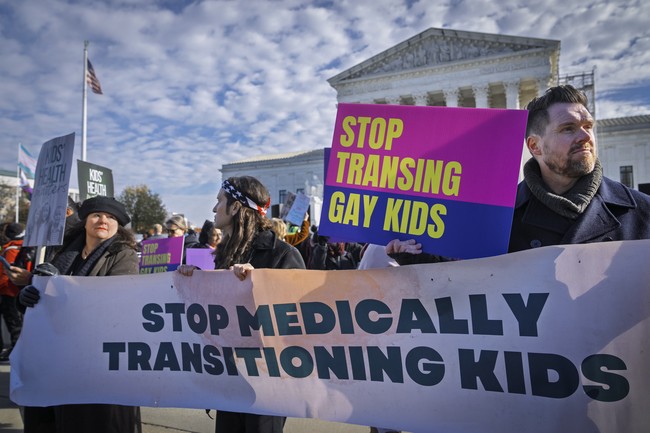
The story covers recent decisions by major health systems to end transgender youth medical programs, the federal funding pressure behind those moves, legal fallout from detransition cases, and political responses pushing back in defense of continued gender-affirming care.
Falling Like Dominoes: NYU Langone Health Hospital Will End Its ‘Transgender Youth Health’ Program
Hospitals in traditionally blue states are quietly rethinking programs that provide gender transition care for minors after new federal pressure threatened Medicare and Medicaid dollars. Faced with the choice between losing crucial funding and continuing controversial treatments for adolescents, several systems have chosen to pull back. That financial reality is reshaping health care offerings faster than many anticipated, and the consequences are already visible.
Massachusetts’ Baystate Health recently announced it would stop prescribing hormones and puberty blockers to patients under 18 while maintaining mental health counseling services. The system said patients’ medications would be transferred to other providers, and framed the move as a response to an evolving regulatory landscape that threatens hundreds of millions in federal funding. That pragmatic choice reflects how hospitals balance patient care with institutional survival.
Baystate Health is reportedly ending its hormone prescriptions for transgender youth under 18 to protect its Medicaid and Medicare funding.
In a letter to parents and guardians earlier this month, shared with The Boston Globe, the Springfield health care system said it would continue to offer mental health counseling for these adolescents but would stop prescribing gender-affirming hormone medications and puberty-blocking drugs.
According to the letter, the patient’s medications will be transferred to Transhealth or another provider of the patient’s choice.
“This decision offers patients the specialized expertise and continuity of care they need and deserve and reflects the evolving regulatory landscape that threatens hundreds of millions of dollars in hospital Medicaid and Medicare funding,” Baystate said in a separate statement to Boston.com.
In New York, a major Manhattan provider followed suit, announcing the closure of its Transgender Youth Health Program amid the same federal threats. NYU Langone cited the departure of its medical director and the current regulatory environment as primary reasons for the decision. Hospitals rely on federal reimbursements for a large share of revenue, and that makes policy shifts from Washington an existential issue for large health systems.
A major Manhattan hospital, faced with threats of losing federal funding, has closed its prominent medical program for treating transgender youth.
The move by the hospital, NYU Langone Health, comes after the Trump administration in December proposed rules that would pull federal dollars from any hospital that provides gender transition treatments for adolescents, such as puberty blockers, hormone therapy or surgery.
On Tuesday night, a spokesman for NYU Langone issued a statement citing “the current regulatory environment” as among the reasons the hospital had decided to discontinue its program for gender-related care for youth.
“Given the recent departure of our medical director, coupled with the current regulatory environment, we made the difficult decision to discontinue our Transgender Youth Health Program,” according to the statement, which was provided by an NYU Langone spokesman, Steve Ritea.
There’s more than funding at stake: litigation from detransitioners is creating new legal and reputational risks for providers who performed irreversible procedures on minors. One high-profile malpractice judgment in favor of a detransitioned patient has signaled that courts may hold clinicians accountable for decisions that led to permanent changes. Hospitals now weigh potential lawsuits and mounting public scrutiny alongside regulatory pressure when deciding whether to continue controversial services.
Several medical groups that once supported transition procedures for minors are reexamining their stances, and some are stepping back from earlier endorsements. That retreat contributes to a broader realignment inside medicine: boards, insurers, and legal teams are all recalculating exposure and liability. For institutions that depend on federal programs and public trust, the calculus favors caution.
Board-certified plastic surgeon Dr. Ira Savetsky publicly reacted to NYU Langone’s decision and voiced regret for not speaking up earlier. He framed his response in moral and parental terms and explicitly credited the president for taking a stand on the issue. His statement captures how some clinicians now view their professional responsibility in light of changing public and regulatory sentiment.
And as a father of three young children and as a physician who took an oath to “Do No Harm,” I failed to speak up. And, I just want to thank President Trump for having moral clarity on this and our society finally came out strongly against this, Savetsky said.
Political leaders in some states are pushing back hard, framing the shutdowns as life-or-death matters and demanding directives to keep gender-affirming care available. New York officials, for example, have urged state health authorities to order hospitals to continue those services and warned of risks if care is withdrawn. Those demands clash directly with the financial reality confronting hospitals and the federal policy changes prompting the shutdowns.
At the same time, public relations concerns and high-profile criminal cases have damaged the reputations of institutions that once championed broad access to gender-affirming interventions. Boards sensitive to donors, regulators, and patient trust are making decisions that protect balance sheets and community standing. The combined pressure of funding, lawsuits, and reputational risk explains why several programs are being discontinued now.
Hospitals will keep weighing the trade-offs between clinical offerings and federal funding streams, and more institutions may follow the lead of Baystate and NYU Langone if the regulatory environment remains uncertain. The shift already underway shows how policy choices in Washington can ripple through the health system and alter care options available to young patients.
Greed wins, and in this case, it’s a good thing.
WATCH:
The political fight over these services continues in Congress and in state capitals, where competing visions for health care and adolescent treatment are driving sharp disagreements. Advocates on both sides will keep arguing about evidence, ethics, and legal obligations, but hospitals must still answer to budgets, boards, and the law when making immediate operational choices.



Add comment