
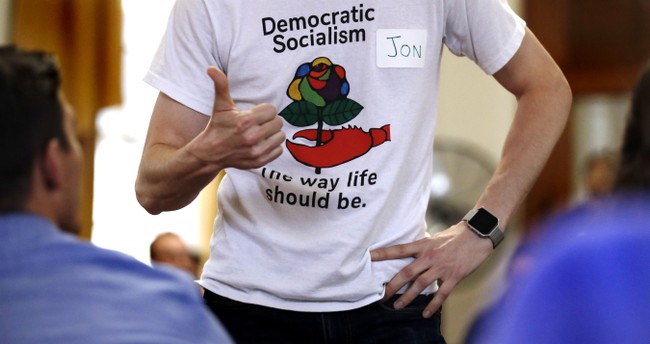
The Party for Socialism and Liberation is opening local “Liberation Centers” across the country, backed by significant funding linked to a China-based donor, and their strategy aims to recruit and radicalize young people through local grievances and community centers; this article explains what those centers do, where some are located, who funds them, and why conservatives view them as an organized threat to law and order and traditional civic institutions.
The more successful President Trump is, the angrier and more radical the left becomes, and that rage has a clear organizing strategy behind it. A group called the Party for Socialism and Liberation, or PSL, has been establishing physical hubs called Liberation Centers designed to gather activists, host workshops, and network local causes. These centers are not casual community spaces; they function as infrastructure to turn local frustrations into sustained political action that aligns with far-left ideology.
Reports indicate roughly two dozen or so centers are up or in development, with several clustered in Pennsylvania and others in cities like Portland and Houston. The movement’s backers include wealthy donors linked to overseas interests, notably a former tech executive now based in Shanghai who has funneled millions into aligned groups. That financial backing lets the movement open spaces, print materials, and run programs that feel grassroots but are coordinated.
Inside these centers you’ll find programming that promotes abolitionist and Marxist themes, workshops on dismantling policing, and literature celebrating revolutionary figures. They reach into schools and youth spaces, encouraging disruptions and creating pathways into activist pipelines that channel teenagers toward organized protests. From a conservative perspective, that is not benign community organizing but targeted recruitment that undermines parental authority and public safety.
Investigative analysts describe a simple model at work: identify a local grievance, radicalize it, and build durable organization around it. That pattern shows up in the kinds of events Liberation Centers promote — from school walkouts to campaigns aimed at law enforcement or immigration enforcement agencies. Those activities are framed as fighting racism, poverty, and war, but critics point out the deeper ideological project: normalize revolutionary ideas and prepare activists for large-scale political confrontation.
These centers often staff themselves with organizers who move from city to city, planting the same blueprint in different communities. They cultivate relationships with sympathetic local groups and create front-facing projects like cafes or student unions that appear harmless on the surface. The goal, according to observers, is to create an ecosystem of overlapping organizations that support each other and multiply influence at the local level.
“Their model is simple; find a local grievance, radicalize it, and turn it into movement infrastructure. These centers are often staffed by semi-local organizers who cut their teeth elsewhere, then parachute into new communities. They reach out to teenagers, encourage school disruptions and walkouts, and help create mini-PSL pipelines disguised as harmless ‘student unions.'”
Examples highlighted by analysts include invitations to organize walkouts targeting immigration enforcement and workshops labeled “Prison Abolition — Marxist Perspective.” Cultural symbols and literature honoring revolutionary leaders also appear in some centers, signaling a clear ideological direction beyond mere community service. That combination of protest tactics and ideological materials raises alarms for those who value law and order and democratic norms.
Many of the centers rely on volunteers and do not disclose full funding streams, which complicates tracing influence and accountability. Still, the obvious infusion of cash into infrastructure, travel, and materials suggests more than a handful of grassroots activists pooling spare time. When organizers coordinate regionally and share resources, the result is a more resilient movement capable of sustained campaigns during election seasons and beyond.
From a Republican standpoint, the concerns are practical and immediate: these centers can disrupt schools, challenge local policing, and push communities toward confrontational politics at a time when the country needs stability. The strategic intent to recruit youth and institutionalize radical causes deserves scrutiny and debate in town halls and school boards across the country. Citizens and officials should be aware of where these centers operate and how they operate so communities can respond through normal civic channels.
“It is not just one group or one campaign. It is an ecosystem of overlapping organizations, causes, and front-facing projects that all reinforce each other locally.”

Add comment