
This article examines reactions from politicians and the media to Elon Musk reaching trillionaire status after SpaceX went public, highlights a controversial headline and subsequent corrections, quotes from California Governor Gavin Newsom, and pushes back from a conservative perspective on calls to “democratize” the economy.
Elon Musk reached trillionaire status following SpaceX’s initial public offering, a milestone that predictably set off a flurry of reactions from the political left. High-profile figures expressed alarm and urged scrutiny, framing Musk’s rise as a problem requiring public policy fixes. That kind of response reveals more about the left’s priorities than it does about Musk’s impact. The central question is whether successful entrepreneurship should be treated as a social ill.
Several Democrats and left-leaning commentators reacted loudly, with remarks suggesting limits or punishments for extreme wealth. Those reactions included calls that read as punitive rather than constructive, and some even suggested preventing similar accumulations in the future. Conservative observers see that as class warfare dressed up as concern for fairness. The pragmatic view is that wealth creation, when tied to innovation and job growth, benefits society at large.
This was actually a Globe and Mail headline:
Facing blowback, the outlet issued a follow-up saying the earlier headline failed to meet editorial standards, but remnants of the original post remained visible on social platforms. That sequence underlines how fast a media mistake can spread and how slow corrective steps often are. It also shows the incentives in media spaces to provoke outrage first and tidy up later. Conservatives argue that the media too often amplifies anti-business narratives without context.
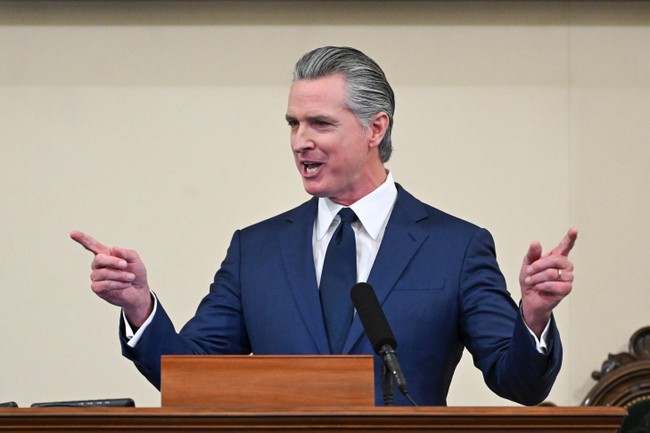
Then there was this winner from California Gov. Gavin Newsom.
https://x.com/globeandmail/status/2065165503472263171
This is not sustainable.
Plutarch warned us 2,000 years ago that the imbalance between rich and poor is the oldest and most fatal ailment of all republics.
We have got to democratize our economy so that it works for all.
Newsom’s post mixes historical appeal with modern policy shorthand, but the quote attributed to Plutarch appears doubtful in origin and accuracy. That sort of shaky attribution is common in quick political messaging, yet it fuels broad claims without empirical backing. “This is not sustainable” is vague and begs the question of what exactly would be unsustainable about private-sector success. Conservatives push back against alarmist rhetoric that implies wealth must be forcibly limited to preserve social order.
“Democratize our economy” sounds noble until you define it, and the working definition from many on the left amounts to more government control over private outcomes. That raises basic questions about property rights, incentives, and the proper role of government. If the economy is “democratized” by commandeering private gains, the capital that drives innovation shrinks. A free-market view holds that encouraging entrepreneurship and rewarding risk leads to wider prosperity over time.
Musk’s companies have employed hundreds of thousands and created enormous private-sector value that trickled down to many workers and early stakeholders. Public offerings often unlock wealth for employees, suppliers, and investors who believed in the venture long before it succeeded. The SpaceX IPO reportedly made thousands of employees millionaires, a fact often overlooked by critics who focus solely on the founder’s net worth. Conservatives note that broad-based gains from private enterprise often deliver far more meaningful improvement to people’s lives than top-down redistribution schemes.
Critics who call for redistributive fixes rarely propose personal sacrifices or tangible examples of sharing wealth themselves. The performative element is strong: grand speeches about equity without corresponding personal action. Pointing out that many leading critics come from comfortable backgrounds highlights a disconnect between rhetoric and reality. From a conservative angle, policy should focus on expanding opportunity rather than shrinking success.
Policy proposals framed as correcting inequality need scrutiny for unintended consequences. Tax hikes, regulatory burdens, or enforced caps on earnings can chill investment and slow job creation. If the government dictates how much someone may keep or how companies distribute gains, the incentive to found and grow companies erodes. The conservative stance emphasizes creating a business climate that makes upward mobility accessible to more people without punishing success.
The media and politicians who rush to label wealth as a societal threat often miss how innovation translates into tangible benefits: improved transportation, cheaper energy options, and new industries that never existed before. Elon Musk’s firms have driven technology in ways that resonate beyond balance sheets, and those outcomes matter to ordinary Americans. Conservatives argue the right question is how to replicate those opportunities, not how to vilify the entrepreneurs who create them.
Ultimately, the debate over Musk’s wealth is a stand-in for a larger struggle over economic philosophy. One side promotes policies that prioritize redistribution and control; the other defends incentives, risk-taking, and private-sector solutions to social problems. The conservative perspective favors expanding prosperity through growth, not constraining it through government mandates that could harm the very innovation society depends on.



Jealousy abounds. Musk works very hard. He is a genius. Perhaps some of these people who are claim this should do some hard work themselves, and perhaps they can get to be where Musk is. Oh, I forgot – it also takes brains.
I wonder if musk back that dumb Demonrat Kamala if newscum would be talking smack about playing Robin Hood.its like the ceo from Starbucks said to Congress I came from nothing I EARNED my money!!!!