
Checklist: critique AOC’s Munich trip and media treatment; recount the wealth tax exchange and Argentinian response; highlight her reaction to press coverage and New York Times defense; note the political implications for a potential 2028 run.
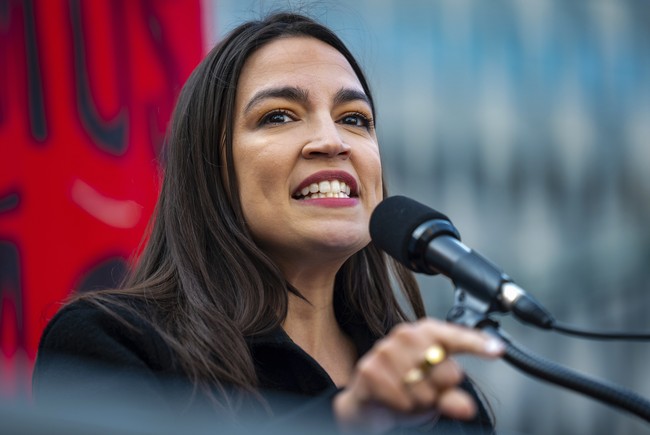
Rep. Alexandria Ocasio-Cortez traveled to Munich this week, appearing at international forums in a bid to broaden her foreign policy profile ahead of possible higher ambitions. The trip produced awkward moments on camera and sharp reactions from critics who say she stumbled through questions that exposed limits in her preparation. Observers compared her performance against sharper critics who pushed back publicly, and the contrast did not favor her.
Her approach seemed straightforward: show up, hit populist themes about billionaires, and argue that democracy faces a global threat. What was meant to look confident instead read as surface-level political theater to many in attendance. When a question about a wealth tax came, her answer faltered and opened the door for a pointed rebuttal from an Argentinian politician.
The exchange made for an uncomfortable moment. After fumbling, she suggested a wealth tax could be enacted without waiting for a single president, but she struggled to lay out specifics under the heat of questioning. The Argentine speaker delivered a succinct historical critique of such measures, arguing they often produce short-term relief and long-term economic damage.
HOST: So when you run for president, are you going to impose a wealth tax or a billionaire’s tax?
OCASIO-CORTEZ: I don’t think that, um, I don’t think that anyone, and that we don’t have to wait for any one president to impose a wealth tax. I think it needs to be done expeditiously.
MOLERO: You have the recipe that many Latin American countries applied many, many times, that is some relief in the short term, but ends up being a tragedy for the future. It’s like a public expenditure, huge public expenditure, price controls, sometimes wealth tax, and you end up with the wealth going away, and you have just the tax, and you don’t have wealth anymore. That was something that Peronism did many, many times.
So all these recipes create a cycle. Then you have this short-term relief, but then it goes with inflation, shortage, then you have more poverty, and the cycle goes and goes.
Ocasio-Cortez is more accustomed to friendly domestic interviews and coverage that tends to soften criticism rather than press on policy specifics. That pattern left her exposed when confronted by seasoned international politicians who drew on history and economic consequences. Critics argue that when a politician is used to a protective press environment, live probing in a global setting reveals gaps quickly.
After the trip, she reached out to a New York Times reporter seeking a softer public framing of the visit. The paper obliged with a piece that emphasized the themes she said she wanted to highlight: rising right-wing populism and threats to democracy. That framing, however, did not prevent conservative social feeds from amplifying her on-camera stumbles and mocking the trip’s optics.
Representative Alexandria Ocasio-Cortez had anticipated a potentially frosty reception to her anti-establishment arguments at the Munich Security Conference, a venue she called “an elite place of decision makers that, frankly, are not responsive to a class-based message.”
And the visit to Germany felt high-stakes: It was the most prominent foreign trip to date by the progressive New York congresswoman, who had mostly focused on domestic priorities until now. Her remarks last week about addressing working-class concerns around the globe, and the reception from world leaders, were both eagerly awaited and highly scrutinized.
But rather than the substance of her arguments, it was her on-camera stumbles when answering questions about specific world affairs that rocketed around conservative social media and drove plenty of the discussion about her visit, as political observers speculated whether they would make a dent in a potential presidential run in 2028.
The Times excerpt sought to recenter the narrative on authoritarian risk and working-class appeals, noting private meetings and panels where she says her arguments landed well. That claim did not sit well with critics who focused on the televised moments that became viral. For them, the trip looked less like a foreign-policy breakthrough and more like a cautionary tale about overreaching without the technical grasp to back it up.
“This reporter came up to me and was like, ‘Is Munich the new New Hampshire?’ And I cannot say enough how out of touch and missing the point, genuinely, that is,” Ms. Ocasio-Cortez said in an interview, referring to the state’s tradition of hosting early presidential primary contests. “Global democracies are on fire the world over, and established parties are falling to right-wing populist movements.”
To Ms. Ocasio-Cortez, the discourse about her visit had missed the more important point about the risks of authoritarianism — an argument that she said had been well-received by the Europeans during two foreign policy panels, private meetings with German leaders and an address in a packed university auditorium in Berlin.
Whatever the internal appraisal from her team, the public takeaway among many conservatives is straightforward: a high-profile trip that highlighted shortcomings rather than strengths. The contrast between polished messaging and momentary on-camera confusion can be brutal in politics. For Republicans and others watching, the Munich visit reinforced doubts about her readiness for higher national office.
That scrutiny is unlikely to vanish. If a campaign for 2028 materializes, her Munich performance will be replayed and dissected by opponents and pundits alike. In modern politics, once those cracks are exposed they get amplified, and restoring a flawless public image becomes a steep uphill climb.



Add comment