
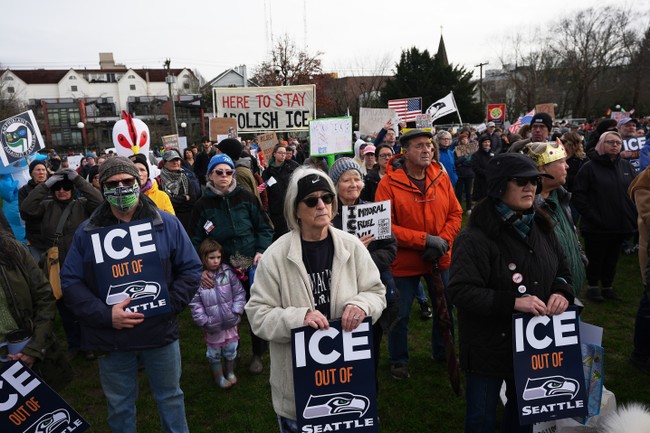
The article examines a recent Minnesota incident where anti-ICE protesters forced their way into a church, naming participants and escalating tensions with federal authorities; it critiques the tactic, highlights legal exposure under the FACE Act, and argues the Department of Justice should treat this as a serious federal matter rather than shrug it off while local officials delay action.
A group of protesters entered a Minnesota church and occupied the space during a service, an action that crossed a clear line between public demonstration and private invasion. Among those present was media personality Don Lemon, and the occupiers claimed they were acting because a pastor allegedly had ties to ICE. That justification, however loud, does not erase the fact that a house of worship is a private venue where uninvited occupation amounts to trespass and potential criminal conduct.
ICE has expanded operations in Minneapolis because state and local authorities have often refused cooperation, which federal agents say forces them to act in ways that draw public attention and controversy. The protesters frame their actions as resistance to deportations they oppose, but storming a church shifts the debate from policy protest to direct confrontation with civilians and property owners. That escalation invites legal consequences and sets a troubling precedent for permissive lawlessness.
Unlike city streets or public squares, churches are private property with congregants who expect sanctuary during worship. Invading that space places innocent people in the middle of a political tussle and undermines basic norms of civility. Minnesota officials have been criticized for allowing repeated unrest in recent years, and this latest incident shows how activists may feel emboldened when local enforcement is inconsistent or lax.
Federal authorities are not bound to the same indifference. Harmeet Dhillon, leading the Justice Department’s civil rights division, has indicated the administration could use the FACE Act to pursue those involved. The FACE Act has a controversial history and has been applied in cases that drew public pushback, but it remains law and provides a tool for federal prosecutors when actions cross into interference with religious exercise. Using existing statutes is a reasonable option when local authorities fail to protect private institutions.
Some commentators note the law’s prior application against activists at abortion clinics and argue that using it here would be inconsistent or politically motivated. That history is part of the conversation, but it does not erase the central fact that a coordinated entry into a place of worship is a different factual scenario with its own legal implications. If protesters knowingly organize an occupation of a church, and then publicize participants and motives, they create a straightforward trail for investigators.
What compounds the situation is the social media behavior that followed the occupation. The leader of the protest, Nekima Levy Armstrong, reportedly posted participants’ names and candid explanations of why they entered the church. That kind of documentation is effectively an admission of participation and intent, and it hands investigators a map to who organized and who executed the action. From a law enforcement point of view, that is the opposite of prudence for someone hoping to avoid charges.
Naming prominent figures like Don Lemon and several organized groups removed any pretense of spontaneous protest and suggested a coordinated operation rather than a peaceful, impromptu expression of grievance. Publicly linking organizations and individuals to an invasion of private property gives the Department of Justice clear leads for civil or criminal inquiry. Activists who rely on anonymity and chaotic crowds to shield them lose that cover when they post roll calls of participants online.
There is a political calculation in how prosecutors choose to proceed, and critics will always say enforcement decisions are selective. Still, the decision here is more straightforward than it might appear: when private citizens and congregations are targeted in their houses of worship, federal civil liberties interests are engaged. The DOJ can lawfully investigate whether federal statutes were violated and whether civil rights protections were undermined by the occupation.
For years Minnesota has seen episodes of unrest that strained public trust, from the George Floyd riots to recurring clashes between activists and law enforcement. Those events shape how citizens and officials respond to new incidents, often creating fatigue or a sense of inevitability. But allowing another unchecked occupation to stand as consequence-free would only encourage repetition and further erode rule-of-law norms.
Federal action does not have to be punitive theatrics; it can be targeted enforcement to restore protections for private worship and to make clear that organized invasions of private spaces are unlawful. Holding organizers accountable would send a message that property and religious liberty matter, regardless of the political cause. If local authorities continue to dither, the federal government has a responsibility to step in where civil rights and public order are at stake.
Add comment