
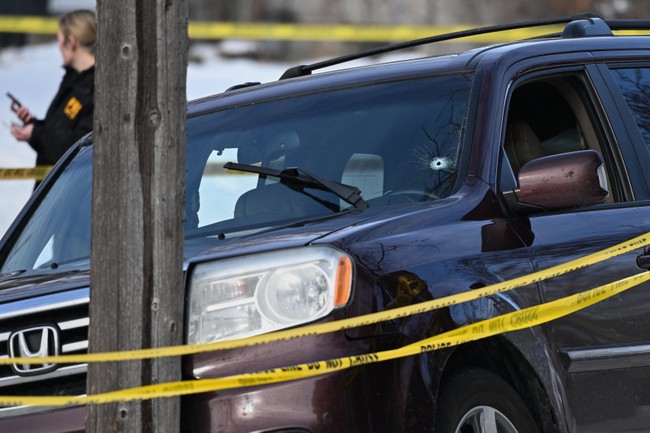
The Minneapolis incident that left Renee Nicole Good dead after an ICE agent fired on her SUV has opened questions about the role her partner played, sparked federal scrutiny, and ignited a political fight over protest tactics and local officials’ conduct.
The scene on the icy street grabbed national attention when a video showed Rebecca Good taunting officers and urging her partner with the line “Drive, baby, drive!” That direction, captured on video, came as agents attempted to detain Renee, and it has become central to the debate over culpability and escalation. People watching the footage quickly split into camps: those who see reckless obstruction and those who see an overreaction by law enforcement.
Other clips that surfaced show both women close up to the ICE operation in the minutes before the shooting. Renee appears to use her SUV to block traffic and blast the horn while Rebecca steps out to film and shout at agents. Those actions, whether intentional interference or chaotic protesting, changed the context of a federal immigration enforcement action into a dangerous confrontation.
Here’s Rebecca in all her glory:
Federal investigators have reportedly shifted attention toward Rebecca to determine whether she impeded a federal officer just before the fatal shot. Officials are looking at her behavior at the scene and any connections she may have to activist groups that organize demonstrations around immigration enforcement. That probe aims to sort out whether the conduct of bystanders crossed legal lines that contributed to the tragedy.
Federal officials are investigating Renee Nicole Good’s partner to determine whether she may have impeded a federal officer moments before he shot and killed Good in Minneapolis, according to two people familiar with the investigation who spoke to NBC News.
The federal investigation into the shooting by Immigration and Customs Enforcement officer Jonathan Ross is focusing more on Becca Good, including what officials said were her possible ties to activist groups, and less on Ross’ actions when he fired into Renee Good’s vehicle during an immigration operation last week, the people said.
Local political leaders are not immune from scrutiny either. Reports indicate investigators have widened the net to look at the actions of city and state officials who critics say fostered an environment that encourages confrontational protest tactics. When political rhetoric frames obstruction as civic heroism, it can blur the line between lawful dissent and dangerous interference with federal duties.
Some Democratic politicians and supporters sought to humanize the pair as everyday parents caught up in an ICE action after dropping off their child, painting the episode as an unfortunate accident. That narrative ran headlong into footage showing deliberate interference with an active operation, and into federal investigators’ interest in whether encouragement from the passenger played a material role in what followed.
Public reaction has been fierce and polarized. On one side are those who view the incident as a tragic outcome of agitational activism; on the other are those who warn about heavy-handed law enforcement and rush to blame officers without considering all circumstances. The split has widened the political fallout, with activists and elected officials trading accusations rather than settling facts.
Money and media attention flowed quickly to Rebecca Good after the shooting, with a fundraiser reportedly surpassing seven figures almost immediately. That outpouring of support revealed how quickly a viral incident can convert into cash and clout, generating both sympathy and suspicion about motives and messaging surrounding the event. The financial windfall for a person at the center of a federal probe raises its own questions about accountability and the incentives around protest behavior.
Beyond individual responsibility, this episode raises broader concerns about the tactics used by some protest networks that target immigration enforcement. When activists intentionally position themselves to obstruct federal agents, the risk of violence and tragic outcomes increases. The legal system must now determine whether those risks amount to criminal obstruction or whether the focus should remain on the conduct of the officer who fired.
Officials and citizens alike are watching the DOJ inquiry closely to see what evidence emerges and how prosecutors will interpret actions captured on video. The answers will shape not only potential charges but also the political conversation about protest limits, public safety, and the obligations of local leaders when federal agents operate in their jurisdictions. Whatever the legal outcome, the footage and the fallout will continue to influence public debate.
The incident serves as a stark reminder that heated protest scenes can spiral fast, and that words shouted from the sidelines have consequences when paired with vehicles, icy streets, and federal interventions. As investigators sift through footage, witness statements, and digital trails, the case will test where the law draws the line between protected protest and criminal interference.
Add comment