
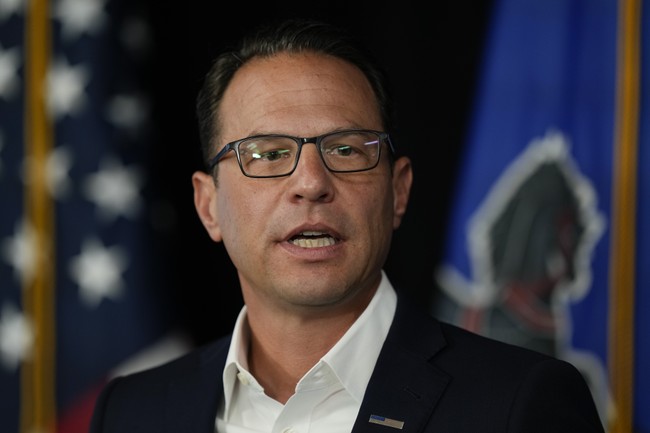
Kamala Harris’s vetting of potential running mates landed in the headlines after Pennsylvania Governor Josh Shapiro revealed unusual and offensive questions he was asked, and his new book adds fresh details. Shapiro describes a vetting process that crossed lines — including insinuations about loyalty to Israel and intrusive inquiries about family and finances — while also portraying Harris and her team as dismissive or out of touch with ordinary political realities. The episode raises questions about how modern vetting operates within a party that claims to champion tolerance, and what that says about political priorities and judgment on the left.
The vetting Shapiro recounts sounds less like routine security screening and more like a desperate search for ideological purity and sensational talking points. He reports being asked whether he had ever been a “double agent for Israel,” a question he found offensive and absurd. That single query became a flashpoint, signaling how the process could veer into conspiratorial territory instead of focusing on qualifications and readiness to serve.
“Had I been a double agent for Israel?” wrote Mr. Shapiro, describing his incredulous response to a last-minute question from the vetting team. He responded that the question was offensive, he wrote, and was told, “Well, we have to ask.”
“Have you ever communicated with an undercover agent of Israel?” the questioner, Dana Remus, a former White House counsel, continued, according to Mr. Shapiro, who recounted, “If they were undercover, I responded, how the hell would I know?”
Shapiro also says Harris herself asked if he would apologize for criticizing antisemitic demonstrations on college campuses, framing legitimate concern about violent or harassing behavior as something needing contrition. He answered that he defended the right to protest but that not all demonstrations were peaceful, a response rooted in principle rather than partisan theater. That exchange underscores how sensitivity to certain activist currents can override straightforward judgment about public safety and free expression.
Beyond the Israel line of questioning, Shapiro paints the vetting team as fascinated with perks and personal details, with comments about wardrobe budgets and hair and makeup for his wife. Those remarks, attributed to a member of the vetting team, left him “a little slack-jawed.” The tenor of these exchanges suggests an out-of-touch elite more concerned with optics and entitlement than with seriousness about governing.
“She noted that her chief of staff would be giving me my directions, lamented that the Vice President didn’t have a private bathroom in their office and how difficult it was for her at times not to have a voice in decision making,” he wrote.
Shapiro also reports that a member of the vetting team suggested his family would need to overhaul their wardrobe and pay for professional grooming, an odd and condescending aside in the middle of a national vetting process. He explicitly said he held no personal grudge against that person, but the comments nonetheless signaled a disconnect between the team’s assumptions and the reality of most Americans. That tone does not inspire confidence in a group vetting someone to stand a heartbeat away from the presidency.
“She said that she knew we didn’t have a lot of money, and that [Shapiro’s wife] Lori was going to have to get all new clothes and pay for people to do her hair and makeup,” he wrote, saying that while he held no grudge against Ms. Remus, the comments left him “a little slack-jawed.”
The end result was predictable: Shapiro declined the offer and Harris chose Minnesota Governor Tim Walz, a pick that many observers criticized at the time. Walz has since faced his own controversies, further illustrating how misjudgments in vetting can have lasting consequences for a campaign. Critics argue the party’s choices show a fixation on narratives rather than a sober assessment of who can carry a battleground state.
Shapiro’s public account and his blunt reactions reflect frustration that many conservatives and independents will recognize: an elite political culture prone to performative purity tests and dismissive of ordinary leadership concerns. He has said the public account from Harris’ side misrepresents his role and motives, calling her portrayal “blatant lies” in prior interviews. That clash of narratives exposes a broader divide about honesty, competence, and how candidates are evaluated behind closed doors.
Whatever one thinks of Shapiro’s politics, his book offers a window into a vetting process that prioritized theater and ideological signaling over practical judgment. Those revelations are worth weighing as voters consider which party is competent to govern and which is more focused on factional demands and public relations. The episode also highlights how the left’s internal dynamics can produce choices that baffle swing-state voters and feed narratives about a party out of step with mainstream America.



Add comment