
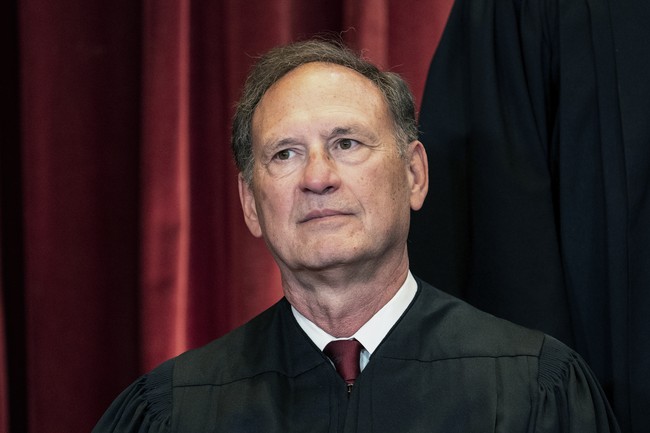
This piece looks at fresh signs that Justice Samuel Alito might step down before the midterms, why his exit would matter to the Court’s balance, and how timing could shape President Trump’s chance to nominate another conservative justice.
Supreme Court appointments define presidencies more than almost any other legacy move, and conservatives rightly watch every ripple around the bench. President Trump already shifted the Court’s makeup in his first term by confirming three justices, so the prospect of another opening is a major political moment. Speculation about Justice Alito’s future has picked up after certain actions and milestones, and those signals are worth understanding in context.
Justice Samuel Alito, 75, who has served on the Supreme Court since January 2006 after being nominated by President George W Bush, is speculated to be considering retirement.
He recently celebrated 20 years on the court at the end of January – a milestone achieved by just a fraction of justices.
The typical term has averaged around 16 years, though since the 1970s, with improvements in medicine, the typical tenure can extend much longer. According to historic averages, justices tend to retire in their late seventies to early eighties.
That’s ‘usually a very good milestone on which to retire,’ Mellisa Murray, a legal scholar and law professor at NYU, recently said on the Strict Scrutiny podcast.
At 75 and with two decades on the Court, Alito checks the boxes that often precede retirement for justices. He has been a consistent conservative voice and has left his mark on important rulings, so his departure would be felt immediately. Conservatives naturally hope any vacancy arrives while the Senate remains friendly to a Republican president, because that would preserve the Court’s current direction.
Timing is everything. If Alito left before a potential Democratic Senate takeover, Republicans could move quickly to confirm a like-minded successor and lock in the conservative majority. If the Democrats control the Senate after midterms, a nomination could face intense obstruction and leave the Court’s balance unsettled for years. That dynamic makes chatter about Alito’s health, calendar choices, and public appearances more than idle gossip; it’s about the strategic window for confirmations.
Also to be considered: the impending midterm elections.
Republicans are expected to take a beating in the November elections.
President Donald Trump has signaled his worries repeatedly, perhaps at nauseam, noting multiple times this year how the midterms are typically won by the party that does not hold the presidency – a historically correct nod to how voters almost always reward the party out of power with additional seats in Congress.
That quoted point about the midterms matters because it sets the political backdrop. If the electorate swings away from the incumbent party, the Senate could flip and the chance to confirm a new justice would vanish. Republicans know this and have incentives to push for confirmations early, while Democrats have incentives to delay. History gives both sides plausible talking points, and those talking points drive real confirmation strategies.
Observers have zeroed in on Alito’s recent public schedule and remarks as possible hints about whether retirement is on the table. No formal announcement has come, and the Justice’s silence keeps everyone guessing. Conservative commentators and legal scholars alike weigh the significance of a twenty-year tenure and the customary retirement ages of justices when mapping likely scenarios.
Another factor is the age and tenure of other conservative justices. Clarence Thomas, for example, is 77 and has decades on the bench; his situation looks different from Alito’s. That reality means the Court could face multiple transitions over the coming years, and each one creates its own political stakes. For Republicans, every vacancy is a test of readiness and resolve to nominate and confirm solid constitutionalists.
If Alito does step down, the president gets the chance to shape the Court yet again. A pick who stands firm for originalist interpretations and restraint on judicial activism would continue the course many conservatives want. But whether that chance arrives depends entirely on political timing and Senate control, and that uncertainty explains why this speculation is getting so much attention now.
For now, Alito remains on the bench and has not signaled a decision, so the situation is watchful rather than decisive. Still, the combination of age, tenure, and the political calendar makes the possibility of an imminent vacancy credible. Conservatives will be tracking any concrete sign because the implications for law and policy are enormous, and the legacy of a president is shaped in large part by who sits on the nation’s highest court.



HE’S BEEN A TRUSTED CONSERVATIVE NOW WE NEED ANOTHER ONE
NO COMMIE NEED APPLY