
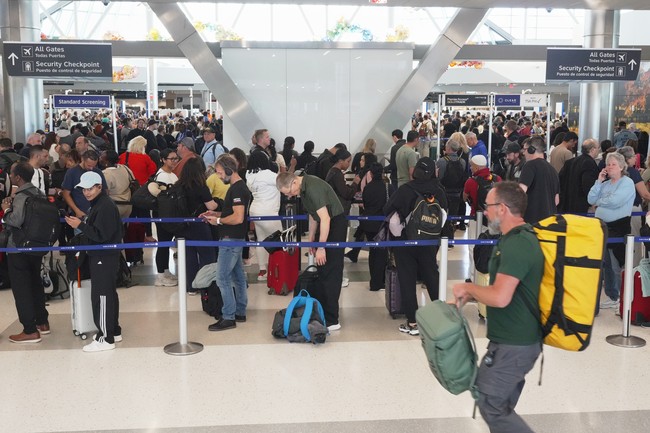
The Department of Homeland Security shutdown has left critical staffing holes at the Transportation Security Administration right as the summer travel surge and the FIFA World Cup arrive, straining screening operations and spotlighting the political choices that created the crisis.
Across the country TSA faces the real-world consequence of losing more than 1,300 employees after a 76-day funding lapse, and that gap matters. Airports do not run on promises; they run on trained personnel doing security work every day, and when staffing drops the system strains. Travelers will notice longer lines, less flexibility for unexpected surges, and added stress at checkpoints during peak travel days.
The timing could not be worse. The World Cup will bring millions of visitors to North America, with the United States hosting most matches across 11 cities. Large events like this require airtight coordination across DHS components, and gaps in TSA staffing ripple out to customs, local law enforcement, and emergency response. When federal security agencies are understaffed it is ordinary citizens—and their safety—that pay the price.
Democratic leadership allowed this prolonged shutdown to happen, and Republican voices should be blunt about the consequences. This is not abstract budget theater; it is Americans standing in longer lines, airlines juggling schedules, and security officials stretched thin. Every GOP candidate can point to the shutdown as a clear example of bad priorities that put political gamesmanship ahead of people’s livelihoods and safety.
The summer travel season already strains checkpoints and resources in a normal year, and this one is anything but normal. Add in a global sporting event that funnels tens of thousands of extra travelers into cities already near capacity, and the margin for error vanishes. Agencies like Customs and Border Protection, Secret Service, and cyber teams all play roles around major events, and the funding uncertainty drags down the whole preparedness chain.
Lawmakers who cut corners on funding created an avoidable operational mess, and the fallout is hitting rank-and-file federal employees hard alongside travelers. Many TSA workers faced furloughs or were forced to work without clear assurances, harming morale and retention at the worst possible moment. When experienced staff leave or are sidelined, training pipelines cannot close that gap overnight.
Voters should understand the local impact of national budget fights. Airports in mid-size and major cities will see the strain in real time, especially on days when flights and fan movement peak. Airport operators and airlines are left scrambling to keep operations flowing, which costs time and money and compromises convenience for millions of Americans who simply want to travel.
This episode also exposes broader weaknesses in how Washington funds essential services. Short-term standoffs and last-minute fixes create ripple effects that extend well beyond the halls of Congress. Essential homeland and transportation services require reliable funding to plan, recruit, train, and respond; without that stability public safety and confidence suffer.
Republican policymakers should make this a clear talking point: voters deserve functional security and a government that prioritizes core missions over partisan fights. Pointing out real consequences—longer waits, reduced staffing, and stressed security networks—resonates with people who experience the effects directly. That concrete story is more powerful than an abstract budget debate.
States and local leaders will need contingency plans for large events, but they cannot fully substitute for federal readiness. Coordination across city agencies, private-sector partners, and federal components is vital, yet it cannot make up for missing staffing or delayed resources. Preparedness depends on both smart planning and proper funding, and one without the other leaves holes.
The shutdown should be a wake-up call about how fragile operational readiness can become when political brinkmanship takes precedence. Travelers, small businesses that rely on tourism, and everyday citizens all bear the cost when security and services are disrupted. Fixing this starts with steady funding and accountability for those who let it unravel.
The World Cup will be hosted across multiple cities in the United States, Canada, and Mexico, with the U.S. handling most matches in 11 cities. The event is expected to draw millions of visitors and requires fully operational security measures to ensure public safety. Beyond TSA officers, other critical DHS personnel in Customs and Border Protection, Secret Service, cybersecurity, and FEMA are also affected by funding uncertainties.
Decision-makers need to stop treating essential services as bargaining chips and start treating them as responsibilities to the public. That means predictable funding streams, support for frontline staff, and plans that anticipate major events rather than reacting to crises. The public expects and deserves a government that keeps people safe without putting normal life at risk.
Moving forward, congressional Republicans should keep pressing for reforms that prioritize staffing stability and operational readiness, and voters should demand clearer commitments from those in charge. The country can insist on accountability for the chaos, and it can insist that the people who keep airports and borders secure are not collateral damage in political fights. The choice is simple: stable security or recurring chaos, and the people paying the price should not be ignored.

Add comment