
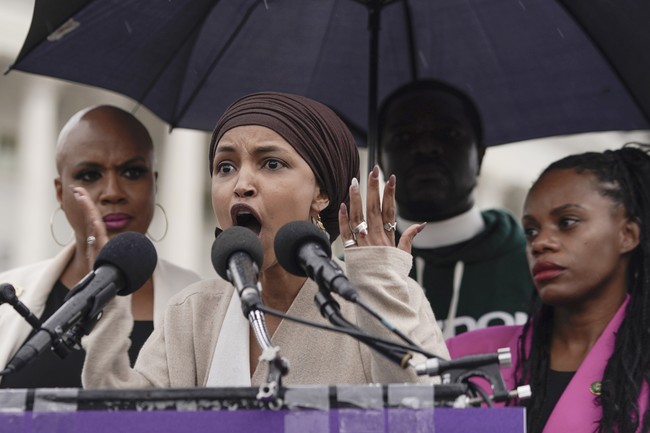
Minnesota lawmakers failed to secure a state subpoena for Rep. Ilhan Omar, and Republican leaders say the matter should now move to the federal level because the alleged fraud involves a weakened federal nutrition program and nationwide implications.
What’s next for Ilhan Omar after Minnesota Democrats shield her from a fraud probe — federal subpoena looming?
Republicans on the House Fraud Prevention and State Agency Oversight Committee tried to force testimony and documents from Rep. Ilhan Omar, but Democrats blocked the subpoena. The vote fell short of the two-thirds supermajority needed, leaving state-level options stalled for now. That result has GOP lawmakers pointing to Washington as the next logical venue for accountability.
The core concern is clear: Feeding Our Future was a federal program that critics say was gamed, and Omar is accused of promoting sites later tied to millions in fraudulent claims. Her sponsorship of the 2020 MEALS Act, which relaxed certain meal program rules, is central to why investigators want her records. Lawmakers argue those policy changes created opportunities for abuse that deserve federal scrutiny.
Critics say Omar “ghosted” hearing invitations and missed a May 5 deadline to deliver records connected to what watchdogs describe as billions—Billions!—meant for kids’ nutrition that allegedly ended up in the hands of fraudsters. That kind of silence fuels suspicion, and it undercuts public trust when a sitting member of Congress is tied to a sprawling fraud case. With state remedies blocked, Republicans see federal subpoenas as the tool to get answers.
Committee Chair Rep. Kristin Robbins framed the situation bluntly: state-level options are “fading,” and the issue has national reach because a federal program was exploited. She said she plans to ask congressional Republicans to consider issuing a federal subpoena, noting the DOJ should be interested too. Those comments signal a push for a formal, federal inquiry rather than an unending state-level stalemate.
“I’ll certainly talk to our friends in Congress to see if they would be willing to issue a subpoena. I don’t know if they are, but they would have the same authority, and it’s still relevant to them because it’s a federal program that’s been swindled,” Robbins told Fox News Digital. The plain reading is that if state enforcement stalls, federal bodies must pick up the slack. Republicans argue this is exactly the sort of cross-jurisdictional case Congress and the DOJ should be handling.
Some in the state Republican delegation worry the case might not rank high on the congressional priority list given the volume of ongoing investigations in Washington. “They have so many investigations going on, I don’t know where this falls on the priority list,” Robbins said, acknowledging the practical limits of federal capacity. Still, advocates for a federal probe argue the program’s national footprint makes it impossible to ignore.
From the GOP perspective, lawmakers in Congress now have a duty to follow up where Minnesota Democrats refused to act. With Omar serving in Congress and the scandal tied to a federal food program, pursuing a federal subpoena is framed as a necessary step. Anything less, critics warn, risks sending a message that major fraud affecting children’s nutrition programs can be brushed aside when a powerful Democrat is involved.
Republicans point to trial exhibits from the $250 million Feeding Our Future case that reportedly reference Omar multiple times and say her name surfaced in connection with sites later accused of fraudulent claims. Her attendance at campaign events tied to convicted actors has also been flagged as problematic. Those associations, coupled with an apparent refusal to hand over communications, form the basis for demands for deeper inquiry.
Legal options at the federal level are broader, according to state GOP leaders, and the Department of Justice could pursue criminal or civil remedies if the evidence warrants it. Federal investigators can issue subpoenas, compel testimony, and coordinate across jurisdictions to trace how funds moved. Republicans insist these tools are the right fit for an allegation that stretches beyond state lines.
Public confidence in assistance programs depends on transparent oversight, advocates and lawmakers say, and the optics of a blocked state subpoena are damaging. If Washington pursues the matter, it will need to show it’s acting on evidence and following due process rather than political theater. But for now, with state efforts stymied, the next move rests with congressional Republican leadership and federal prosecutors.
Questions remain about why Omar has resisted producing records and whether federal authorities will prioritize this among their many probes. The coming weeks will reveal whether Republican leaders in Congress take up the baton and issue subpoenas, and whether the DOJ launches its own investigation. Until then, the stalled state vote leaves a gap critics say must be filled to protect the integrity of federal nutrition programs.

Look at that Evil raging maniac imbecile that should should have already faced a Military Tribunal at GITMO and been summarily executed for Treason and Sedition!
Lock that Witch up NOW!!!