
This article reviews how President Donald Trump’s primary endorsements reshaped several Indiana state Senate races after a redistricting fight, detailing which incumbents lost, which survived, and who the key players were in the post-redistricting backlash.
As of Tuesday night, five of six Indiana state Senate contests with Trump-backed challengers had been called, and four incumbents who voted against approving new maps were defeated. The pattern is clear: challengers endorsed by Trump capitalized on voter anger tied to the redistricting vote. These results show how national influence can play out in state legislative primaries.
Senate District 41 was among the first to flip, with Michelle Davis, backed by President Trump, taking a decisive lead over incumbent Greg Walker. Voters in that district rewarded the challenger who aligned with Trump’s push for redistricting. The message from the electorate was unmistakable to incumbents who sided against the maps.
Soon after, Senate District 19 followed suit as Blake Fietchter, another Trump-endorsed challenger, soundly defeated incumbent Travis Holdman. The loss of Holdman carried symbolic weight because he was one of the senators who voted down the proposed maps. That vote became the tipping point voters used to judge who had sided with Trump’s agenda and who had not.
Indiana State GOP Senator Travis Holdman, who voted against congressional redistricting in the Hoosier State’s Senate, lost tonight to Trump-endorsed Republican primary challenger Bluffton City Council member Blake Fiechter in the largely rural northeastern Indiana 19th district per AP.
State Senate District 11 delivered a similar verdict, where Brian Schmutzler, with Trump’s backing, beat incumbent Linda Rogers by about eight points. That margin shows the power of organized primary support and the weight of the redistricting issue. Grassroots turnout and targeted campaigning closed the gap that incumbents might have otherwise relied on.
In State Senate District 1, Trevor De Vries, another Trump-endorsed challenger, defeated incumbent Dan Dernulc in a decisive victory. The result was not close and reinforced the broader trend across multiple districts. Voters showed they will hold elected officials accountable when they feel national priorities are ignored.
The contest in State Senate District 23 remains exceptionally tight, with only three votes separating Trump-endorsed Paula Copenhaver from incumbent Spencer Deery. That razor-thin margin highlights how these primaries were fought in precincts where every vote mattered. Small turnout differences and focused ground games made the race nail-biting.
Not every incumbent lost: Greg Good in Senate District 38 managed to fend off his Trump-backed challenger, Brenda Wilson, keeping his seat. At the same time, Senate District 6 produced an upset without a Trump endorsement, where Rick Niemeyer was defeated by James Starkey. These mixed results show that local dynamics still matter, even amid a broader national theme.
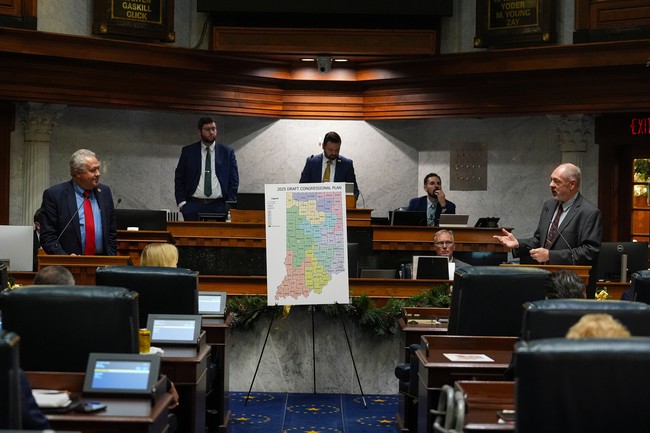
The backstory that galvanized these contests was President Trump’s push in November 2025 for a mid-decade redistricting in Indiana. Senate President Pro Tem Rodric Bray and several Republican senators voted to reject the maps favored by the White House, setting up the primary backlash. That legislative defeat became a central point of contention heading into the primaries.
Despite repeated calls from President Trump to pass a mid-decade redistricting map that would likely net the Republican Party seats in next year’s midterm elections, Indiana Republicans voted Thursday afternoon to reject the map favored by the White House. The final vote in the Indiana state senate was 19 in favor, 31 against the measure; Republicans currently hold a 40-10 supermajority in the chamber.
Citizen groups and activists played a clear role in flipping seats, with organized field efforts turning out GOP primary voters for challengers. Early Vote Action and TPUSA Action worked the ground in several of these districts, helping convert national energy into local ballots. Their involvement illustrates how coordinated grassroots campaigns can influence intra-party contests.
For skeptics who predicted Trump’s influence was fading, these outcomes are a counterargument: they demonstrate that endorsements and attention from national leaders still move races. The primary defeats of several incumbents who rejected the maps will be studied by state parties and campaign strategists. Party insiders will now have to reckon with the appetite among voters for alignment with national priorities.
The evening’s headlines carried sharp reactions from activists and supporters, and observers noted pointed commentary aimed at national figures who didn’t back the map push. Scott Presler’s presence on the campaign trail and his public remarks added fuel to the post-vote conversations. The ripple effects from these primaries will shape how Indiana Republicans approach internal disputes going forward.

Add comment