
The piece reviews sharp drops in violent crime across Washington, D.C., credits a stronger law-and-order approach, highlights specific declines in homicides and other offenses, and points to the ongoing National Guard presence and a federal task force as key factors in those improvements.
The political left likes to frame crime as a complex social problem, blaming inequality or systemic injustice for every uptick. The practical reality is more straightforward: visible enforcement, clear consequences, and sustained action change behavior and reduce crime. When authorities stop tolerating disorder, communities feel safer and criminals find it harder to operate. That basic cause and effect is playing out in the nation’s capital right now.
Washington was long a national embarrassment, with scenes of bold daytime robberies and threats to lawmakers that undermined confidence in the city’s safety. Those days have started to recede as federal and local officials took a firmer stance on criminal behavior. Interior Secretary Doug Burgum noted the dramatic shift in recent statistics and drew applause from people tired of excuses and inaction.
Data reported from local police show a steep decline in killings after a forceful federal intervention in August of 2025. The numbers are stark: there have been 20 homicides in 2026 so far, a 52 percent drop compared with 42 during the same period last year. The city recorded 127 homicides in all of 2025, down from 187 in 2024, which suggests that the recent tactics are producing measurable results.
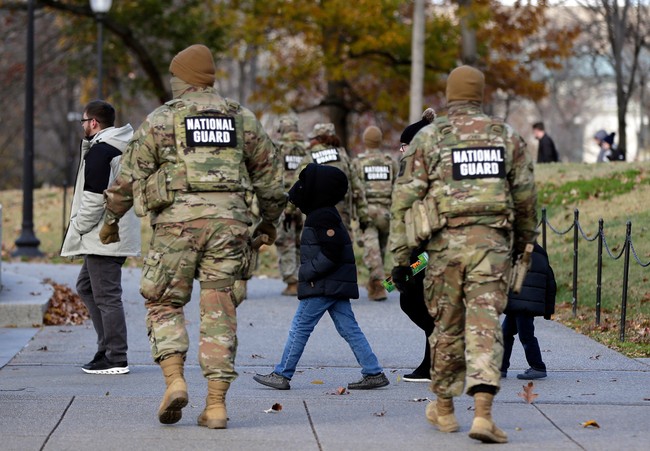
The number of homicides in Washington, D.C., has dropped steeply after President Donald Trump sent the National Guard to clean up the city in August 2025.
There have been 20 homicides in 2026 so far in the nation’s capital, which is a 52 percent drop compared to 42 homicides recorded in the same time period of 2025, according to D.C. police statistics.
In all of 2025, the city recorded 127 homicides. The city recorded 187 homicides in 2024.
Those reductions are not limited to killings. Multiple categories of violent crime have plunged in the first months of 2026, signaling a broader pattern rather than a statistical fluke. Sex abuse reports dropped by 48 percent, robberies fell 23 percent, and motor vehicle theft fell 56 percent, while overall crime dropped about 25 percent. Those are the kinds of shifts that change a city’s daily life and allow residents to move freely without constant fear.
Data show that many categories of violent crime have plunged as of four months into 2026. Homicides are down 52 percent, sex abuse is down 48 percent, robbery is down 23 percent, and motor vehicle theft is down 56 percent.
All crime is down 25 percent.
President Donald Trump explained his decision to deploy National Guard troops to patrol the city in August 2025, a move that produced immediate controversy. The Democrats shrieked and wailed, screaming , but the predictable result followed: tolerate less crime and impose consequences, and the statistics move in the right direction. That’s exactly what happened when authorities made clear they would not back down from restoring order.
Who would have guessed? The approach is simple: increase policing where crime happens, back up local law enforcement with federal resources when needed, and ensure offenders face accountability. The National Guard presence, along with a coordinated task force, created an environment where illicit activity became riskier for would-be offenders, and the city responded with fewer violent incidents as a result.
You spit, and we hit:
More than 2,500 Guardsmen remain on patrol across D.C., and their presence is part of a sustained campaign rather than a one-off stunt. While Guard members do not typically make arrests themselves, the broader mission supported by federal resources helped local law enforcement disrupt criminal networks. The administration reported that the task force has coincided with thousands of arrests and large numbers of firearms removed from the streets, outcomes that make neighborhoods safer.
While the guard members do not make arrests, the Trump administration argues their support to the broader mission has helped reduce crime. The White House said 12,000 arrests have been made by the task force since operations began, including 62 known gang members, and thousands of illegal firearms were seized.
White House spokesperson Abigail Jackson said the president’s crime task force in the city has “yielded tremendous results for local communities.”
The takeaway for citizens is straightforward: policies that focus on enforcement and consequences produce results. Communities that had been suffering from persistent criminal activity are now seeing tangible improvements in safety because the government chose to act decisively. Those results undercut the idea that crime must be accepted as inevitable or that only root-cause theories matter more than immediate public safety measures.
Implementing a tougher posture on crime does not erase social problems, but it does make neighborhoods safer while long-term solutions are pursued. For residents tired of excuses and rising victimization, the recent declines in D.C. show what happens when leaders prioritize law and order and follow through on commitments to protect their communities.

Add comment